Federal Wildfire Strategy Under Fire as Personnel Shortages and Mounting Fatalities Reach Critical Levels

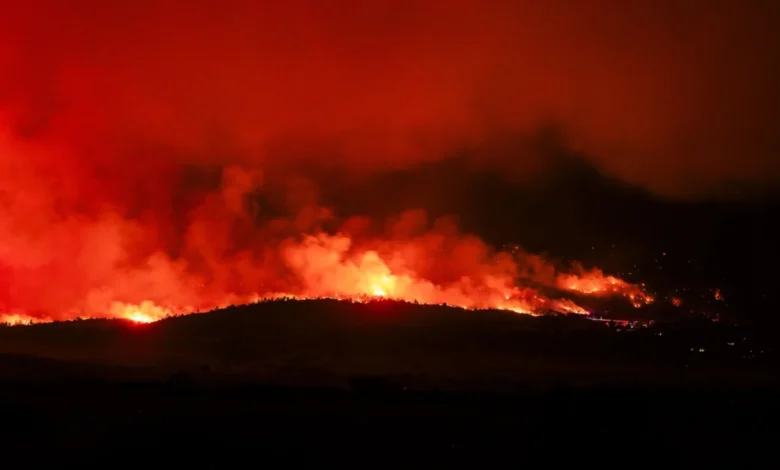
The American landscape is currently besieged by an unprecedented fire season, with over 8.4 million acres scorched by mid-September 2026. As the Aspen Acres fire in Colorado—the eighth-largest in state history—continues to serve as a grim monument to this year’s volatility, the federal government finds itself at the center of a fierce debate regarding its wildfire management strategy. Despite official assertions from the U.S. Forest Service (USFS) claiming full operational capacity, a growing chorus of active-duty firefighters, retired chiefs, and federal lawmakers suggests that the nation’s frontline defense against wildfires is suffering from dangerous personnel shortages, strategic overreach, and a persistent "inflation" of fire intensity that has far outpaced agency resources.
A Season of Unprecedented Risk and Tragedy
The 2026 fire season has shattered records, not just in terms of acreage burned—which stands at 149 percent of the 10-year average—but in the severity of threats posed to those tasked with suppression. Data from the Wildland Fire Lessons Learned Center reveals that firefighters are being overrun by flames at the highest rate in two decades. By mid-August, there were 12 recorded "entrapments"—a term describing the most lethal scenarios where flames breach safety zones or cut off escape routes. This represents a 20-year high, signaling a systemic failure in the current approach to rapid containment.
The human cost has been particularly severe this year. Fourteen on-duty fatalities have been reported to date. Among the most harrowing incidents was the Knowles fire in Colorado, where three firefighters lost their lives in a single entrapment, while two others from their crew suffered life-altering injuries. These figures have sparked internal dissent, with multiple firefighters speaking on the condition of anonymity, fearing professional retaliation for revealing the reality on the ground: crews are being pushed past their physical and psychological limits.
The Widening Gap: Capacity vs. Climate Reality
The fundamental conflict, according to experts, is that federal firefighting capacity has remained largely stagnant while the environmental conditions—driven by the climate crisis—have become increasingly hostile. Fire ecologist Timothy Ingalsbee, executive director of Firefighters United for Safety, Ethics and Ecology, describes the current situation as a "perfect firestorm."
"Firefighting capacity is like wages, and the fire environment is like inflation—it has not kept up," noted one veteran fire captain based in the Pacific Northwest. This sentiment is echoed by Bobbie Scopa, a retired fire chief and vice-president for Grassroots Wildland Firefighters. Scopa argues that the reliance on temporary, often inexperienced, leadership structures to fill roles previously held by veterans is a recipe for disaster. When taskforce leaders and division supervisors—positions that traditionally require decades of expertise—are replaced by less experienced staff, the safety margin for everyone on the fire line evaporates.
The Shift Toward Aggressive Suppression
The current administration has mandated a return to "full and fast" suppression. Directives issued by U.S. Agriculture Secretary Brooke Rollins and Interior Secretary Doug Burgum have explicitly instructed agencies to prioritize immediate, aggressive containment. This represents a pivot away from recent years, during which land managers sometimes utilized "managed fire" strategies—allowing certain blazes to burn in remote areas to reduce future fuel loads.
While agency leadership argues this aggressive stance is necessary to protect property and human life, the practical application has drawn criticism. By mandating that 100 percent of fires be suppressed immediately, the administration is forcing crews to engage in "direct attack" strategies in areas that are often physically impossible or too hazardous to defend. Critics argue that this policy not only endangers personnel but is also fiscally inefficient, consuming massive portions of the $6 billion suppression budget to combat minor fires that pose little threat to public safety, thereby leaving the country vulnerable when truly catastrophic blazes emerge.
Congressional Scrutiny and Official Responses
In mid-September, a bipartisan group of senators—including Michael Bennet, Alex Padilla, Ron Wyden, Adam Schiff, and John Hickenlooper—penned a formal letter to the Departments of the Interior and Agriculture. The senators expressed deep concern over the "depletion of the combined $6 billion suppression budget" with weeks of the fire season still ahead. The letter explicitly warned that the current practice of using temporary supervisors to manage complex operations is "exceptionally concerning" given the record-high fatality rates.
Despite this pressure, the leadership of the USFS remains publicly steadfast. In testimony provided to a congressional subcommittee in July, USFS Chief Tom Schultz stated, "Our firefighting workforce is stronger than at any point in recent years. We are fully staffed and equipped to respond aggressively to every unplanned ignition." This assertion stands in stark contrast to the reports from the field, where crews report that they are frequently understaffed and stretched thin, often moving from one assignment to the next without adequate recovery time.
The Cumulative Effect of Sustained Deployment
The logistical strain on the firefighting system is evidenced by the "Preparedness Level" (PL) ratings. The U.S. reached "PL5"—the highest state of national mobilization—for 48 consecutive days in 2026. This is nearly double the 10-year average for consecutive days at the highest level of alert.
The physiological impact on personnel is profound. Prolonged exposure to smoke, sleep deprivation, and physical exhaustion has, according to medical experts monitoring fire crews, a cumulative effect on cognitive function. "It impacts your ability to think clearly and act decisively to keep you and your crew members safe," Ingalsbee noted. When crews are moved from one fire to the next without downtime, the risk of human error—which can lead to the very entrapments that have become so common this year—increases exponentially.
Future Implications and Strategic Reassessment
The debate over wildfire management is no longer merely a logistical or budgetary issue; it has become a central point of contention regarding the government’s duty of care to its employees. If the current trend of aggressive, high-risk suppression continues, experts fear that the loss of life will continue to climb. Furthermore, the practice of full suppression may ironically be exacerbating the long-term fire risk by allowing forest fuels to accumulate, essentially "storing up" energy for even more devastating fires in future seasons.
As the 2026 season continues, the primary concern for many within the firefighting community is whether the federal government will pivot to a strategy that prioritizes risk-based decision-making over total, immediate suppression. Without a change in policy, the "breaking point" mentioned by many in the field may soon be reached, resulting in a system that is not only less capable of protecting the nation’s forests and communities but is also increasingly unable to protect the firefighters themselves.
The coming months will serve as a critical test. With millions of acres already burned and the threat of late-season fires remaining, the friction between federal directives and the reality of the front lines will likely remain a defining feature of the American wildfire crisis. Whether the government responds to the pleas of lawmakers and veteran firefighters or maintains its course of aggressive, all-in suppression will determine the trajectory of wildland firefighting for years to come.
Related posts: