GOP Bets Big on President Trump at Historic Dallas Convention to Defy Midterm Historical Trends

DALLAS — Defying conventional political wisdom that the party occupying the White House inevitably suffers losses during a midterm election cycle, the Republican Party is adopting an aggressive, high-risk strategy centered squarely on President Donald Trump. As the nation races toward a critical November congressional ballot, the GOP has launched a unified campaign aimed at protecting and expanding its fragile majorities in the House of Representatives and the Senate.
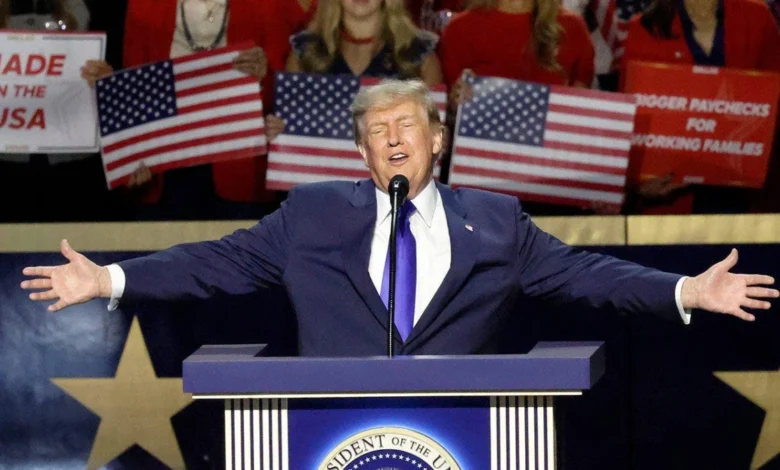
This strategic gamble took center stage during the first-ever GOP midterm convention, held at the American Airlines Center in Dallas. Rather than distancing themselves from a president facing persistent public scrutiny and low approval ratings, Republican candidates, incumbent lawmakers, and party leadership embraced him. The two-day gathering featured back-to-back keynote addresses from President Trump, speeches from top Cabinet officials, and high-profile appearances by vulnerable House members running in fiercely contested battleground districts.
The convention underscores a calculated shift in Republican campaign tactics. While history suggests that a mobilized opposition fueled by anti-administration sentiment typically dominates midterms, GOP leaders argue that the current political landscape is fundamentally different. By projecting absolute unity, tying their campaigns directly to the administration’s legislative achievements, and framing the election as a stark ideological choice, Republicans hope to rewrite the traditional political playbook.
The Historic Midterm Reality and the Republican Counter-Strategy
Since the mid-20th century, the party in power has historically lost seats in Congress during midterm elections. Political scientists often attribute this phenomenon to the "midterm penalty"—a combination of presidential fatigue, complacency among the governing party’s base, and heightened enthusiasm among the opposition eager to check executive power.
Two years prior, Democrats faced a similar environment as they attempted to navigate headwinds under the previous administration. However, Republicans in Dallas argued that the political dynamics of the current cycle favor their legislative agenda. GOP strategists point to sweeping policy measures enacted over the past two years, notably stricter border enforcement and the implementation of significant tax relief measures codified in the One Big, Beautiful Bill Act.

Addressing the enthusiastic crowd in Dallas, President Trump urged candidates and voters to treat the midterm elections as a referendum on the administration’s trajectory. "I’m asking you to pretend that I’m on the ballot," Trump told the audience, directly linking his political capital to the survival of the Republican congressional majority.
For vulnerable incumbents, the decision to share a stage with the president is a calculated risk. Democrats have made it clear they intend to run nationalized campaigns centered around Trump’s polarizing public standing, attempting to tie every Republican candidate to the administration’s most controversial policies. Yet, lawmakers attending the convention maintained that voters in their districts are far more focused on economic stability and national security.
Vulnerable Incumbents Embrace the Presidential Alliance
Among those walking a political tightrope are several freshman and sophomore Republicans representing swing districts that narrowly voted in previous presidential cycles. Representatives Ryan Mackenzie of Pennsylvania, Mike Lawler of New York, and Rob Bresnahan of Pennsylvania stepped onto the Dallas stage to defend their records and make the case for continued Republican control of the House.
Rep. Mackenzie, whose campaign is a primary target for Democrats looking to flip seats in the Keystone State, argued that the administration’s policy successes outweigh traditional midterm trends.
"We ran together in 2024 on a ticket with President Trump—Sen. Dave McCormick and myself—and voters elected all of us to deliver real change and results, and we’ve actually been able to do that with securing the border and delivering historic tax relief," Mackenzie told digital reporters on the sidelines of the convention. "Now what we’re seeing is in a midterm, we are actually going to defy the historic trends. Why is that? Because the Democrats are so far left they are totally out of touch."
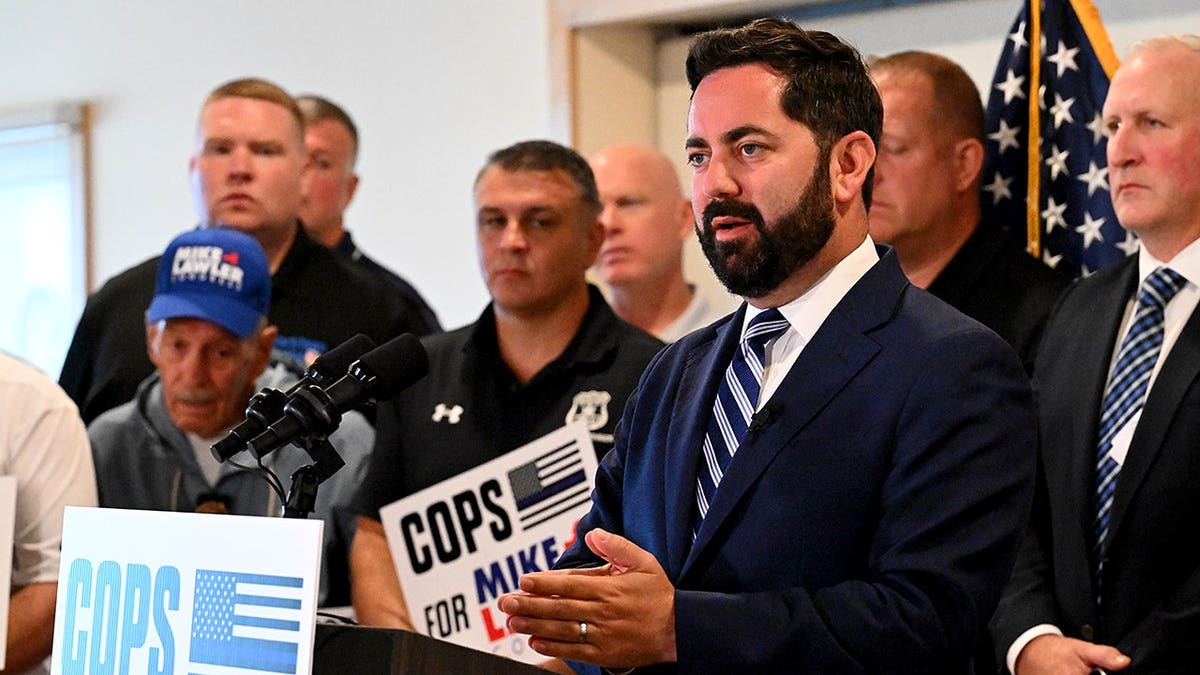
Rep. Lawler, representing a critical suburban district outside New York City, defended his willingness to engage directly with the executive branch regardless of party lines. Lawler has built a reputation as an independent-minded legislator in a competitive area, but he emphasized that constructive engagement yields tangible results for constituents.

"He’s the President of the United States, and whether it was Joe Biden or Donald Trump, I’ve always shown up," Lawler said. "You have to be able to engage with the president, and, you know, frankly, this is where I think the Democrats have made a very big mistake. They could get a lot more in terms of what it is that they want if they would actually engage constructively."
To underscore the administration’s focus on public safety and border security—core tenets of the Republican platform—Lawler highlighted poignant human elements during his address, introducing local residents whose lives were upended by cross-border crime. This narrative of security versus perceived Democratic permissiveness formed a central pillar of the convention’s messaging.
Expanding the Map: Border Security and Economic Populism
The convention also drew challengers running in traditionally blue or competitive leaning districts who view the administration’s record as their strongest asset. Eric Flores, a congressional candidate running in a South Texas district currently represented by Democratic incumbent Representative Vicente Gonzalez, rejected the notion that candidates should distance themselves from the White House.
"When people say that folks are running away from President Trump, I’ll tell you I’m certainly not doing that. And let me tell you why: because he has made promises to South Texas, and he has kept them, especially when we look at border security," Flores stated. Drawing on his background as a federal prosecutor and his experience during Operation Guardian Support, Flores described the previous administration’s border policies as a humanitarian and security crisis, contrasting it with what he termed the immediate enforcement actions taken by the current administration.
Republicans believe that highlighting regional concerns—such as inflation, energy costs, and border integrity—will resonate with independent voters who might otherwise be swayed by national anti-Trump sentiment. House leadership has consistently downplayed internal party anxieties regarding midterm headwinds, expressing absolute confidence in the durability of their legislative platform.
Democratic Counter-Offensive and Sharp Rebukes
In response to the Dallas convention, the Democratic Party immediately moved to weaponize the event, framing the high-profile gathering as definitive proof that Republican candidates are beholden to an agenda that harms working-class families. National and state-level Democratic organizations launched coordinated messaging campaigns aimed at tying local candidates directly to the administration’s economic and social policies.
Pennsylvania Democratic Party Chair Eugene DePasquale issued a scathing statement targeting the Keystone State’s vulnerable Republican delegation.
"Ryan Mackenzie, Rob Bresnahan and Scott Perry made their priorities clear tonight: they care more about Donald Trump’s cost-raising agenda than what’s best for the people of Pennsylvania," DePasquale said. "After jetting all the way to Texas to champion an agenda of higher gas prices, cost-raising tariffs, and healthcare cuts, Mackenzie, Bresnahan, Perry and the entire PA GOP have proven that they’ll put Trump ahead of our Commonwealth every single time—and Pennsylvanians are ready to send them packing this November."
Democrats are targeting a dozen additional Republican-held districts across the country as part of a comprehensive strategy to retake the House majority. Party strategists plan to focus heavily on healthcare access, reproductive rights, and the projected economic impact of tariff policies, betting that suburban and moderate voters will reject the hardline conservative alignment on display at the Dallas convention.
Broader Implications and the Road to November
As the 100-day sprint to the midterms commences, the political landscape remains intensely volatile. Both parties face unique pressures as they campaign across key geographic battlegrounds.
For the GOP, the Dallas convention represents a calculated gamble that full consolidation behind President Trump will energize the conservative base sufficiently to counteract historical midterm attrition. By leaning into national issues like immigration and tax reform, Republicans aim to transform local congressional races into a broader ideological referendum on governance.
Conversely, Democrats are counting on suburban fatigue, presidential approval metrics, and localized economic anxieties to motivate their own coalition and peel away moderate voters in swing districts. The success or failure of the Republican strategy to embrace Trump openly—rather than running away from him—will likely serve as a defining case study in modern American electoral politics, determining not only the balance of power in Congress for the remainder of the presidential term but also shaping the future identity of the Republican Party.