Alaska Dem Senate candidate suffers minor injuries in car crash, forcing her to skip campaign events

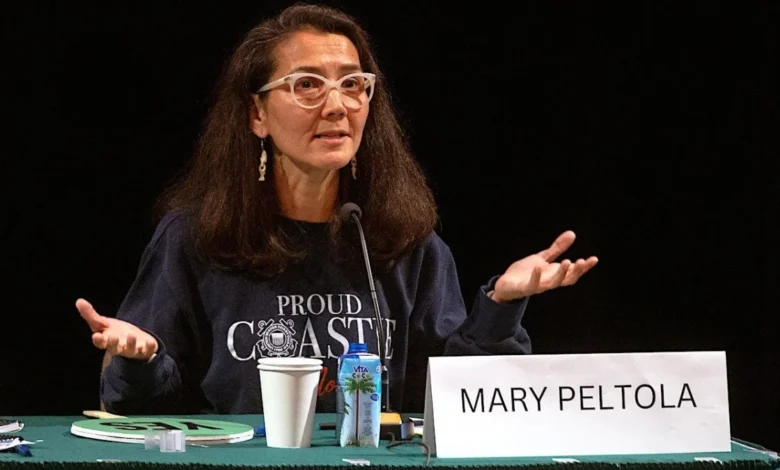
Democratic U.S. Senate candidate Mary Peltola and several members of her family were involved in a two-vehicle collision in Anchorage on Saturday evening, an unexpected incident that has forced a temporary reconfiguration of her campaign schedule during the critical final stretch of the midterm election cycle.
The accident occurred in the vicinity of the Alaska Federation of Natives (AFN) convention, an annual gathering that serves as a focal point for political engagement in the state and where Peltola had maintained an active schedule of appearances and constituent meetings throughout the weekend. According to statements released by her campaign team, the collision transpired when another vehicle collided with the automobile transporting Peltola and her relatives as they traveled to attend the Alaska Federation of Natives Annual Banquet.
While the physical impact of the crash was significant enough to necessitate immediate medical evaluation, campaign manager Cheryl Bruce confirmed that Peltola and her family sustained only minor injuries and remain in good spirits. However, acting upon the explicit advice of attending medical professionals, Peltola’s campaign elected to implement a brief precautionary recovery period, sidelining her from scheduled campaign events in Fairbanks and Bethel to allow for adequate rest and recuperation.
The temporary interruption comes at a uniquely sensitive juncture in Alaska’s intensely contested Senate race. Peltola, an Alaska Native and former U.S. representative, is locked in a fierce battle with incumbent Republican Senator Dan Sullivan. The race has drawn national attention, significant financial investments, and intense partisan maneuvering, making it one of the most closely watched and fiercely competitive Senate contests on the entire 2026 midterm map.
Campaign Reconfiguration and Immediate Timeline
The chronology of the weekend events highlights the compressed and high-pressure environment of the final days before the election.
On Saturday, prior to the evening collision, Peltola participated in events surrounding the AFN convention in Anchorage, engaging with Alaska Native leaders and voters—a demographic that both major party campaigns have aggressively courted. The crash occurred later that evening, abruptly halting her itinerary.
Following medical assessments, the campaign structured a rapid but cautious return-to-work timeline. Peltola missed scheduled campaign stops on Sunday and utilized Monday as a designated rest day. According to campaign strategists, she is scheduled to return to the active campaign trail on Tuesday, diving straight back into the final week of voter outreach, public appearances, and direct appeals to the electorate.
Campaign manager Cheryl Bruce expressed regret over the unavoidable delay to the launch of Peltola’s "Alaska Always Tour," emphasizing the candidate’s eagerness to resume direct communication with voters. "Mary is disappointed that the accident is delaying the start of her Alaska Always Tour, and she is eager to get back on the campaign trail to speak directly with Alaskans about her plan to take on the rigged system and lower costs for working families," Bruce said in a statement.
The Broader Political Landscape: Peltola vs. Sullivan
The collision and subsequent pause in campaigning occur against the backdrop of an exceptionally intense and expensive battle for Alaska’s U.S. Senate seat. Peltola’s historic candidacy—aiming to become the first Democrat in nearly two decades to represent Alaska in the upper chamber of Congress—has reshaped conventional partisan calculations in a state traditionally viewed as a Republican stronghold.
The race has been characterized by sharp personal attacks, intense debates over institutional corruption and character, and a relentless mobilization effort by both campaigns. The strategic importance of the contest has manifested in massive financial expenditures from both parties and outside political action committees.
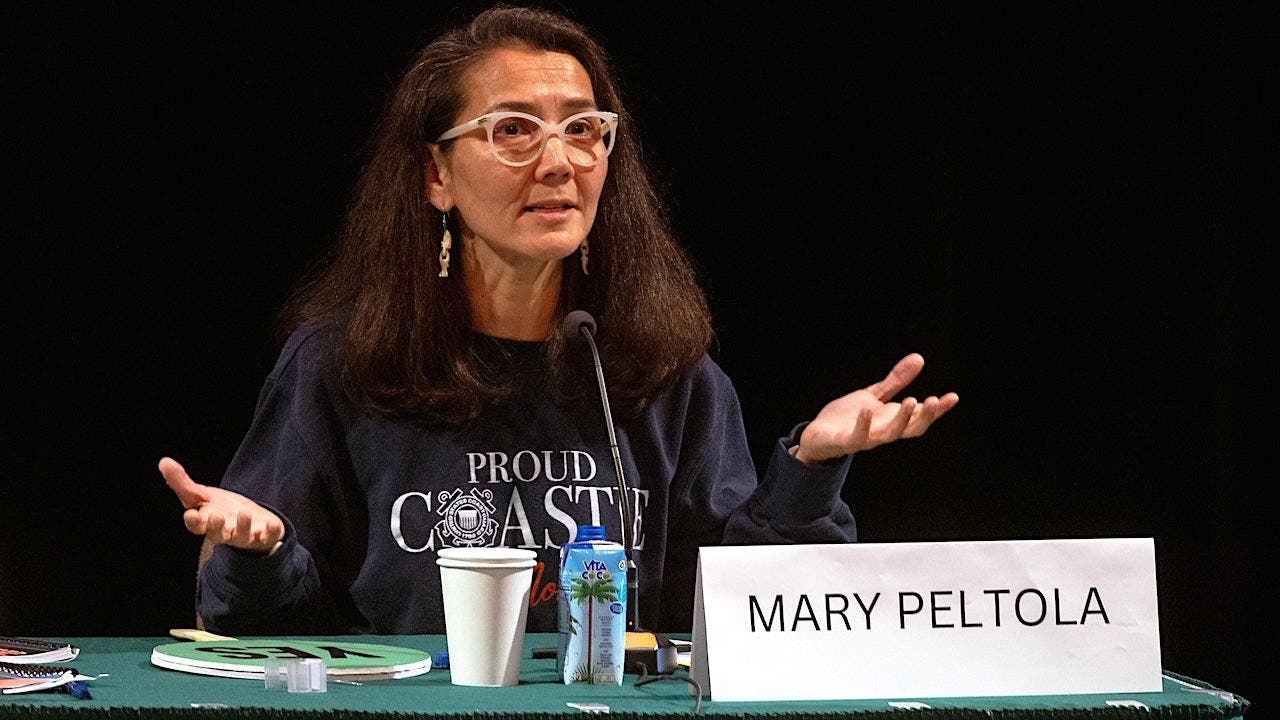
Financial disclosures heading into the final stretch illustrate the sheer scale of the financial arms race in Alaska. Peltola has maintained a fundraising advantage, having outraised Sullivan through October by pulling in approximately $33 million compared to Sullivan’s nearly $14 million. However, Sullivan’s campaign reported holding a larger cash-on-hand reserve, with $5.1 million remaining in his war chest compared to Peltola’s $3.2 million. Overall spending figures reflect a massive national investment, with Republicans outspending Democrats overall $42 million to $38 million in the race.
Alaska’s Unique Ranked-Choice Voting System and Legal Controversies
Complicating the standard dynamics of the partisan face-off is Alaska’s distinctive electoral framework. Alaska employs a ranked-choice voting system, a mechanism that continues to generate fierce debate and unique strategic calculations for both parties.
Under the state’s system, voters do not simply cast a single vote for their preferred candidate; instead, they rank their choices on the ballot. For the upcoming midterm vote, the Senate ballot features four distinct choices: incumbent Republican Dan Sullivan, Democrat Mary Peltola, and two other contenders, including a candidate named Daniel J. Sullivan Jr.
Republicans have vocally criticized the inclusion of the second candidate bearing the same surname, labeling him a "decoy" designed to siphon conservative votes and sow confusion among the electorate through intentional ballot similarity. The controversy has sparked ongoing legal battles and sharp partisan rhetoric.
The dispute drew national attention when former President Donald Trump weighed in heavily on the matter. Trump, who traveled to Alaska earlier in the month to hold a high-profile rally in support of Senator Dan Sullivan, escalated his criticism of the state’s voting procedures. Writing on social media, Trump asserted that he had directed his administration to explore legal avenues to block the certification of the election results if the incumbent Republican senator is defeated, citing voter confusion tied to the ballot configuration.
"I revealed what everyone knows, that the Ranked Choice Voting Ballot is a TOTAL DEMOCRAT SCAM meant to confuse the Voter, so that Senator Dan Sullivan will lose Votes to a man who has never participated in Politics before, named Daniel J. Sullivan, Jr.," Trump wrote on Truth Social. "He is only there because the Democrats want to steal the Election."
Trump explicitly urged Alaskans to vote in favor of Ballot Measure 2, a citizen-led initiative aimed at repealing the state’s ranked-choice voting system. "The Democrats are trying to steal this important Republican Seat and, if that happens, everything we’ve done for Alaska will come to an immediate halt," Trump added. "VOTE ‘YES’ AGAINST RANKED CHOICE VOTING, on Ballot Measure 2. SAVE ALASKA!"
Implications for the Final Week of the Campaign
As Peltola prepares to return to the campaign trail on Tuesday, political analysts are assessing what impact, if any, the weekend car accident and subsequent schedule adjustments will have on her electoral momentum.
In a race as tightly contested as Alaska’s Senate election, every day of direct voter contact is considered vital. While the physical toll of the crash appears manageable—with Peltola and her family sustaining only minor injuries—the logistical disruption forced the cancellation of high-profile events in key regional hubs like Fairbanks and Bethel.
Both campaigns now face a compressed, high-stakes sprint to November. For Peltola, the immediate priority is demonstrating a full recovery, re-establishing visibility across the state, and refocusing the political narrative back onto economic issues, healthcare costs, and her platform for working families. For Senator Sullivan and his Republican allies, the closing days will center on driving base turnout, neutralizing the complexities of the ranked-choice voting system, and defending the incumbent’s legislative record against a well-funded Democratic challenger.
With millions of dollars in campaign expenditures, competing legal challenges regarding ballot integrity, and a distinctive voting infrastructure, Alaska’s Senate race remains one of the most volatile and unpredictable electoral contests in the nation as voters prepare to head to the polls.
Related posts: