Midterm Election Stakes Rise as Political Divisions and Legal Battles Intensify Across the United States

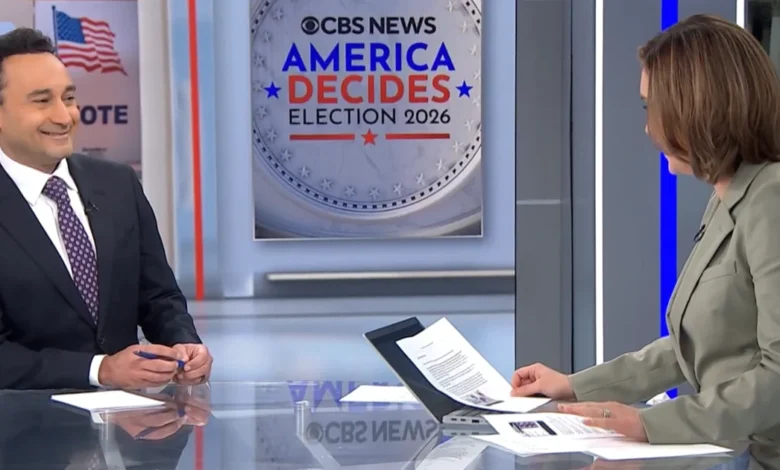
With just nine days remaining until the final ballots are cast in the 2026 midterm elections, the American political landscape is defined by a high-stakes struggle for control of Congress. Recent polling from the CBS News Battleground Tracker indicates a tightening race, with Democrats currently projected to hold a narrow majority of 229 seats in the House of Representatives, while the Senate remains a toss-up. As both parties finalize their closing arguments, the influence of former President Donald Trump—despite his absence from the ballot—remains a central pillar of the national discourse, serving as both a rallying cry for his base and a primary motivator for opposition voters.
Legal Challenges and Election Integrity
The closing days of the campaign have been marked by a flurry of activity from the U.S. Department of Justice (DOJ), leading to heightened tensions regarding the role of federal agencies in state-run elections. Attorney General Todd Blanche has defended the department’s recent interventions, including a preemptive lawsuit in Alaska aimed at preventing the certification of results should voter confusion occur.
The Alaska situation centers on a unique ballot scenario involving two candidates named Dan Sullivan. While the Republican incumbent, Dan S. Sullivan, is seeking reelection, a second candidate, Dan J. Sullivan, has entered the race. The DOJ’s legal action seeks to ensure that if electoral outcomes are impacted by voter confusion between the two, federal guardrails are in place to address the validity of the results. Attorney General Blanche emphasized that the department’s role is to ensure the integrity of federal law, stating that the DOJ has a responsibility to intervene when facts suggest that voter intent may be compromised.
However, critics, including Alaska’s senior Republican Senator Lisa Murkowski, have pushed back against the intervention. Senator Murkowski argued that Alaskans do not require federal assistance in identifying their preferred candidate and that the state had already implemented measures to distinguish the two individuals on the ballot. This disagreement highlights a broader, ongoing debate regarding the extent of federal oversight in state election administration.
The Role of Tech Oligarchs in National Security
Beyond traditional election politics, the 2026 cycle has been underscored by concerns regarding the influence of private technology leaders over national security policy. The recent disclosure that SpaceX CEO Elon Musk exercised unilateral authority to throttle satellite internet access for Ukrainian forces during military operations has prompted significant alarm in Washington.
Congressman Jason Crow, a member of the House Intelligence Committee, has been a vocal critic of the lack of accountability regarding critical infrastructure. "It cannot and should not be the case that a tech oligarch, a private citizen, who has that much control over our national security, who is unaccountable, who is unelected, with zero transparency, is making life-and-death decisions on the battlefield," Crow stated during a recent broadcast.
Senator Thom Tillis (R-NC) has joined in the bipartisan calls for clarity, emphasizing that the Department of Defense must establish clear guardrails for private-sector involvement in geopolitical conflicts. The incident has raised fundamental questions about whether the U.S. government has outsourced essential defense capabilities to entities that do not operate under the same transparency requirements as public institutions.
Economic and Cultural Drivers of Voter Sentiment
As election day approaches, data indicates that voter motivation is heavily influenced by domestic economic conditions and competing visions for the country’s cultural future. CBS News polling data reveals that while inflation remains a top-tier concern, the electorate is increasingly polarized by the perception of systemic corruption. Roughly 83% of voters identify government corruption as a significant factor in their decision-making process.
In the Texas gubernatorial race, Democratic challenger Gina Hinojosa has framed her campaign around "securing the American dream," focusing on public school funding and healthcare accessibility. Hinojosa’s platform addresses the state’s high uninsured rate and the impact of recent tax breaks for large-scale data centers, which she argues have prioritized corporate interests over the needs of rural communities.
"Nobody wants politics as usual," Hinojosa remarked, noting that her agenda seeks to bypass traditional party labels to address infrastructure and affordability. Her campaign has also highlighted concerns regarding the influence of major donors, such as Elon Musk, on state policy, calling for greater transparency in the relationship between government officials and private investors.
Strategic Outlook and Party Platforms
The Republican strategy for the final stretch has leaned heavily into criticizing the Biden administration’s handling of inflation and foreign policy, while also highlighting the "MAGA" platform as a solution to what they characterize as institutional decline. Conversely, Democrats are attempting to maintain their projected lead in the House by focusing on the preservation of the Affordable Care Act, education funding, and the defense of democratic norms against what they describe as "extremism."
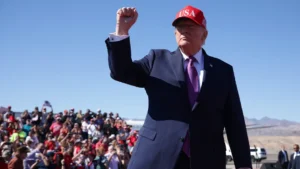
The influence of President Trump, as identified by CBS News surveys, acts as a double-edged sword. While his endorsement is crucial for energizing the conservative base, it also serves as a potent mobilization tool for the Democratic party. Nearly two-thirds of voters acknowledge that Trump’s presence in the political discourse is a major factor in their voting decision, with a significant portion of the electorate indicating that their vote is cast as much in opposition to him as it is in favor of a specific legislative platform.
Implications for Governance
The potential for a narrow House majority and a competitive Senate creates a high-pressure environment for the next Congress. Should Democrats succeed in securing the House, they have signaled an intent to utilize their oversight powers to investigate allegations of corruption within the executive branch. This has led to concerns from some quarters about the potential for retaliatory political investigations, a cycle that many legislators, including Senator Tillis, warn could further erode public trust in government institutions.
Meanwhile, the executive branch remains focused on managing national security threats, particularly from actors like Iran, which intelligence officials report have increased efforts to target U.S. personnel. The intersection of domestic political battles and global instability suggests that the post-election period will be defined by a need for stability and a resolution of the foundational questions regarding the role of private actors in public governance.
As the nation prepares to head to the polls on November 3rd, the primary challenge for the winning coalition will be to address the deep-seated grievances regarding economic affordability and institutional integrity. With the margins for control currently razor-thin, every campaign stop and every legal filing in these final nine days carries the weight of defining the trajectory of the federal government for the next two years. The results will not only determine the legislative agenda but will also serve as a referendum on the current state of American democracy and its capacity to manage the complexities of the 21st century.
Related posts: