Aleksandar Vucic concedes defeat in historic Serbian parliamentary election as student-led movement reshapes Balkan politics

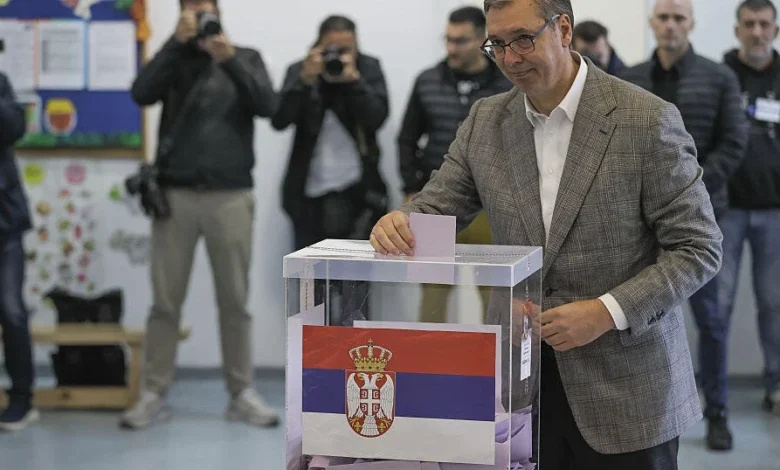
The long-serving strongman leader of Serbia, Aleksandar Vucic, conceded defeat on Sunday in an election that served as a terminal referendum on his 14-year grip on power. In a seismic political shift for the Balkan nation, Vucic’s right-wing Serbian Progressive Party (SNS) was overtaken by the "Students’ List," a grassroots, non-partisan coalition that capitalized on two years of simmering public frustration. With the final counts signaling a transition of power, the outcome marks the end of an era for a leader who had long positioned himself as the essential architect of Serbian stability.
Projections released by the SNS headquarters shortly after polls closed indicated that the Students’ List is on track to secure between 135 and 140 seats in the 250-member National Assembly. Conversely, the SNS is expected to command approximately 105 seats, representing a collapse of the legislative majority Vucic utilized to consolidate control over the state apparatus.
A Timeline of the Fall: From Hegemony to Uprising
The trajectory of this electoral defeat can be traced back to a series of crises that eroded the foundation of Vucic’s popularity.
- 2012–2023: Vucic and the SNS solidify control through a combination of electoral dominance, media consolidation, and the systematic marginalization of opposition figures.
- November 2024: A tragic accident at the Novi Sad train station, where a concrete canopy collapsed, killing 16 people, serves as a catalyst. Public anger mounts as investigations reveal widespread corruption and corner-cutting during government-led renovations.
- 2025: The "Students’ List" movement gains national momentum, organizing protests across Serbia. Despite the movement lacking a traditional party structure or career politicians, it successfully builds a nationwide coalition of farmers, athletes, and academics.
- September 2026: Vucic resigns from the presidency in a tactical gamble to lead the parliamentary campaign, hoping to secure a prime ministerial mandate to continue his rule.
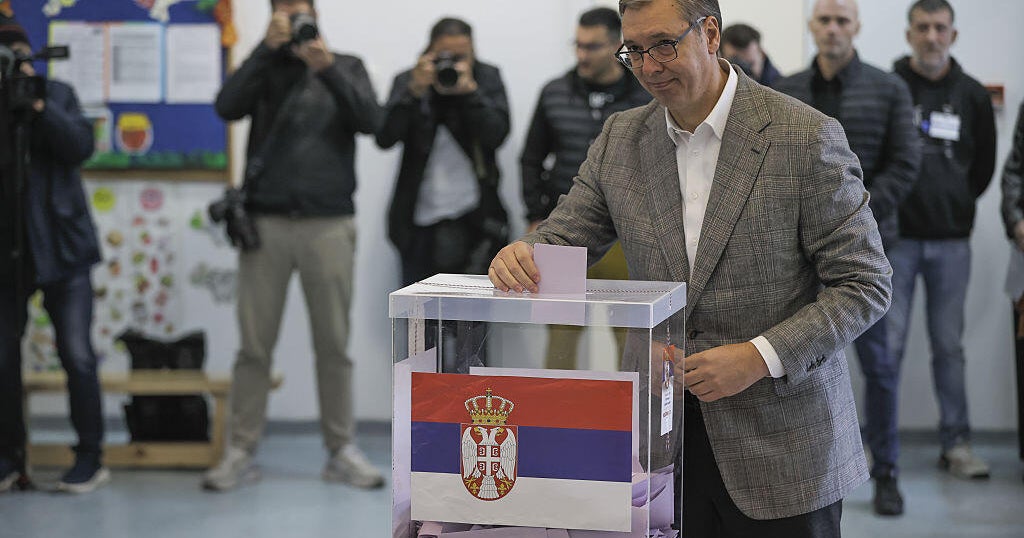
- October 25, 2026: Election Day sees a record turnout of approximately 70%, with millions of voters casting ballots in what is considered the most critical democratic exercise in Serbia since the fall of Slobodan Milosevic in 2000.
The Mechanics of the Student Movement
The success of the Students’ List is a case study in modern political mobilization. Unlike traditional opposition parties that were often dismissed by the electorate as remnants of previous failed administrations, the Students’ List presented a "clean slate." By keeping professional politicians off their ticket, they bypassed the skepticism that has plagued Serbian opposition for over a decade.
Their campaign was defined by a door-to-door, village-to-village approach. By bypassing state-controlled television and print media, which consistently vilified them, they utilized decentralized networks and local engagement to penetrate Vucic’s traditional rural strongholds. Their platform focused on a simple, unifying message: institutional integrity, a transparent economy, and a restoration of democratic norms.
Vucic’s Response and the Rhetoric of Division
In his concession speech, delivered late Sunday night, Vucic remained defiant. While acknowledging the mathematical reality of the electoral defeat, he framed the loss through a lens of external subversion. He pointed to an alleged "American deep state" and unnamed European actors, claiming they coordinated with local independent media to undermine his government.
"The Students’ List has won," Vucic admitted to a room of somber supporters, though he simultaneously insisted that his administration had been the victim of an elaborate international campaign. His narrative sought to delegitimize the win by attributing it to foreign interference, a tactic that has been a staple of his rhetoric during his tenure as a Russian-aligned leader in the heart of Europe.
Economic and Democratic Implications
The economic backdrop of the election was defined by high inflation and a perception of rampant graft. Critics argued that under Vucic, major infrastructure projects—often contracted to foreign firms without competitive bidding—became vehicles for kickbacks. The Novi Sad disaster became the symbolic face of this corruption, proving that the government’s focus on "stabilitocracy"—the prioritizing of regional stability over democratic standards—had come at the cost of public safety.
International monitors, including observers from the European Union, had expressed significant concerns leading up to the vote. Reports of ballot tampering, the intimidation of polling station workers, and the systematic use of state resources to boost SNS turnout were frequent. The fact that the opposition managed to overcome these structural hurdles is viewed by analysts as a testament to the depth of the public’s desire for change.
Regional and Geopolitical Consequences
The defeat of Vucic is likely to reverberate throughout the Western Balkans and the European Union. Serbia is a key candidate for EU membership, yet its geopolitical balancing act—maintaining close ties with Vladimir Putin’s Russia while pursuing European integration—has been a source of tension in Brussels.
The victory of the student movement draws sharp parallels to recent political developments in Hungary, where a similarly long-standing, autocratic-leaning leader faced a challenge from a youth-driven coalition. The shift in Belgrade suggests a potential pivot away from the Kremlin-aligned policies that have characterized the last decade of Serbian foreign policy. However, the incoming coalition faces the daunting task of navigating a political system where the judiciary, law enforcement, and media remain heavily influenced by the remnants of the SNS administration.
Challenges for the Transition
As celebrations erupted in Belgrade, the atmosphere remained tense. Police in anti-riot gear maintained a heavy presence around the election commission headquarters, reflecting the fragility of the transition. The "Students’ List" must now pivot from a protest movement to a governing coalition.
Their immediate challenges are significant:
- Governing Coalitions: The list must now negotiate a stable government without the benefit of traditional party hierarchies.
- Institutional Resistance: Much of the civil service and state-owned enterprises are populated by SNS loyalists. Dismantling the patronage system without triggering a state collapse will require immense political dexterity.
- External Relations: Balancing the demands of an electorate that wants European standards of living with the geopolitical realities of Serbia’s reliance on Russian energy and Chinese investment will be the defining test of the new administration.
Conclusion
The October 25 election marks a watershed moment. For 14 years, Vucic was the immovable object in Serbian politics, relying on a carefully curated image of a nationalist savior. The rise of a leaderless, youth-driven movement proves that even the most entrenched regimes are vulnerable when they lose the trust of the next generation. As the dust settles in Belgrade, the message to the political establishment is clear: the era of the strongman is facing a reckoning, and the future of Serbian democracy now rests in the hands of those who refused to accept the status quo.
The coming months will determine whether this electoral victory can be translated into the structural reforms that the protesters demanded. For now, the streets of Belgrade belong to the people, marking the end of a long, turbulent chapter and the beginning of an uncertain, yet hopeful, transition.