The Silent Arctic: How Declining Research Funding is Blinding Science to a Rapidly Changing North

For three decades, the windswept expanse of Mitivik Island in Canada’s Hudson Bay served as a sentinel for the health of the Arctic ecosystem. Once home to one of the world’s most significant subpopulations of nesting eider ducks, the island became the site of a pioneering research station established in the 1990s by the Canadian government. It was a beacon of international scientific cooperation, where Inuit partners from Southampton Island worked alongside global researchers to decode the mysteries of avian migration, disease resistance, and the early, warning signs of a warming climate. Today, that station stands empty, shuttered by the Canadian government in 2024 as part of a broader, troubling trend of retreating environmental oversight across the circumpolar north.
The closure of the Mitivik site is not an isolated incident but a microcosm of a systemic withdrawal from Arctic research. As the region experiences warming at rates nearly four times faster than the global average, the infrastructure designed to monitor this transformation is collapsing under the weight of geopolitical instability, austerity-driven budget cuts, and the sheer logistical difficulty of operating in a changing climate.
A Chronology of Scientific Retreat
The decline of the Mitivik station reflects a broader erosion of Arctic observational capacity. In the 1990s, the Canadian government recognized the urgent need for data as eider populations faced a mysterious global collapse. The resulting research station provided foundational insights that led to targeted hunting regulations, successfully reversing the population decline. By the mid-2000s, however, the station faced new threats. In 2005, researchers identified an outbreak of avian cholera—a disease exacerbated by shifting temperature patterns—that decimated nearly half the colony over the following eight seasons.
By 2024, the situation had deteriorated significantly. The nesting eider population at Mitivik had crashed from a peak of 8,000 pairs to mere hundreds. Despite the clear evidence of ecological distress, the Environment and Climate Change Canada (ECCC) department quietly shuttered the facility. This closure is consistent with a series of fiscal retrenchments: in 2025, the Canadian federal government committed to a 10 percent reduction in its environmental and climate change workforce.
The retreat is not limited to Canada. In the United States, the Arctic Research Consortium of the United States (ARCUS) ceased operations following the elimination of National Science Foundation operating grants. Simultaneously, geopolitical friction following the 2022 invasion of Ukraine led to the suspension of hundreds of climate-based collaborations with Russian scientists, further fragmenting the global understanding of the Arctic. Data indicates that between 2021 and 2024, the number of US-led research publications focusing on climate change in Greenland plummeted by 32 percent, creating a significant "knowledge gap" in one of the most critical zones for sea-level rise research.
The High Cost of Monitoring a Warming Frontier
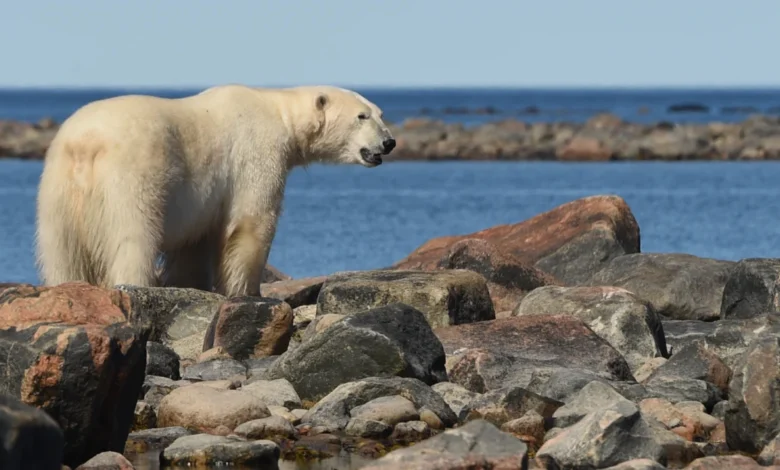
The primary drivers for this scientific retreat are multifaceted, but fiscal pressures remain the most immediate catalyst. Conducting research in the high Arctic is exceptionally expensive; the logistics of fuel, transport, and safety equipment for remote field teams have skyrocketed. Moreover, the environmental conditions themselves have become more dangerous. Receding sea ice has forced polar bears onto land in unprecedented numbers, creating a constant threat to researchers.
Historically, funding for these endeavors was often tied to industrial interests. In the late 20th century, wildlife monitoring was frequently justified by its necessity for oil and gas development—specifically, determining how infrastructure like pipelines and drilling rigs would impact migratory caribou herds. However, as global energy markets shifted and unconventional fracking methods reduced the reliance on expensive Arctic oil exploration, the political justification for these research programs evaporated.
Today, government priorities have pivoted toward national security and the quest for rare-earth minerals. As the Arctic becomes a focal point for international competition—highlighted by Canada’s $40 billion investment in infrastructure meant to assert northern sovereignty—the "soft science" of biological monitoring has been pushed to the periphery.
Ecological Implications: The Knowns and Unknowns
The implications of this retreat are profound. Researchers like Grant Gilchrist, who founded the Mitivik station, argue that we are effectively blinding ourselves to the reality of the Arctic collapse. The biological data collected at these sites is not merely academic; it is vital for understanding the resilience of species.
For instance, studies at Mitivik revealed that eider ducks had developed a biological mechanism to mitigate the impact of environmental toxins. Scientists discovered that certain gastrointestinal parasites in the ducks, which thrived in warming waters, actually helped the birds clear their systems of mercury and lead leached from melting permafrost. Without continuous, long-term monitoring, such complex ecological interactions remain hidden, leaving conservationists unable to predict how species will adapt—or fail to adapt—to the rapid degradation of their habitats.
Current estimates suggest that at least 96 Arctic and sub-Arctic mammal and bird species are actively altering their migration patterns in response to earlier spring snowmelts and landscape changes. While these animals are traveling farther and arriving earlier, many of their traditional stopover sites—such as California’s Salton Sea—are themselves in decline due to drought and human development. Without field researchers to track these birds across their entire migratory range, the scientific community is left to guess whether these shifts are survival strategies or precursors to mass extinction.
Official Responses and the Future of Arctic Oversight
When questioned regarding the cessation of research at Mitivik and the broader funding cuts, Environment and Climate Change Canada maintained that it remains "committed to the long-term conservation of biological biodiversity." The department highlighted ongoing efforts to collaborate with territorial governments and Indigenous organizations, emphasizing the integration of new tracking technologies as a replacement for traditional field stations.
However, many in the scientific community view this reliance on remote sensing and technology as a poor substitute for boots-on-the-ground observation. Andrew Derocher, a veteran researcher with four decades of experience studying polar bears across Norway, Canada, and Alaska, notes that we are currently at an "all-time low" for polar bear monitoring. "We’ve pretty much stopped any research beyond the long-term monitoring in Western Hudson Bay," Derocher states. "There is almost no other research on polar bears in Canada now."
The loss of this data is particularly concerning given the role of Indigenous knowledge. Inuit hunters have long been the first to notice systemic changes—such as the arrival of orcas in new regions, the hybridization of grizzly and polar bears, and the disappearance of ivory gulls. Yet, these observations are rarely integrated into the formal, peer-reviewed records that drive government policy. As the gaps in the scientific record grow, the ability of policymakers to make informed, evidence-based decisions regarding land use and conservation diminishes.
A Call for Persistent Vigilance
The consensus among experts is that the current state of Arctic research is unsustainable. Mark Mallory, an ornithologist and co-editor-in-chief of the journal Arctic Science, frames the crisis not just as a lack of money, but as a lack of political will. "No credible scientist would deny that not enough is being invested in long-term monitoring," Mallory says. "But the bigger problem is not enough is being done to act on what we already know."
For researchers who have spent their lives documenting the Arctic, the closure of stations like Mitivik represents a failure to steward one of the most fragile environments on Earth. While some, like Gilchrist, are attempting to relocate their efforts to more accessible or safer locations—such as Baffin Island—the broader loss of longitudinal data is likely irreparable.
As the Arctic continues to undergo a fundamental, climate-driven transformation, the international community is left with a paradox: we have never had better satellite imagery or climate modeling tools, yet our understanding of the lived, biological reality of the Arctic is becoming increasingly opaque. The "ebbs and flows" of funding that historically defined Arctic research have turned into a significant retreat, leaving the region’s wildlife—and the people who depend on them—to navigate an uncertain future with significantly less guidance. As the ice continues to thin, the silence in the North is becoming deafening, marking a period of historical scientific negligence that may be felt for generations to come.