High-Speed Rail Realities: Brightline’s Chapter 11 Restructuring Sparks National Debate Over Private Sector Transit Models

For the passengers who rely on Brightline to commute between West Palm Beach and Fort Lauderdale, or to zip from Orlando to Miami at speeds reaching 125 miles per hour, the announcement of a Chapter 11 bankruptcy filing came with a reassuring corporate promise: it is entirely business as usual. The trains remain on their schedules, the luxury carriages continue to feature modern amenities, and the company’s expansion plans across the American transit landscape press onward. Yet beneath the surface of this operational continuity lies a much more complex financial narrative. Brightline’s recent restructuring marks a pivotal moment for the high-profile, privately operated rail venture, shining a harsh spotlight on the profound economic challenges of building and maintaining high-speed rail in the United States without deep, sustained public subsidies.
The restructuring agreement, hammered out after months of intense discussions with bondholders, is designed to give the company the financial breathing room it desperately needs. Under the terms of the new arrangement, Brightline aims to secure an additional $490 million in financing. This influx of capital is intended to bridge the gap as the company works to scale up its ridership sufficiently to service a staggering $4.4 billion in accumulated debt. That debt burden is the direct result of the immense capital expenditure required to build, expand, and operate a private passenger rail system from the ground up in a nation historically dominated by highways and aviation.
Crucially, the legal restructuring shields key operating entities from immediate insolvency. Brightline Trains Florida, the division that directly oversees and runs the day-to-day operations of the Sunshine State line, is not included in the bankruptcy filing. Similarly, Brightline West—the ambitious venture currently developing a high-speed corridor connecting Las Vegas to the outer reaches of the Los Angeles metropolitan area—remains insulated from the proceedings. This structural firewall has allowed the company to project stability to the public, ensuring that consumer confidence remains intact while financial engineers rework the balance sheets behind closed doors.
A Chronology of Ambition: From South Beach to Central Florida
The origins of Brightline trace back to 2018, when the company launched its initial passenger service between Miami and West Palm Beach under the original name All Aboard Florida. It was heralded as a groundbreaking milestone: the first privately funded, operated, and maintained higher-speed intercity passenger rail system to be built in the United States in over a century. Proponents hailed it as a triumph of entrepreneurial ingenuity, demonstrating that the private sector could step into a market traditionally abandoned to public infrastructure deficits and deliver a premium travel alternative.
The network achieved a major milestone in 2023 with the opening of its long-awaited extension to Orlando International Airport, connecting South and Central Florida via a high-speed corridor alongside the Beachline Expressway. The extension transformed the railway from a regional commuter utility into a viable alternative to driving across the state or taking short-haul flights. Passenger numbers have steadily climbed; between January and August, Brightline reported a 14 percent increase in ridership and a 17 percent jump in revenue compared to the same period in the previous year. Furthermore, the company continues to advance planning and engineering for future extensions, including prospective service to Tampa and a new intermediate station in Cocoa, Florida.
Despite these operational victories, the underlying financial math has proven punishingly difficult. Brightline currently serves approximately 3.5 million passengers annually, generating roughly $240 million in revenue. According to financial analysts such as Tim Hynes, head of Global Credit Research at Debtwire, these figures fall short of original corporate forecasts, sitting at less than half the projected ridership and roughly one-third of the income the company anticipated generating by 2024. These shortfalls exposed the vulnerability of a capital-intensive enterprise heavily reliant on passenger ticket sales and real estate development synergies to cover escalating debt-service obligations.
Public Praise, Private Pressures, and Safety Scrutiny
For everyday users, the appeal of Brightline is undeniable. Commuters like Ivan Reich, a bankruptcy attorney who splits his time between West Palm Beach and Fort Lauderdale, view the service as a welcome departure from grueling highway traffic. For a 40-minute commute or a trip to a Miami Heat basketball game, Reich praises the experience, likening the boarding process and cabin comfort to a commercial airline flight. While some regular commuters find daily passes cost-prohibitive—with round-trip tickets between Miami and Orlando starting around $120 and shorter hops priced at approximately $35—the consensus among frequent travelers is that the quality of service is exceptionally high.
However, the rapid expansion of high-speed passenger trains through densely populated urban and suburban corridors has not come without controversy. Brightline has faced persistent scrutiny over its safety record at grade crossings. As of January, public tracking and local news investigations indicated that 182 people had been killed by Brightline trains since operations began in 2018, with the vast majority of incidents stemming from motorist or pedestrian incursions onto the tracks rather than mechanical failures or derailments. In response to these tragedies, the company has invested hundreds of millions of dollars into advanced safety infrastructure, including fencing, electronic intrusion-detection systems, and public awareness campaigns, insisting that none of the incidents were caused by operational negligence.

The Broader Economic Landscape and the Question of Infrastructure
Brightline’s financial restructuring arrives at a time of surging national interest in rail travel. Across the United States, traditional networks like Amtrak are shattering historical ridership records, and regional transit systems are seeing renewed demand as travelers seek alternatives to highway congestion and airline delays. Yet, Brightline’s Chapter 11 filing forces policymakers, economists, and transit advocates to confront a fundamental structural question: Can the private sector truly shoulder the financial burden of building major national rail infrastructure, or is government support an absolute prerequisite?
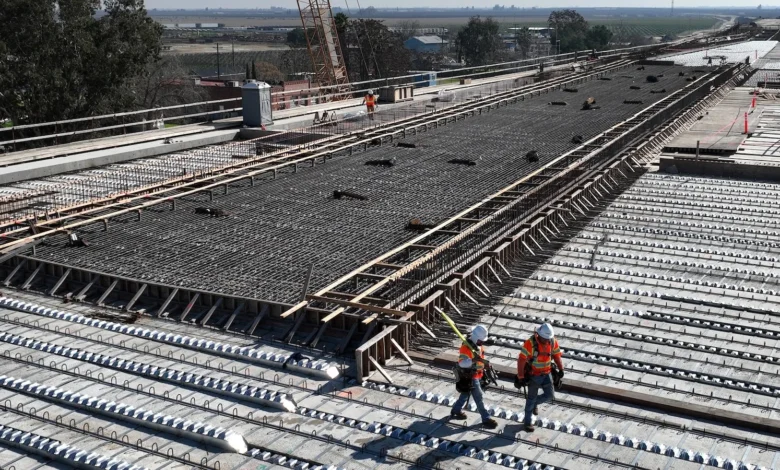
This tension is especially visible in the development of Brightline West, the proposed 218-mile high-speed rail system intended to link Las Vegas with Rancho Cucamonga, California. The project carries an estimated price tag of $21 billion. While it has successfully secured a $3 billion federal grant from public infrastructure funds, it is concurrently pursuing a $6 billion federal loan to close its financing gap. The reliance on substantial public backing for a supposedly private enterprise highlights the reality that private capital alone is rarely sufficient to absorb the upfront costs of heavy rail construction.
By contrast, California’s state-sponsored high-speed rail project, which aims to connect San Francisco and Los Angeles, approached the funding equation from the opposite direction. After nearly two decades of relying primarily on public financing and struggling with severe budget overruns and delays, California transportation officials have increasingly looked toward public-private partnerships and private investment to complete their network.
Industry Experts Weigh In on the Future of Rail
Transportation policy experts and advocacy leaders view Brightline’s financial restructuring as a natural, if painful, correction for a pioneering private venture. Jim Mathews, president and CEO of the Rail Passengers Association, argues that the Chapter 11 process is a beneficial mechanism that grants the company necessary breathing room to escape a crushing debt load. Mathews suggests that a healthier balance sheet for Brightline ultimately strengthens the broader passenger rail ecosystem by ensuring its long-term viability and expanded access for the public.
At the same time, Mathews and other industry leaders emphasize that government funding must play a foundational role in passenger rail development. Building modern railroads involves extraordinary capital outlays and complex right-of-way acquisitions that stretch far beyond the risk tolerance of private investors. “Building a railroad is very hard and very expensive,” Mathews noted, adding that the situation illustrates why national and local governments retain a legitimate and necessary role in financing critical transport networks.
Other analysts point to institutional integration as a major hurdle for private rail operators. Alon Levy, a research scholar at the New York University Marron Institute, notes that private systems frequently struggle to connect seamlessly with existing public transportation networks. For instance, Brightline West’s planned terminus in Rancho Cucamonga rather than downtown Los Angeles underscores the logistical friction of coordinating with regional commuter agencies like Metrolink. Overcoming these barriers, Levy argues, requires top-down federal action and strategic regional planning.
Rick Harnish, executive director of the High Speed Rail Alliance, contends that passenger rail should be evaluated through the same economic lens as other modes of major transportation. Commercial airlines do not pay to construct and maintain national airports, and private trucking companies do not finance the construction of the Interstate Highway System; those massive capital investments are absorbed by taxpayers because the economic benefits accrue to society at large. According to Harnish, private capital is fundamentally unsuited to fund the baseline infrastructure required for robust public transit networks.
“It’s time for both the feds and states to start investing in good, high-quality tracks,” Harnish said, emphasizing that while consumer demand for rail is clearly at an all-time high, public policymakers must step up to provide the underlying infrastructure.
As Brightline navigates its financial reorganization in Florida and advances its western ambitions toward Nevada and California, the immediate corporate priority remains straightforward: keeping the trains running on time and maintaining passenger trust. But the broader implications of its restructuring reach far beyond the corporate boardroom. The trial-and-error of private high-speed rail in America has exposed both the incredible consumer appetite for modern train travel and the stark financial limits of private enterprise in the face of mega-project economics. For the future of American transportation, the central question is no longer whether citizens want to ride the rails, but who will ultimately pay to lay down the tracks beneath them.
Related posts: