Facing a difficult decision: NASA, Boeing, and the future of American human spaceflight access

As the International Space Station (ISS) approaches its projected sunset date, currently slated for 2030, NASA finds itself navigating a complex logistical and strategic crossroads regarding the future of low-Earth orbit (LEO) operations. The impending retirement of SpaceX’s Crew Dragon vehicle—a workhorse that revolutionized commercial access to orbit—has forced the agency to confront a critical vulnerability in its flight manifest. With the ISS potentially receiving an operational extension to 2032 and the simultaneous rise of private Commercial LEO Destinations (CLDs), NASA is tasked with securing reliable, cost-effective, and redundant transportation for its astronauts in an era where the current market leader is nearing the end of its lifecycle.
The central dilemma for NASA is how to maintain a consistent human presence in orbit while managing a transition away from the era of SpaceX dominance. While the development of private space stations—projects currently spearheaded by companies like Axiom Space, Blue Origin, and Voyager Space—promises a vibrant future for orbital research, these platforms will require a robust transportation architecture. NASA’s current reliance on a singular provider for crew rotation has functioned well, but agency leadership is acutely aware of the dangers inherent in a single-point failure scenario.
The Starliner Conundrum and the Logic of Continuity
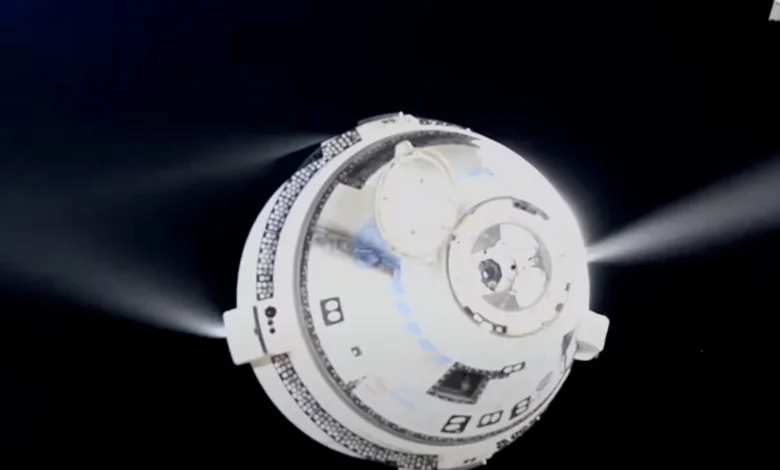
For years, the Boeing Starliner program has been characterized by significant technical delays, software anomalies, and budget overruns. Yet, despite these challenges, it remains the only viable domestic alternative to the SpaceX Crew Dragon. Faced with the prospect of an expensive and time-consuming second crew competition—which would involve vetting new entrants like Blue Origin or The Exploration Company—NASA has opted to double down on its existing investment in Boeing.
The financial logic is straightforward: the United States has already poured billions into the Commercial Crew Program (CCP). Abandoning the Starliner project now would not only represent a massive loss of sunk capital but would also leave the U.S. dependent on foreign partners or entirely without an independent launch capability for a period of years. During a recent news conference, officials emphasized that the future demand for astronaut flights is relatively modest, estimated at roughly two seats every six to nine months. Given this low flight cadence, the cost-benefit analysis favors refining the existing Starliner architecture rather than subsidizing the development of entirely new, unproven launch vehicles.
Chronology of Commercial Crew Evolution
The trajectory of the Commercial Crew Program began in 2010 under the Commercial Crew Development (CCDev) initiative, which sought to shift NASA from an owner-operator model to a customer-purchaser model.
- 2014: NASA awards multi-billion dollar contracts to Boeing and SpaceX to develop crewed spacecraft.
- 2020: SpaceX achieves the first crewed flight of the Dragon capsule, marking the return of human spaceflight to U.S. soil.
- 2022: Boeing successfully completes the Orbital Flight Test-2 (OFT-2), an uncrewed mission to the ISS, correcting previous software failures.
- 2024: Following a series of technical hurdles, the Crew Flight Test (CFT) serves as the definitive evaluation for the platform’s operational certification.
- 2030–2032: The targeted retirement window for the ISS and the expected phase-out of the current generation of Dragon capsules.
This timeline underscores the long-term nature of aerospace development. A new competition today would likely take nearly a decade to reach operational maturity, rendering it ineffective as a bridge for the immediate post-Dragon era.
Boeing’s Strategic Pivot to CLD Integration
Boeing’s leadership remains optimistic, framing the current challenges as a final hurdle before a long-term role as the primary provider for both NASA and the future commercial space station sector. John Mulholland, Boeing’s vice president and program manager for Commercial Crew, has highlighted the company’s intention to leverage the Vulcan Centaur rocket—developed by the United Launch Alliance (ULA)—as the primary launch vehicle for future Starliner missions.
"We are incredibly excited about the partnership with NASA," Mulholland stated. "To continue to fly to the International Space Station, and then obviously, with the Vulcan certification, missions beyond the current six that we have. Certainly, we have talked to all of the CLD providers about becoming their preferred transportation supplier in the future."
By positioning Starliner as the "preferred supplier" for commercial stations, Boeing aims to capture the entire LEO ecosystem. This strategy is designed to provide the economy of scale necessary to justify the high cost of maintaining a crewed launch system. However, the path to this dominance is paved with uncertainty, particularly concerning the certification of the Vulcan rocket and the finalization of a pricing structure that remains elusive.
Economic Realities and the Monopoly Risk
The primary concern for industry analysts and NASA’s oversight committees is the specter of a Boeing monopoly. When the SpaceX Dragon exits the market, Boeing will likely become the sole provider of human transport for U.S. government missions. Monopolies in aerospace are notoriously expensive; without the competitive pressure that drove prices down during the early years of the Commercial Crew Program, the cost per seat could climb significantly.
Currently, the negotiated price for Starliner missions 2 through 6 is approximately $90 million per seat. This figure is considerably higher than the estimates for subsequent iterations of commercial crew missions, but it reflects the high overhead costs associated with legacy aerospace manufacturing. When pressed on pricing for the 2030s, Boeing executives have remained non-committal.
"We couldn’t provide detailed pricing to the CLD suppliers as the Vulcan rocket has not been certified, and the spacecraft has not been certified, and we don’t have detailed pricing on the Vulcan," Mulholland noted. "That will come in the future, and obviously we want to be as competitive as possible."
The lack of transparent pricing creates a difficult environment for the emerging CLD operators, who must build their business models based on the cost of transporting their crew and cargo. If the price per seat remains high, the financial viability of private space stations could be jeopardized, potentially slowing the transition to a privatized LEO economy.
Implications for the Future of American Spaceflight
The decision to stick with Starliner is a calculated gamble on stability over disruption. By opting against a second competition, NASA is betting that Boeing’s engineering team can rectify the system’s current flaws and bring the cost down through operational experience. If this bet pays off, the U.S. will have a reliable, dual-pathway capability—even if the second path is currently slower and more expensive than the first.
However, the implications for the broader industry are profound. Critics argue that by effectively locking in Boeing, NASA is stifling innovation from smaller, more agile competitors like The Exploration Company or Sierra Space. These companies, which are developing systems like the Nyx capsule or the Dream Chaser spaceplane, represent the next generation of aerospace technology. If NASA does not provide a path for these companies to prove their capabilities, the domestic market may become stagnant.
Moreover, the international context cannot be ignored. With the Chinese space station, Tiangong, fully operational and Russia’s continued involvement in the ISS remaining a subject of geopolitical volatility, the U.S. cannot afford a "gap" in its ability to put humans in orbit. The pressure to maintain a permanent American presence is not merely a scientific priority but a geopolitical necessity.
Conclusion
NASA’s choice is reflective of the harsh realities of the aerospace sector: grand ambitions are frequently tempered by fiscal constraints, the complexities of launch vehicle certification, and the imperative of maintaining existing infrastructure. While the transition from the SpaceX era to a post-Dragon environment is fraught with technical and financial risks, the agency has prioritized continuity.
Whether Boeing can transform the Starliner into a cost-effective, reliable, and commercially viable platform will define the next chapter of American human spaceflight. For now, the agency remains committed to the current path, hoping that the investment in legacy expertise will eventually yield the reliable access to orbit that the future of space exploration demands. As the 2030 deadline looms, the eyes of the global space community will remain fixed on the flight manifest, waiting to see if the U.S. can successfully bridge the gap between the era of the ISS and the dawn of the commercial space station age.
Related posts: