Nominee for FDA Commissioner Faces Intense Scrutiny Over Political Influence and Scientific Integrity

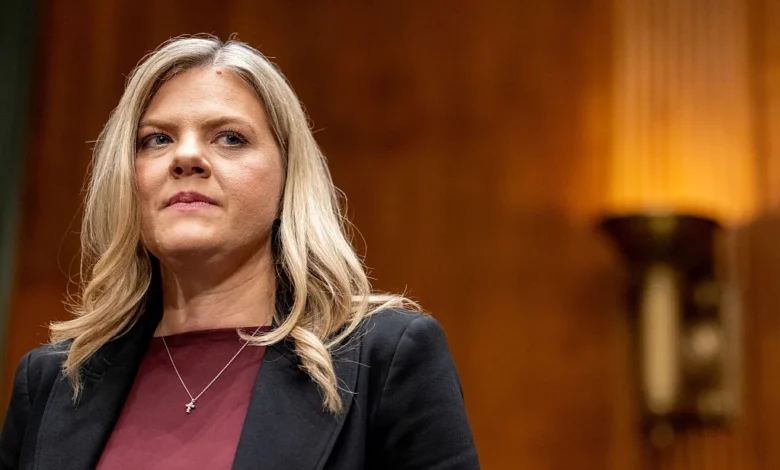
During a contentious confirmation hearing before the Senate, the nominee for Food and Drug Administration (FDA) commissioner found herself under a microscope as lawmakers pressed for clarity on her scientific independence and her history of advising President Trump on sensitive public health matters. The hearing served as a high-stakes arena where the tension between political administration goals and the agency’s mandate for evidence-based regulatory oversight reached a boiling point. Senators from both sides of the aisle utilized the session to probe whether the nominee would serve as a firewall against political interference or as an extension of the administration’s policy agenda.
The exchange centered on a series of controversial public claims made by the President, including unsubstantiated assertions regarding the link between Tylenol use during pregnancy and autism, as well as the administration’s unconventional approach to vaccine scheduling. As the FDA faces a period of leadership instability following the resignation of former commissioner Marty Makary in May, the committee sought to establish whether the nominee’s tenure would prioritize scientific rigor over political expediency.
The Challenge of Scientific Independence
Senator Maggie Hassan (D-N.H.) initiated the questioning by focusing on the administration’s adherence to established medical consensus. Hassan pointedly challenged the nominee, asking for a direct confirmation of whether the President’s past claim—that acetaminophen (Tylenol) is linked to autism—was scientifically inaccurate.
The nominee, opting for a cautious, procedural response, stated, "There is no current evidence of a causal link between Tylenol and autism." However, she repeatedly declined to label the President’s statement as "wrong," instead emphasizing that the President’s primary objective is to seek "the best outcomes for the American people." This refusal to provide a definitive binary answer frustrated members of the committee, who argued that an FDA leader must be willing to correct misinformation, regardless of the source.
"I wish it wasn’t so difficult for members of the administration to just plainly say that the president is wrong," Senator Hassan remarked, noting that the ambiguity suggests an ongoing reliance on political equivocation that could undermine public trust in the FDA.
Vaccine Strategy and Regulatory Hurdles
The scrutiny deepened when Senator Lisa Blunt-Rochester (D-Del.) raised concerns regarding the President’s recent rhetoric on vaccine distribution. Reports suggest that the nominee herself may have proposed splitting combination vaccines—such as the MMR (measles, mumps, and rubella) vaccine—into individual doses.
Public health experts have long warned that such a shift would be logistically catastrophic. The current combination vaccines are the result of decades of clinical research and safety testing. To move toward individual administration, manufacturers would face years of regulatory hurdles, including massive investments in new manufacturing infrastructure, clinical trials to prove efficacy, and the potential risk of lower vaccination rates due to the increased burden on families to visit clinics multiple times.
When pressed by Senator Blunt-Rochester on whether she stood by the suggestion of splitting vaccines as a "good option," the nominee maintained that her role is to provide the executive branch with a menu of options. When the senator attempted to pin her down on the quality of those options—asking if she would ever present a "bad option" to the President—the nominee demurred, asserting that her advisory role is strictly to offer information for consideration. This response led to a testy exchange, with Blunt-Rochester characterizing the inquiry as a simple question of scientific judgment that the nominee seemed unwilling to answer.
The Flavored Vape Controversy
Perhaps the most significant portion of the hearing addressed the recent, abrupt shift in FDA policy regarding flavored nicotine vapor products. The FDA has remained in a state of administrative flux since the departure of Marty Makary, who resigned in May after reportedly resisting intense pressure from the White House to authorize the sale of flavored vapes—products that the FDA’s own internal experts have frequently flagged as being aggressively marketed to youth.
Senator Chris Murphy (D-Conn.) presented a timeline that he argued demonstrated a troubling intersection between campaign finance and public health regulation. According to Murphy’s account, a major tobacco firm made an $8 million donation to the President’s political efforts on a Thursday. By that Saturday, representatives from the company were reportedly in a lunch meeting with the President, specifically advocating for a change in FDA rules concerning flavored nicotine products. By the following Tuesday, new guidance was issued by the agency, effectively opening the door for the sale of these products.
Murphy asked the nominee directly: "Do you see a connection between the donation and the policy change, and is that how you think the FDA should work?"
The nominee firmly rejected the framing of the question, stating, "I reject the framing of that question," and reiterated her belief that the President is driven by a commitment to the best possible outcomes for the country. This response did little to satisfy the skepticism of the committee, as senators noted that the policy reversal occurred in direct opposition to bipartisan legislative concerns about the long-term health impact of vaping on minors.
Broader Implications for the FDA
The FDA serves as the cornerstone of American public health, regulating everything from life-saving pharmaceuticals and medical devices to the food supply and tobacco products. Because of this, the agency is designed to operate with a high degree of autonomy, shielded from the immediate pressures of partisan politics. The confirmation hearing highlighted a growing concern among lawmakers that the wall between the executive branch and the agency’s scientific decision-making process is becoming porous.
Political analysts suggest that the nominee’s performance will likely define her confirmation prospects. For some senators, the nominee’s refusal to challenge the President’s rhetoric is a disqualifying trait, as they believe the FDA commissioner must be the ultimate authority on health data, even when that data contradicts executive policy. Conversely, supporters of the administration argue that a commissioner must work within the President’s agenda to implement reform and that providing a wide range of policy options is a standard component of executive advisement.
Historical Context of FDA Leadership
The history of the FDA is marked by high-profile struggles between political appointees and career scientists. In the past, commissioners have resigned or faced public friction when they felt their scientific integrity was being compromised. The current situation, however, is unique in its intensity. With the agency operating without a confirmed commissioner for months, the morale of career staff and the public’s confidence in regulatory guidance are at risk.
As of the latest reporting, the committee has not signaled whether it will move to a vote on the nomination. The fallout from the hearing suggests that the nominee will face continued requests for documentation regarding her advice on vaccines and the internal deliberations that preceded the reversal on flavored vapes.
Conclusion
The confirmation hearing for the FDA commissioner role has transcended a typical vetting process, evolving into a debate over the role of scientific truth in a highly polarized political environment. Whether the nominee can convince a skeptical Senate that she will prioritize data-driven outcomes over the administration’s political preferences remains the central question. As the debate continues, the agency remains in a vulnerable position, tasked with managing public health crises while its own leadership structure remains under heavy fire from those who believe the FDA’s primary duty is to the American public, not to the political interests of the Oval Office. The coming weeks will determine whether the administration chooses to double down on this nomination or if the political cost of the current strategy will necessitate a change in direction.