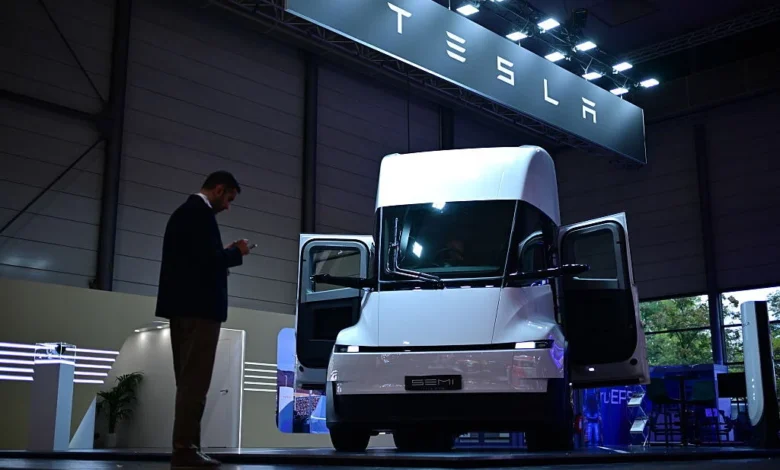
The recent procurement of 2,500 Tesla Semi trucks by an alliance of major shippers—including corporate giants Microsoft and PepsiCo—marks a pivotal moment for the heavy-duty transportation sector. This record-setting order, slated for fulfillment over the next 18 months, represents a significant leap forward for the commercial adoption of electric vehicles (EVs). However, this milestone arrives amidst a complex backdrop of federal policy reversals, record-breaking energy costs, and the persistent instability of global oil markets. As the trucking industry faces pressure to decarbonize, the economic viability of electric freight is being tested against a political environment that has increasingly pivoted away from green subsidies.
A Shifting Regulatory Environment
The path to this massive fleet transition has not been linear. Last year, the Trump administration and its legislative allies enacted significant cuts to federal support for electric vehicle infrastructure and consumer incentives. This policy shift directly impacted the momentum of the EV transition, particularly within the heavy-duty sector. Furthermore, the administration’s efforts to lower fuel economy standards for heavy-duty truck engines—a move designed to alleviate immediate regulatory burdens on manufacturers—have created a climate of uncertainty for long-term climate goals.
Data from the Environmental Protection Agency (EPA) underscores the magnitude of the challenge: heavy-duty trucks account for approximately 7 percent of total greenhouse gas emissions in the United States. By relaxing standards, the administration effectively slows the industry’s pace toward electrification. Paradoxically, while federal support has waned, the economic imperative for private firms to transition has only intensified, driven by the volatility of global energy prices.
The Economic Catalyst: Fuel Price Volatility
While regulatory headwinds persist, the economic argument for electrification has reached a fever pitch. In the current month, U.S. diesel prices have soared to record highs, exacerbated by the ongoing conflict in the Middle East and its resulting disruption of oil production and maritime shipping lanes. With diesel prices nearly doubling compared to the previous year, the cost-benefit analysis for fleet operators has shifted dramatically.
In a pre-taped address regarding the new order, Elon Musk highlighted this economic reality, noting that the Tesla Semi offers a compelling value proposition. "The truck is going to make a ton of sense economically because the cost of electricity is much less than the cost of diesel, especially in these crazy times," Musk stated. His remarks served as a pointed observation of the current geopolitical environment—one influenced by an administration he previously supported, yet one whose policies have inadvertently made the business case for his company’s electric trucks more robust than ever.
The Dynamics of the Record-Setting Order
The procurement deal, facilitated by the nonprofit Smart Freight Centre, represents a strategic pooling of demand. By aggregating the needs of multiple shippers, the alliance was able to leverage economies of scale, effectively bringing down the unit price of the vehicles. This collaborative approach is increasingly viewed as a blueprint for other industries looking to de-risk their transition to sustainable logistics.
According to Meena Bibra, a spokesperson for the Smart Freight Centre, the selection of the Tesla Semi was the result of a rigorous evaluation process. "We assessed price, performance, production capability, and service support," Bibra explained. While Tesla emerged as the primary choice for this specific order, the market remains competitive. Carriers are maintaining relationships with established heavy-duty manufacturers such as Kenworth, Volvo, and Ride, which continue to refine their own electric offerings to meet specific fleet requirements.
The impact of this order on the broader industry is substantial. Currently, heavy-duty electric trucks represent a small fraction of the total freight fleet in the United States. The introduction of 2,500 units into the supply chain is expected to nearly double the total count of operational electric heavy-duty vehicles nationwide. This infusion of technology will provide critical data on range, charging efficiency, and maintenance cycles that will influence the purchasing decisions of other large-scale logistics providers over the next decade.
Technological Hurdles and Future Milestones
Despite the optimism surrounding the deployment, the Tesla Semi is not yet a fully autonomous solution. The company’s "Full Self-Driving (Supervised)" feature, a hallmark of its consumer vehicles, remains absent from the current configuration of the Semi. During his address, Musk acknowledged this gap, stating that the feature would debut in "the very near future."
This promise carries with it a history of missed timelines. When the Tesla Semi was first unveiled in 2017, the company promised that "Enhanced Autopilot" would be a core component of the vehicle’s capability. Seven years later, the industry is still waiting for the realization of these advanced driver-assistance features in the trucking context. The delay highlights the immense technical challenge of safely implementing autonomous systems in heavy-duty vehicles, which operate with much higher mass and longer braking distances than passenger cars.
A Chronology of the EV Transition
The trajectory of the electric trucking industry can be viewed through several key developmental phases:
- 2017: Tesla officially unveils the Semi, promising 500 miles of range and advanced autonomous capabilities, setting the stage for industry-wide interest.
- 2020–2022: The COVID-19 pandemic and subsequent global supply chain disruptions delay production timelines across the automotive sector.
- 2023: Federal policy shifts result in the reduction of EV tax credits and the loosening of emissions standards for heavy-duty engines.
- Early 2024: Global oil market instability pushes diesel prices to historic highs, reigniting corporate interest in electrification for cost-saving purposes.
- Late 2024: The Smart Freight Centre alliance finalizes the 2,500-unit order, signaling a transition from pilot programs to mass-fleet adoption.
Industry Implications and Market Outlook
The implications of this transition extend beyond individual corporate balance sheets. For the logistics sector, the move toward electric trucks represents a fundamental shift in capital expenditure. While the upfront cost of an electric truck remains higher than a diesel equivalent, the lower total cost of ownership—driven by reduced maintenance and lower energy costs—is becoming the deciding factor for boards of directors.
Furthermore, the participation of companies like Microsoft and PepsiCo suggests that sustainability mandates are no longer peripheral concerns. These firms are under increasing pressure from shareholders and consumers to reduce Scope 3 emissions, which encompass the emissions generated by their supply chains and logistics partners. By investing in electric fleets, these corporations are effectively future-proofing their operations against potential carbon taxes and further fluctuations in fossil fuel prices.
However, the transition is not without its risks. The success of this massive deployment hinges on the build-out of a national charging infrastructure capable of handling the high-energy demands of heavy-duty freight. As it stands, the infrastructure remains the most significant bottleneck to widespread adoption. While Tesla has made strides with its "Megacharger" network, the broader national grid and specialized charging stations must scale rapidly to match the influx of new vehicles.
As the industry moves forward, the divergence between federal policy and private-sector action will remain a defining feature of the American energy transition. If the current trend of high diesel prices continues, the economic case for the Tesla Semi and its competitors will likely overcome the lack of federal support. For now, the 2,500 trucks ordered by the shipper alliance serve as a test case for whether the logistics industry can successfully navigate a landscape defined by geopolitical instability and rapid technological change. The success of this rollout will likely determine the pace of electrification for the remainder of the decade.
Related posts: