Frontier Airlines Under Scrutiny After Viral Video Shows Flight Attendant Refilling Water Bottles From Galley Tap

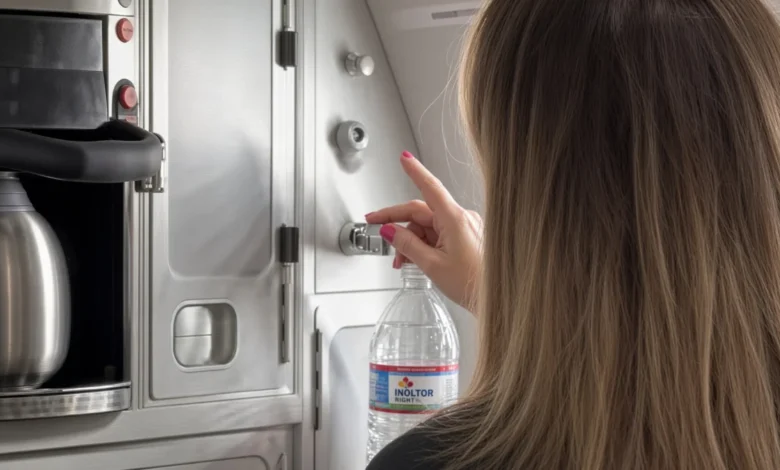
A viral social media post has sparked a fresh debate regarding the sanitary standards and operational transparency of commercial airlines after a passenger captured video footage of a Frontier Airlines flight attendant refilling empty water bottles from the aircraft’s onboard water system. The incident, which occurred on Frontier flight F9 2342 from Los Angeles to Denver, has drawn widespread criticism from travelers who rely on bottled water as a safe, hygienic alternative to the water sourced directly from an aircraft’s internal plumbing.
The video, shared by passenger Erica Mena on X (formerly Twitter) on September 25, 2026, features a clear view of the flight attendant pouring water from a galley dispenser into what appears to be a previously used or empty plastic water bottle. The implication, according to the original poster and many who commented on the thread, is that the airline may be misleading passengers by serving tap water in containers that suggest a sealed, bottled product. The incident has reignited long-standing anxieties regarding the quality of potable water on commercial aircraft and the logistical practices employed by budget carriers to manage onboard supplies.
Chronology of Onboard Beverage Controversies
This event is not an isolated instance of passengers raising alarms over the handling of beverages during flight. The aviation industry has faced similar public relations challenges over the last decade, often highlighting a disconnect between passenger expectations of hygiene and the realities of cabin service.
In 2017, an Emirates flight attendant was filmed pouring leftover champagne from used passenger glasses back into an original bottle. While the airline industry maintains strict standards for service, such instances often stem from a desire to reduce waste, though they inevitably violate food safety protocols and passenger trust.
More recently, in 2023, a traveler on an American Airlines flight from San Diego to Charlotte documented a flight attendant pouring several partially consumed cups of orange juice back into a serving container. These incidents, while varied in nature, have contributed to a growing skepticism among frequent flyers regarding how flight crews manage leftover beverages and the potential for cross-contamination in the confined space of an aircraft galley.
The Science and Regulation of Aircraft Potable Water
To understand the public outcry surrounding the Frontier incident, one must examine the regulatory framework governing water quality in the aviation sector. In the United States, the Environmental Protection Agency (EPA) enforces the Aircraft Drinking Water Rule (ADWR). This regulation mandates that airlines provide safe and potable water to passengers and crew.
The process is inherently complex. Water is loaded onto aircraft at airports via specialized servicing equipment and is then stored in internal tanks. From these tanks, the water travels through an intricate network of pipes and heating elements to reach the galley faucets and the lavatory sinks. The quality of this water is heavily dependent on the maintenance schedules of these systems, which include periodic flushing, disinfection, and rigorous sampling to test for contaminants such as coliform bacteria.
Despite these regulations, the infrastructure of an aircraft is susceptible to biological growth. The EPA has historically noted that the storage tanks and plumbing systems of commercial aircraft can harbor bacteria if they are not consistently and thoroughly sanitized. Consequently, many health experts, including those consulted in various aviation safety reports, have long advised passengers to avoid drinking tap water on planes, opting instead for bottled water, which is sourced from external, municipal-regulated facilities.
Data and Quality Assessment
A comprehensive review of water quality across U.S. airlines conducted in December 2025 provides context for the current incident. The analysis utilized a scoring system based on EPA testing data, assigning a grade of 1 to 5 to major carriers.
In that assessment, Frontier Airlines received a score of 4.80, indicating a generally high level of compliance with water quality safety standards. For comparison, Delta Air Lines achieved a perfect score of 5.00. However, other major carriers fared significantly worse; American Airlines and JetBlue, for instance, were ranked at the bottom of the list with scores of 1.75 and 1.80, respectively.
While Frontier’s score suggests that its maintenance protocols are objectively superior to those of many competitors, the optics of the situation remain problematic. Even if the water itself meets the federal standards for "potable," the act of transferring it into a bottle—an item that inherently suggests a commercial, sealed product—constitutes a breach of consumer trust. Passengers who purchase or request bottled water do so specifically to avoid the aircraft’s plumbing system. By circumventing this expectation, the flight attendant essentially bypassed the passenger’s ability to make an informed choice regarding their own health and hydration.
Broader Implications for Airline Operations
The incident on flight F9 2342 raises critical questions about airline cost-cutting measures and the pressure placed on cabin crews to manage limited resources. In the competitive low-cost carrier (LCC) market, margins are thin, and the efficient management of onboard supplies is a primary operational objective. However, the optics of "recycling" or "refilling" items that are generally perceived as single-use can have severe repercussions for an airline’s reputation.
Industry analysts suggest that the negative response to the video is fueled by a lack of transparency. If airlines were to provide a clear, public-facing policy regarding the sourcing of their water, passengers might be less inclined to view the refilling of bottles as a deceptive practice. However, as it stands, the assumption remains that a bottle provided by a flight attendant is factory-sealed. When that expectation is subverted, the resulting indignation is predictable.
Furthermore, the incident serves as a reminder of the "hidden" aspects of air travel that passengers rarely consider until they are brought to light by digital evidence. From the cleanliness of tray tables to the quality of the water in the coffee maker, the invisible maintenance of an aircraft is a major operational challenge. The EPA’s Aircraft Drinking Water Rule is designed to mitigate these risks, but it cannot fully account for the human element—specifically, the shortcuts that may be taken by staff under the stress of high-volume, low-cost operations.
Looking Ahead: Policy and Trust
As of the date of this report, Frontier Airlines has not issued a formal, detailed response regarding the specific disciplinary actions, if any, taken against the flight attendant involved. However, the incident has prompted renewed calls for airlines to standardize their beverage service policies.
For the traveling public, the message remains consistent with long-standing health advisories: while aircraft water is required to meet safety standards, the integrity of the delivery system is often perceived as a weak point in the aviation experience. The controversy serves as a stark reminder that in the age of ubiquitous mobile connectivity, every action taken by crew members is subject to public scrutiny.
Moving forward, airlines may need to reconsider their service protocols to ensure that they are not only meeting federal safety requirements but also maintaining the transparency necessary to uphold passenger confidence. Whether this leads to a shift in how water is served or simply a more rigorous training program for cabin crews remains to be seen. What is clear, however, is that for the modern traveler, the "bottled water" label carries a weight of expectation that airlines ignore at their own peril. As passengers continue to demand higher levels of transparency, the industry will likely be forced to reconcile its cost-saving efficiencies with the evolving standards of consumer trust in the 21st century.
Related posts: