Fanatics CEO Michael Rubin Vows To Spend Whatever It Takes To Defend Empire Against Frivolous Lawsuits After Accumulating Near Nine-Figure Legal Bill

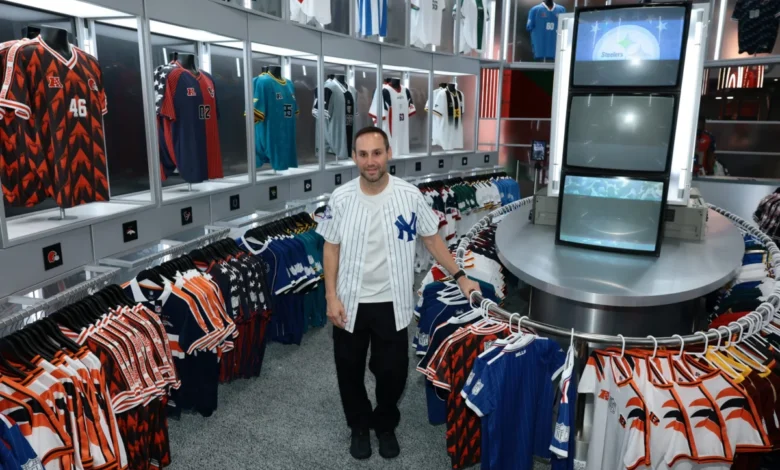
Sports business mogul and Fanatics Chief Executive Officer Michael Rubin has confirmed that his company has amassed a legal defense expenditure approaching $100 million in recent years, defending its sprawling sports merchandise, memorabilia, and trading card operations against a wave of high-profile civil lawsuits. Fresh off a string of recent legal victories in federal courts, Rubin has firmly stated that the company will not alter its defensive strategy, signaling that he is prepared to invest unlimited financial resources to protect the brand from what he characterizes as baseless, extortionate litigation.
Over the past several years, Fanatics has ascended to a dominant position within the global sports economy, securing exclusive licensing agreements with major professional sports leagues, athletes, and collegiate organizations. However, this meteoric rise—marked by aggressive market expansion, the launch of Fanatics Collectibles, and high-profile live events such as Fanatics Fest NYC—has also placed a massive target on the corporation’s back. Competitors, independent retailers, and disgruntled consumers have increasingly turned to the American judicial system, filing antitrust and monopolistic lawsuits that accuse the company of stifling open commerce and exploiting its market power.
Despite the astronomical costs associated with mounting a robust defense against multi-plaintiff class actions, Rubin remains unapologetic. Speaking frankly about the financial realities of corporate litigation, the billionaire entrepreneur emphasized that folding or settling unmerited claims is simply not an option for his organization, regardless of the short-term economic burden.
Anatomy of the Legal Challenges: Antitrust and Monopoly Claims
The legal battles facing Fanatics primarily center on antitrust scrutiny, with plaintiffs consistently arguing that the company’s exclusive arrangements with premier sports organizations—including the National Football League (NFL), Major League Baseball (MLB), the National Basketball Association (NBA), and the National Hockey League (NHL)—create an unfair monopoly. These critics claim that the centralization of manufacturing, distribution, and retail rights chokes out competition, ultimately harming consumers through elevated pricing, reduced product variety, and diminished quality.
The judicial onslaught began intensifying in early 2025. In March of that year, a federal court in New York became the battleground for a notable antitrust lawsuit filed by plaintiff Robert Scaturo. The complaint alleged that Fanatics’ aggressive monopolization of the licensed trading card and memorabilia market had directly injured direct purchasers by eliminating viable alternatives and creating an airtight commercial ecosystem.
Just a few months later, in July 2025, a broader class-action complaint was initiated by Phillip Jones and several co-plaintiffs. This lawsuit expanded the scope of allegations, claiming that Fanatics’ rapid corporate growth and vertical integration had severely restricted consumer choice while artificially inflating retail prices across multiple merchandise categories. Around the same period, another independent retailer-focused lawsuit brought by Charles Franz and similarly situated business owners alleged that the company’s exclusive league partnerships unfairly discriminated against third-party vendors attempting to compete in the active sports apparel and collectible marketplace.

Parallel to these consumer and retailer actions, Fanatics has also found itself embroiled in high-stakes corporate litigation with traditional industry heavyweights. Most notably, the company remains locked in an ongoing, fiercely contested civil dispute with rival memorabilia and trading card manufacturer Panini, with both entities trading accusations of anticompetitive behavior, interference with business relations, and aggressive talent poaching.
A Chronology of Recent Judicial Dismissals
Despite the complexity and breadth of the allegations, the judiciary has delivered a series of definitive setbacks to the plaintiffs over the past several months, validating Fanatics’ aggressive defense strategy.
In the high-profile case spearheaded by Phillip Jones, a federal judge formally tossed the lawsuit out of court, ruling decisively that the plaintiffs failed to meet the essential legal threshold required to maintain an antitrust action. Specifically, the presiding judge noted that the complainants failed to demonstrate that they, individually and in a sufficiently particularized manner, had suffered—or were imminently going to suffer—the specific types of economic injuries outlined in the legal filings.
Judges in the Scaturo and Franz matters rendered similarly critical assessments, finding the evidentiary foundations of the complaints wanting and ultimately dismissing them from the docket. Legal analysts note that antitrust litigation is notoriously difficult for private plaintiffs to sustain, requiring exhaustive proof of direct market harm and antitrust injury rather than mere dissatisfaction with a dominant market participant’s business model.
By securing these crucial dismissals, Fanatics has successfully neutralized the immediate threat posed by multiple sweeping class-action lawsuits. However, the legal pipeline remains active, and the company continues to dedicate substantial legal teams to managing remaining exposures, most prominently the lingering corporate litigation with Panini.
The Financial Reality of Modern Corporate Defense
The revelation that Fanatics has poured nearly $100 million into legal fees underscores the staggering cost of doing business at the highest levels of the global sports and entertainment industries. For a conglomerate valued in the tens of billions of dollars, investing heavily in top-tier legal representation is viewed by leadership not as a discretionary luxury, but as an indispensable operational necessity.
Corporate governance experts point out that large enterprises targeted by high-stakes litigation often face a difficult calculus: settle early to avoid negative publicity and legal burn rates, or fight aggressively to establish a deterrent against future opportunistic filings. By choosing the latter path, Rubin and his executive team are signaling to the broader legal and business communities that Fanatics will not serve as an easy target for class-action litigation, regardless of the cumulative expense.

"We’ve spent nearly $100 million on legal fees on these various cases," Rubin stated during a recent interview. "We’re not going to let someone extort us for baseless claims."
This philosophy reflects a broader trend among modern technology, retail, and sports giants. As companies achieve unprecedented scale and market penetration, antitrust scrutiny from both federal regulators and private litigants becomes an inevitable byproduct of their success. Defending against these challenges requires assembling specialized legal task forces capable of navigating complex economic data, market definitions, and multi-jurisdictional federal court procedures.
Broader Implications for the Sports Merchandise Ecosystem
The outcome of these legal battles carries profound implications for the future of sports commerce, memorabilia collecting, and retail distribution. Fanatics has fundamentally transformed how fans interact with their favorite teams and leagues, shifting the retail landscape toward a unified, vertically integrated model powered by e-commerce, localized pop-up experiences, and massive live events like Fanatics Fest NYC.
Proponents of the Fanatics model argue that exclusive partnerships streamline production, guarantee authentic merchandise, and elevate the fan experience through state-of-the-art digital infrastructure and curated live conventions. They contend that the company’s success is the result of intelligent strategic investments, superior logistical execution, and a deep understanding of modern sports fandom.
Conversely, critics and independent merchants maintain that hyper-consolidation restricts economic mobility for smaller businesses and reduces the healthy friction of market competition. While recent federal court rulings have favored Fanatics by dismantling several foundational lawsuits, the underlying debate over market access, licensing exclusivity, and fair competition in the sports memorabilia space is far from over.
As Fanatics continues to navigate its ongoing corporate disputes—such as the high-stakes legal sparring with Panini—the company’s financial commitment to its defense remains unwavering. With Michael Rubin at the helm and a nearly nine-figure legal budget already deployed, Fanatics has firmly established that it is prepared to spend whatever capital is necessary to protect its commercial empire from legal challenges for the foreseeable future.
Related posts: