Miami Immigrant Rights Advocate Files Federal Lawsuit Challenging Border Agency Device Searches Following Phone Seizure

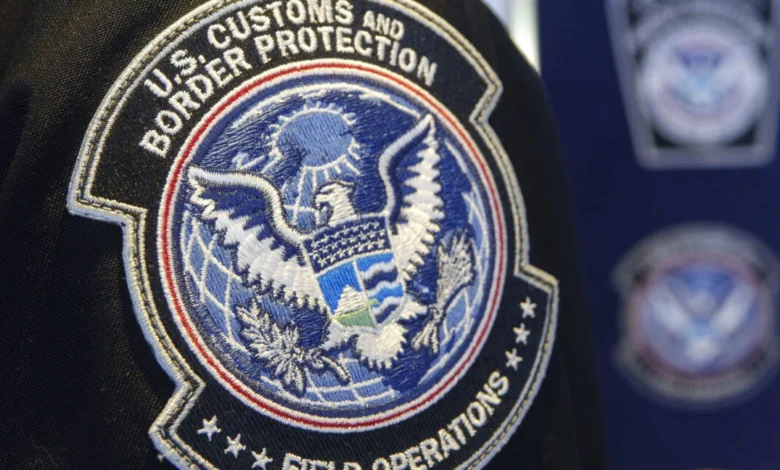
The intersection of national security protocols and civil liberties has once again moved to the forefront of judicial scrutiny following a recent lawsuit filed by a prominent Florida-based immigrant rights advocate. The plaintiff alleges that U.S. Customs and Border Protection (CBP) agents utilized their expansive border search authority to target him for his political activism rather than for legitimate customs or immigration enforcement. This legal challenge, which seeks to contest the constitutionality of warrantless electronic device searches, highlights a long-standing tension between the federal government’s mandate to secure the nation’s borders and the First and Fourth Amendment rights of travelers.
According to court filings, the advocate contends that his detention and the subsequent seizure of his cellular device were not random administrative actions, but rather a calculated attempt to monitor his political activities. The plaintiff asserts that his history of organizing, particularly his vocal opposition to policies championed by Florida Governor Ron DeSantis, has made him a target for government surveillance. "I believe CBP flagged me because of my organizing and political work around immigrants’ rights in Florida," he stated in his complaint. The lawsuit further alleges a pattern of harassment, citing a 2021 incident in which the Miami Police Department allegedly surveilled him and restricted his access to official press conferences, framing the current border incident as an escalation of these past encounters.
The Border Search Exception and Constitutional Limitations
The legal foundation for the CBP’s actions rests on what is widely known as the "border exception" to the Fourth Amendment. Under this long-standing legal doctrine, federal courts have granted authorities the power to conduct searches of individuals, luggage, and electronic devices at ports of entry without the requirement of a warrant or probable cause. The rationale provided by the government is that the sovereign interest in protecting the border outweighs the individual’s expectation of privacy within a narrow zone at the nation’s perimeter.
However, as personal technology has evolved to become a repository for the entirety of an individual’s digital life—including private communications, financial records, medical history, and professional data—the application of this exception has faced mounting criticism. Civil liberties organizations, including the American Civil Liberties Union (ACLU), have argued that the "Constitution-free zone" created by this exception is outdated and fundamentally incompatible with modern technology. The plaintiff’s case echoes concerns raised in previous litigation, such as a 2017 incident at San Francisco International Airport, where a traveler reported being threatened with the seizure of his phone by border agents unless he complied with a request to unlock it. These cases suggest that the standard operating procedures for device searches are often opaque, leaving travelers with little recourse when they believe their rights have been violated.
Chronology of Electronic Device Search Policies
The current regulatory framework governing these searches is codified under CBP Directive No. 3340-049A. This policy distinguishes between "basic" searches, which involve manual inspection of a device, and "advanced" searches, which involve connecting a device to external equipment to extract or copy data.
For an advanced search to occur, the CBP policy stipulates that there must be "reasonable suspicion" of a violation of the law or a national security concern. However, the agency’s internal guidance also leaves significant room for interpretation, noting that officers may copy data if there is "probable cause to believe that the information contains evidence of a violation of law" that the agency is tasked with enforcing. Critics point out that the definition of "enforcement matters" is broad, encompassing immigration and customs laws, which can be applied to a vast array of digital content.
The plaintiff in the current case argues that the agency failed to meet even these flexible thresholds, suggesting that the search was a pretext for political intelligence gathering. If the court finds that the agency’s actions were motivated by the plaintiff’s political viewpoint rather than a legitimate enforcement purpose, it could set a significant precedent regarding the limits of administrative power at the border.
Analyzing the Data: How Rare Are Device Searches?
To contextualize the frequency of these encounters, it is necessary to examine the data provided by the Department of Homeland Security. According to CBP, the total number of travelers processed at U.S. ports of entry in Fiscal Year 2025 exceeded 419 million. Out of this massive volume of traffic, the agency conducted 55,318 searches of electronic devices. This results in a search rate of approximately 0.0013%.
CBP officials frequently cite these figures to defend the necessity of the practice, arguing that while the raw number may seem high to the public, it represents a statistically minuscule fraction of total international travel. They contend that these searches are vital tools for interdicting child exploitation material, counterfeit goods, and information related to transnational criminal organizations.
However, civil rights advocates argue that statistics alone do not capture the chilling effect such searches have on free speech and the right to privacy. The argument is that even if the percentage of searches is low, the potential for abuse—particularly against journalists, activists, and legal professionals—remains high. The lack of transparency regarding how the criteria for selection are determined contributes to a perception of arbitrariness that the current litigation seeks to challenge.
Official Responses and Administrative Defenses
The CBP maintains that its officers are trained to conduct searches in a professional manner that adheres to the Constitution and existing federal statutes. In response to inquiries regarding individual complaints, the agency typically emphasizes that its mission is the protection of the homeland and that its officers act within the scope of their delegated authority.
When questioned about allegations of political bias, government representatives often assert that CBP does not target individuals based on protected speech or political beliefs. They argue that all searches are driven by objective intelligence or specific behaviors identified during the inspection process. Yet, for plaintiffs like the Florida activist, these assurances are insufficient. His legal team is expected to focus on the discovery process, seeking internal documents and communications that might shed light on whether the plaintiff was placed on a "watchlist" or otherwise flagged for his activism before he arrived at the port of entry.
Broader Implications for Privacy and Political Activism
The legal battle initiated in Miami represents a wider societal struggle over the extent to which digital privacy is sacrificed at the border. As the world becomes increasingly interconnected, the devices we carry across borders are no longer just tools for communication; they are extensions of our personal and professional identities.
If the court rules in favor of the plaintiff, it could force a reevaluation of the "border exception," potentially requiring the government to demonstrate a higher burden of proof before accessing sensitive data on a personal device. Such a ruling would likely be welcomed by privacy advocates who argue that the Fourth Amendment should follow the citizen even when crossing international boundaries. Conversely, a ruling that upholds the CBP’s current authority would reinforce the status quo, confirming that the border remains a unique space where standard constitutional protections are substantially diminished.
The implications for political activists are particularly acute. If the government is permitted to seize and copy data from activists, it could create a significant deterrent effect, discouraging individuals from engaging in dissent or advocacy if they fear their digital records will be exposed to law enforcement scrutiny. The case, as reported by the Miami New Times, is being closely watched by legal observers who see it as a potential bellwether for how the judiciary will balance the interests of a surveillance-capable state with the fundamental rights of its citizenry.
As the litigation proceeds, the court will have to grapple with the specific evidence presented regarding the plaintiff’s claims of targeted harassment. Whether the outcome results in a narrow decision specific to the facts of this case or a broader directive that reshapes federal border policy remains to be seen. In the meantime, the case serves as a stark reminder of the vulnerability of digital information in an age where the border is not merely a physical line, but a digital checkpoint. The resolution of this lawsuit will likely influence not only the future of the plaintiff’s advocacy work but also the standard of privacy afforded to millions of travelers who enter the United States annually.