Anti-vaccine embrace: The political alignment of Robert F. Kennedy Jr. and the Children’s Health Defense movement

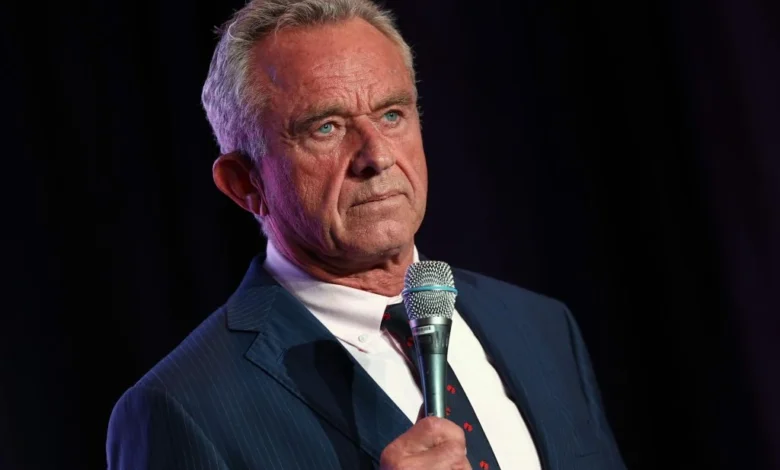
The Children’s Health Defense (CHD) is set to host its annual conference, an event framed by organizers as a “pursuit of a more perfect future,” designed to deliberate on the shifting landscape of the “health freedom movement.” Scheduled for September 17, with an opening reception occurring the preceding evening, the gathering has drawn significant attention due to its high-profile roster of speakers and its implications for national health policy. Among those headlining the event is Robert F. Kennedy Jr., whose participation signals a potential return to his foundational activism despite his current federal role.
The conference agenda features a coalition of political figures and media personalities who have long been critical of established public health mandates. Notable participants include Senator Ron Johnson (R-Wisc.), a vocal proponent of alternative vaccine theories; Senator Rand Paul (R-Ky.), who has frequently challenged federal public health authority; Mark Gorton, president of the MAHA Institute; and Jan Jekielek, a senior editor at the Epoch Times. These sessions, facilitated by CHD leadership including CEO Mary Holland, seek to consolidate a strategy for what the organization describes as the preservation of medical autonomy.
A Chronology of Institutional Tension
The relationship between Kennedy and the Children’s Health Defense has been a subject of evolving scrutiny. Historically, Kennedy served as the face of the organization, leveraging his name and platform to build a robust network of vaccine skeptics. However, the trajectory of this partnership shifted significantly in early 2025. Upon his nomination for a high-ranking federal health position, Kennedy formally severed his official ties with the CHD.
During the subsequent confirmation process, Kennedy navigated intense questioning regarding his long-standing advocacy against various vaccination programs. In his testimony, he attempted to reconcile his history of activism with his potential governmental duties, asserting that he was “pro-vaccine” while simultaneously defending his past inquiries into vaccine safety. This pivot was widely interpreted by political analysts as a strategic move to secure Senate confirmation. However, his decision to return to the stage as a headliner for a CHD event suggests a departure from the administrative caution he adopted during the early months of his tenure.
The timing of this engagement is particularly notable, occurring in the shadow of reports suggesting that the White House—specifically President Trump—has expressed frustration with the pace of federal policy shifts regarding vaccine safety. Sources close to the administration have indicated that the President has pressured Kennedy to aggressively investigate and validate long-debunked claims regarding a link between childhood vaccinations and autism.
The Landscape of the Health Freedom Movement
The "health freedom" movement, which serves as the intellectual and logistical foundation for the CHD conference, has seen a transformation from a fringe interest group into a significant political force. Over the past decade, the movement has capitalized on digital infrastructure to bypass traditional scientific gatekeepers.
Data from recent public health studies indicate that while vaccine confidence remains high among the general population, there has been a documented rise in "vaccine hesitancy" clusters, particularly in specific geographic and ideological regions. According to the Centers for Disease Control and Prevention (CDC), the disruption to routine childhood immunization schedules caused by the COVID-19 pandemic created a "gap" in coverage that has yet to be fully closed. Public health experts argue that high-profile events like the CHD conference serve to widen this gap by providing an aura of institutional legitimacy to unverified medical claims.
The economic footprint of these movements is also substantial. The sold-out status of the $250 in-person tickets for the September conference, alongside the availability of $125 seating and $100 livestream access, highlights a dedicated donor and supporter base. This financial stability allows organizations like CHD to fund research, legal challenges to state vaccine mandates, and extensive media production—all of which serve to institutionalize skeptical narratives.
Scientific Context and Public Health Implications
The central pillar of the rhetoric promoted by groups like the CHD—the assertion that vaccines are a primary driver of autism—has been systematically debunked by decades of rigorous, peer-reviewed scientific literature. The landmark 1998 study that initially suggested such a link was retracted by The Lancet, and the author, Andrew Wakefield, was stripped of his medical license. Despite this, the narrative has proven remarkably resilient in the digital age.
The implications of a federal health official engaging with these platforms are profound. When a leader within the public health apparatus validates or shares the stage with organizations dedicated to undermining foundational medical science, it creates a "mixed messaging" crisis. For public health officials at the state and local levels, this creates an environment where science-based outreach becomes increasingly difficult to execute.
"The erosion of trust in the regulatory process is a long-term risk," says Dr. Elena Rodriguez, a professor of public health policy. "When the public cannot distinguish between evidence-based medicine and ideologically driven activism at the highest levels of government, the entire structure of herd immunity becomes fragile."
Official Responses and Political Repercussions
While the White House has maintained a formal silence regarding Kennedy’s specific speaking engagements, the political fallout is being felt on Capitol Hill. Democrats have voiced alarm, calling for oversight hearings to determine whether federal resources or time are being utilized to support private advocacy events. Conversely, some members of the GOP caucus have defended Kennedy’s right to participate, framing it as an exercise of free speech and a necessary challenge to what they term the "medical-industrial complex."
The conference itself represents a tactical intersection of media, politics, and grassroots activism. By inviting figures like Senator Ron Johnson and Senator Rand Paul, the event aims to bridge the gap between private advocacy and legislative action. These lawmakers have previously used their committee seats to host hearings that provide a platform for anti-vaccine testimony, a strategy that aligns closely with the CHD’s goal of reframing vaccine safety as a matter of congressional concern rather than purely clinical research.
Analyzing the Shift in Strategy
The shift toward openly embracing his original ideology, rather than distancing himself from it, suggests that Kennedy may be recalculating his political capital. There are two primary schools of thought regarding this move.
The first suggests that Kennedy believes the current political climate is favorable enough to allow for a more overt push against existing health mandates. In this view, his participation is a calculated effort to energize his base and solidify his influence within the administration, ensuring that his policy agenda remains a priority for the President.
The second perspective is that this move could jeopardize his standing with more moderate members of the cabinet and Congress. Should the rhetoric at the conference veer into extreme territory—such as calls for the withdrawal of specific vaccines or the dismantling of regulatory agencies—it could force a public confrontation between the administration and the scientific community. Such a confrontation would likely lead to legal challenges, as the administrative state is bound by the Administrative Procedure Act, which requires that any shift in policy be supported by a robust evidentiary record.
Future Outlook
As the September 17 conference approaches, all eyes will be on the content of the speeches and the specific policy proposals discussed. The event is not merely a gathering of individuals; it is a signal of the current state of the health freedom movement’s influence.
Whether this conference serves as a turning point toward a new era of vaccine policy, or merely as a controversial footnote in the history of the 2025-2026 administration, remains to be seen. What is clear is that the divide between the established public health consensus and the anti-vaccine movement has widened into a deep political chasm. For citizens, healthcare providers, and policymakers, the event serves as a stark reminder that the battle over medical truth is no longer contained to laboratories and journals—it is now a central, and highly volatile, feature of the American political theater.
As the conference concludes, the broader impact will be measured not just in attendance numbers or ticket sales, but in how the administration chooses to respond to the calls for action that will inevitably emerge from the stage. The convergence of federal authority and private, ideology-driven advocacy marks a significant moment in the intersection of public policy and public health.