The Hidden Cost of AI: Environmental Safeguards Crumble as Data Center Construction Accelerates Nationwide

The rapid expansion of artificial intelligence infrastructure across the United States has ignited a fierce debate over the environmental and public health costs of the industry’s massive power requirements. While Silicon Valley leaders frequently capture headlines by discussing the existential risks of future AI superintelligence, a coalition of former Environmental Protection Agency (EPA) officials and environmental health experts is sounding an alarm regarding a more immediate, tangible threat: the unregulated proliferation of energy-intensive data centers.
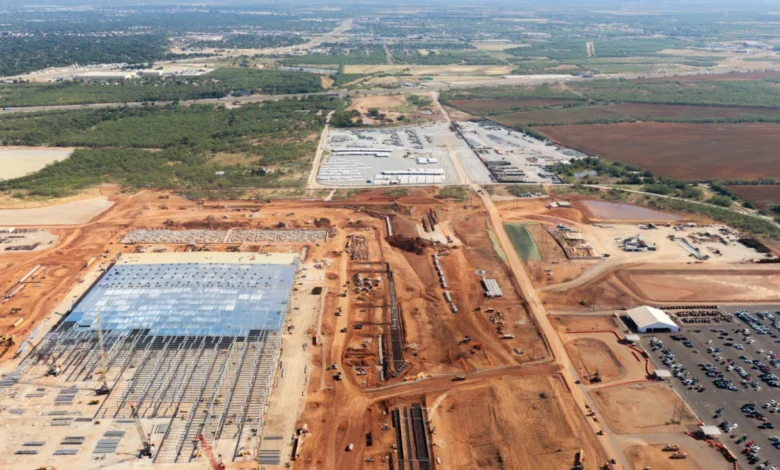
As the construction of massive facilities, such as the 4-million-square-foot Stargate Oracle AI data center in Abilene, Texas, moves toward completion, the nation is witnessing a pivot in regulatory policy. Under the current administration, the EPA has significantly curtailed oversight, raising concerns that the drive to establish the United States as the global leader in AI is occurring at the direct expense of community health and environmental stability.
A Chronology of Regulatory Rollbacks
Since January 2025, the EPA has undergone a fundamental shift in its mission, prioritizing industrial expansion over strict environmental compliance. This transition has been marked by a series of at least 30 distinct policy actions designed to expedite the permitting, construction, and operation of hyperscale data centers.
- Early 2025: The administration begins signaling a "compliance-first" orientation, prioritizing the rapid deployment of energy infrastructure over traditional air quality and pollution oversight.
- Mid-2025: The EPA’s internal research offices—formerly the bedrock of the agency’s scientific rigor—are dismantled. This move effectively ends decades of independent research into emerging pollutants.
- Late 2025: Administrator Lee Zeldin issues a formal memo outlining the agency’s commitment to "cutting heavy-handed regulations," framing the move as essential for AI supremacy.
- Early 2026: The EPA proposes a rule change that permits developers to commence construction on data centers and their auxiliary power plants prior to receiving formal air pollution permits.
- Mid-2026: The agency issues directives to enforcement staff to avoid any regulatory actions that could "unduly burden" power generation, essentially granting a waiver to energy-hungry projects.
The Infrastructure Boom and the Power Grid
The United States currently hosts approximately 3,000 data centers, with over 1,500 more in the planning or early construction phases. This surge is creating an unprecedented strain on the national power grid. Because AI models require continuous, high-density computing power, these facilities cannot rely solely on the intermittent nature of renewable energy. Consequently, many developers are turning to fossil fuels to ensure the 24/7 reliability demanded by their hardware.
In several regions, this has led to the continued operation of aging coal-fired power plants that were previously slated for decommissioning. Furthermore, there is an increasing reliance on onsite fossil-fuel-powered turbines—such as those seen at xAI’s Colossus facility—to bypass grid limitations. These turbines often bypass the stringent emission standards required for large-scale utility plants, leading to a concentrated localized impact on air quality.
Texas, a primary hub for this activity, serves as a microcosm of the national tension. Governor Greg Abbott’s recent decision to pause approvals for new large-scale data center loads connecting to the Texas grid highlights the severity of the infrastructure crisis. The concern is not merely about capacity, but about the reliability and safety of the energy systems serving millions of residents.
Scientific Perspectives on Public Health
For over 35 years, experts like Dan Costa, a former EPA scientist, worked to establish a framework that protected the public from industrial air pollution. According to Costa and his colleagues at the Environmental Protection Network, the current administrative trajectory effectively blinds the government to the consequences of this industrial expansion.
"Transforming the nation’s energy system while simultaneously diminishing our scientific capacity to understand the impacts makes no sense," Costa stated during a recent press briefing. He noted that the EPA, established in 1970, was built on the premise of protecting public health through independent scientific analysis. The loss of that capacity means that there is no longer a robust "check and balance" system for the environmental footprint of the AI industry.
The health implications are significant. Dr. Lynn Goldman, a physician and former EPA administrative official, emphasizes that the pollution associated with the data center boom is not abstract. Exposure to fine particulate matter (PM2.5) and nitrogen oxides—byproducts of fossil-fuel-driven power generation—is linked to a wide array of health issues.
"Some health impacts are felt almost immediately," Dr. Goldman explained. "We see spikes in heart attacks, respiratory distress, and complications in premature births following periods of high pollution exposure. Other, more chronic effects, such as cancer, take years to manifest. The AI industry’s race for a competitive advantage should not be a matter of life or death for the families living near these massive sites."
Data-Driven Risks and Economic Implications
A study cited by the Environmental Protection Network suggests that the pollution levels associated with the rapid AI-driven expansion could lead to as many as 1,300 additional deaths annually. These figures are based on projected emission increases from the power plants required to sustain the massive load of modern GPU clusters.
Economists and environmental analysts point out that while the AI boom promises significant economic growth and technological leadership, the "externalities"—the costs not paid by the industry but borne by the public—are mounting. These costs include:
- Healthcare Expenditures: Increased local pollution correlates with higher rates of chronic illness, shifting the financial burden to public health systems and private insurers.
- Water Scarcity: Data centers require massive quantities of water for cooling purposes. In regions like Texas or the American Southwest, this places additional pressure on local aquifers and municipal water supplies, potentially leading to increased utility rates for households.
- Electricity Pricing: The prioritization of data center power loads can create volatility in local electricity markets, as utilities struggle to balance the massive demands of tech giants with the needs of residential consumers.
Official Policy and Future Outlook
The current administration’s stance remains clear. By positioning the U.S. as the "AI Capital of the World," officials argue that the regulatory "cutting" is a necessary sacrifice for national security and economic dominance. Administrator Lee Zeldin has framed these rollbacks as an effort to ensure the U.S. does not fall behind international competitors in the race for artificial general intelligence.
However, the divergence between federal policy and local sentiment is widening. In 2026, data centers have become a central topic in the midterm elections. Conservatives in various districts have begun to push back, citing concerns over property rights, land-use control, and the skyrocketing cost of electricity for rural families. Meanwhile, environmental groups and opposition lawmakers are focusing on the long-term degradation of water and air quality.
As the Stargate Oracle facility in Abilene nears completion, it serves as a litmus test for the industry. If the project proceeds with minimal oversight and results in localized environmental degradation, it may serve as a catalyst for a more restrictive regulatory environment in the coming years.
Ultimately, the conflict pits the immediate, tangible requirements of the digital age against the long-term, essential requirements of public health. As the nation prepares for the next phase of the AI revolution, the fundamental question remains: can the United States maintain its position as a global technology leader without compromising the environmental safeguards that protect its citizens? For now, the administration has chosen to prioritize speed, leaving communities to navigate the hidden, and potentially lasting, costs of the AI boom.
Related posts: