The Hidden Health Costs of the AI Infrastructure Boom and the Erosion of Federal Environmental Oversight

The rapid ascent of artificial intelligence as the cornerstone of the American economy has triggered a massive industrial land grab, characterized by the construction of hyper-scale data centers across the United States. While Silicon Valley titans dominate headlines with proclamations regarding the existential risks posed by future superintelligence, a coalition of former Environmental Protection Agency (EPA) officials and public health experts are pointing toward a more immediate and tangible threat: the public health consequences of the energy infrastructure required to sustain this digital expansion. As of late 2026, the United States hosts approximately 3,000 data centers, with over 1,500 additional facilities in various stages of planning and development. This surge in energy-intensive infrastructure is coinciding with a fundamental shift in federal environmental policy, raising concerns that the race for AI supremacy is outpacing the guardrails designed to protect air and water quality.
The Stargate Oracle and the Texas Model
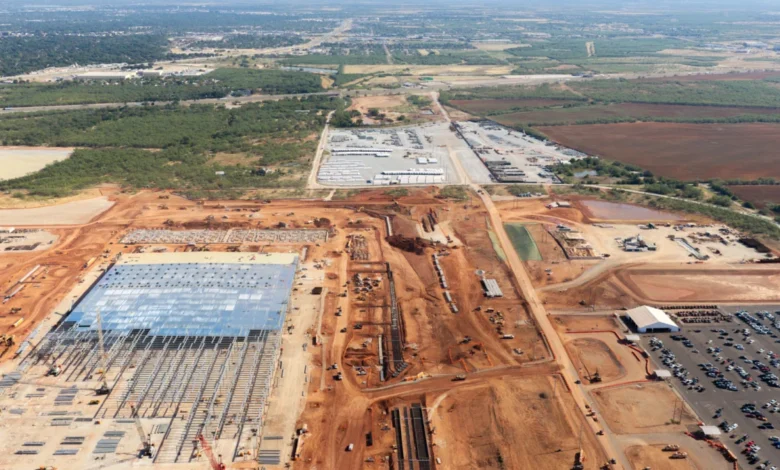
The physical manifestation of this trend is currently visible in Abilene, Texas, where construction is nearing completion on the Stargate Oracle AI data center. Spanning approximately 4 million square feet, the facility represents a new class of "hyperscale" infrastructure designed to support the immense computational demands of OpenAI’s models. The site serves as a bellwether for the logistical and environmental challenges facing the industry.
The project has become a focal point of debate leading into the 2026 Midterm elections. While proponents champion the site as a pillar of national technological competitiveness, critics—ranging from local landowners concerned about property rights to environmental groups monitoring water consumption—have highlighted the project’s massive draw on the Texas power grid. The strain has reached such a level that Governor Greg Abbott has implemented a pause on approvals for new large-scale data center loads, signaling that even in states historically friendly to industrial expansion, the physical limitations of the power grid are forcing a reevaluation of the AI boom’s sustainability.
Chronology of Regulatory Shift
The current regulatory environment is the result of a systematic policy pivot initiated in early 2025. Since the start of the current administration, the EPA has executed at least 30 distinct actions aimed at streamlining the permitting process for industrial energy projects.
- January 2025: The new administration signals a priority shift toward energy independence and AI infrastructure development, emphasizing the reduction of "heavy-handed regulations."
- July 2025: Reports emerge regarding the dismantling of key EPA research divisions, specifically those tasked with evaluating long-term pollution impacts and climate modeling.
- Late 2025: EPA Administrator Lee Zeldin issues an internal directive prioritizing a "compliance-first" orientation, effectively discouraging aggressive enforcement of legacy pollution standards that could delay construction.
- 2026 Q1-Q3: The administration proposes a rule change that would allow developers to initiate construction of data centers and associated power generation facilities prior to the receipt of formal air pollution permits, provided they meet preliminary requirements.
This timeline illustrates a deliberate move to prioritize speed-to-market for digital infrastructure over the traditional, more rigorous environmental review processes that governed such developments for decades.
The Erosion of Scientific Capacity
For over 50 years, the EPA functioned as the primary watchdog for industrial air quality. Dan Costa, a veteran of 35 years at the agency, notes that the institutional knowledge base—comprising toxicologists, atmospheric scientists, and engineers—has been significantly depleted. This brain drain is not merely a bureaucratic change; it represents a loss of the agency’s ability to conduct independent oversight of new, emerging industrial threats.
"The mission was to protect the American people from industrial air pollution," Costa stated during a recent press briefing organized by the Environmental Protection Network. "By gutting the scientific capacity to understand the impacts of our rapidly transforming energy system, the government is effectively flying blind while the industrial footprint of the country undergoes its most significant expansion since the mid-20th century."
Data-Driven Risks and Public Health
The core of the concern lies in the energy source. To meet the 24/7 power demands of AI data centers, developers are increasingly turning to fossil-fuel-reliant solutions. In several regions, aging coal-fired power plants that were scheduled for decommissioning have been granted stays of execution to provide the necessary baseload power for new server farms. Furthermore, the use of onsite natural gas turbines—as seen in the infrastructure supporting hyperscale projects like xAI’s Colossus—bypasses the traditional, regulated grid, often with less oversight regarding emissions.
A study cited by the Environmental Protection Network suggests that the current trajectory of pollution associated with the AI energy boom could contribute to as many as 1,300 additional premature deaths per year. Dr. Lynn Goldman, a physician and former EPA administrator, warns that these effects are not abstract. "Particulate matter exposure is linked to immediate health events, including heart attacks and respiratory distress," Goldman noted. "When we loosen air quality standards to accommodate rapid industrial growth, we are essentially making a choice to accept a specific level of excess mortality as a cost of doing business."
Official Responses and the "AI Capital" Strategy
The administration’s stance remains one of aggressive technological nationalism. In a memorandum circulated last year, EPA Administrator Lee Zeldin framed the deregulation as a matter of national security and economic vitality. The memo explicitly states that the agency is committed to "cutting heavy-handed regulations" to ensure that the United States remains the "AI Capital of the World."
Proponents of this strategy argue that the rapid deployment of AI infrastructure is essential to maintain a competitive advantage over global rivals. They contend that the economic growth spurred by AI will provide the capital and technological innovation necessary to solve long-term environmental issues. From this perspective, the current environmental trade-offs are considered manageable and necessary to secure a dominant position in the global digital economy.
Broader Implications for 2026 and Beyond
The intersection of data center expansion and environmental regulation has become a flashpoint for the 2026 Midterm elections. The discourse is split along familiar partisan lines, yet with unique regional nuances.
- Conservatives are increasingly vocal about the impacts on local land-use control and the rising electricity prices that burden residential ratepayers as data centers claim an ever-larger share of the grid.
- Democrats and Environmental Organizations are focusing their criticism on the long-term health implications of increased particulate pollution and the strain on local water resources, which are essential for the cooling systems of massive server farms.
As the nation approaches the end of 2026, the Stargate Oracle project in Abilene stands as a testament to the scale of the AI revolution. Whether this infrastructure can be integrated into the nation’s power grid without compromising public health remains the defining question of the era. The shift in EPA oversight has created an environment where industrial speed is prioritized, but the lack of independent, peer-reviewed data on the cumulative health effects of these data centers suggests that the full cost of this "AI boom" may not be fully understood until long after the facilities are operational.
Ultimately, the challenge for policymakers is to reconcile the undeniable economic and strategic importance of AI with the mandate to maintain a habitable and safe environment. As the regulatory landscape continues to evolve, the public is left to weigh the potential of a digital future against the very real, and potentially immediate, costs of the physical infrastructure that powers it. The coming months will likely see increased litigation and legislative scrutiny, as communities and advocacy groups seek to re-establish the guardrails that were dismantled during the current administration’s push for technological supremacy.