The Enduring Mystery of the Santa Maria
The legend of the Santa Maria, the flagship of Christopher Columbus’s first voyage to the Americas, has persisted for over five centuries. Historical records indicate the ship ran aground on a coral reef off the northern coast of present-day Haiti on Christmas Eve in 1492. While the crew was rescued, the vessel was abandoned. In 2014, underwater archaeologist Barry Clifford sparked international headlines by suggesting he had identified the wreckage. However, subsequent investigations by UNESCO and other maritime experts concluded that the remains belonged to a vessel from a later era, likely the 17th or 18th century. The Santa Maria remains lost, a phantom of the Age of Discovery, illustrating the difficulty of verifying maritime archaeological finds where wooden structures have long since succumbed to the biological and physical forces of the Caribbean.
The Lost Fortune of the Flor de la Mar
The Flor de la Mar, a massive Portuguese carrack, represents one of the most significant "missing" treasures in history. Measuring 118 feet in length and standing over 111 feet high, the vessel was an engineering marvel for its time, serving as a critical link in the Portuguese trade routes between India and Europe. In 1511, while navigating a severe storm off the coast of Sumatra, Indonesia, the ship foundered. It reportedly carried the entire personal fortune of the Portuguese governor of Malacca, a hoard of gold and precious stones estimated in contemporary currency at approximately $2.6 billion. The loss was a catastrophic economic blow to the Portuguese colonial administration. Despite numerous private expeditions over the last four centuries, the ship’s precise resting place remains unconfirmed, fueling ongoing debates over salvage rights and the preservation of underwater cultural heritage.
The SS Waratah: Australia’s Titanic
Before the sinking of the Titanic in 1912, the maritime world was shaken by the disappearance of the SS Waratah in 1909. Often referred to as "Australia’s Titanic," the passenger-cargo liner was en route from Durban, South Africa, to Cape Town when it vanished with 211 passengers and crew on board. Despite extensive searches, no debris was ever definitively linked to the vessel, and its fate remains one of the most enduring mysteries of the 20th century. Theoretical causes range from structural instability—specifically, a lack of transverse stability—to a rogue wave or an explosion in the coal bunkers. The failure of the National Underwater and Marine Agency to locate the wreck in the late 1990s reinforced the reality that, without a precise last-known-position, the vastness of the Indian Ocean can effectively erase a massive vessel from the map.
The USS Indianapolis and the Dawn of the Nuclear Age
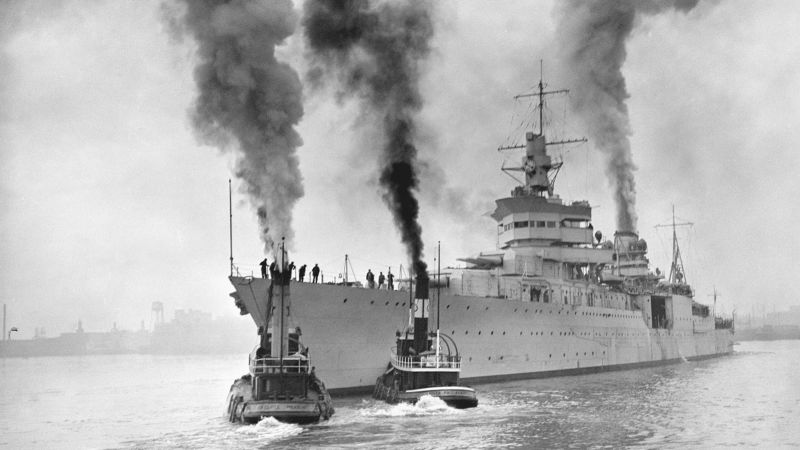
The discovery of the USS Indianapolis in 2017 by a research team led by the late Paul Allen concluded a 72-year search for one of the most storied ships in American naval history. The heavy cruiser played a clandestine role in the final stages of World War II, having delivered the components for the "Little Boy" atomic bomb to Tinian Island. On its return journey, the ship was torpedoed by a Japanese submarine. The tragedy was compounded by a delayed rescue, which left survivors exposed to extreme dehydration, exposure, and, notoriously, repeated shark attacks. The wreck was finally located 18,000 feet beneath the Pacific surface, providing a site of remembrance for the survivors and the families of the 879 men who perished. The recovery of the site served as a vital, if somber, contribution to the historical record of the Pacific Theater.
The Ethics of Maritime Archaeology and the Slave Trade
The investigation into the "triangular trade" vessels has shifted the focus of maritime archaeology from mere treasure hunting to the documentation of human suffering. It is estimated that approximately 1,000 ships involved in the forced migration of 12 to 13 million Africans now lie on the ocean floor. Notable among these is the São José, which sank off the coast of South Africa in 1794. The project to recover artifacts from this site, led by the group Diving With a Purpose, represents a paradigm shift in how we view underwater sites. By recovering items like iron ballasts and shackles, researchers are not just documenting the mechanics of the ship, but providing tangible evidence of a systemic atrocity. The implications of these findings are profound, as they force a modern reckoning with the historical legacies of enslavement and the importance of preserving these sites as underwater memorials rather than sites of exploitation.

Ancient Trade and the Uluburun Shipwreck
Maritime archaeology also offers a window into the Bronze Age, as evidenced by the 1982 discovery of the Uluburun shipwreck off the coast of Turkey. Dated to the late 14th century BCE, this vessel provided unprecedented insight into the trade networks of the ancient Mediterranean. The cargo—ten tons of copper, glass beads, and agricultural products—revealed a sophisticated international trade system that connected disparate civilizations. The recovery of these items, currently housed in the Bodrum Museum of Underwater Archaeology, demonstrates the potential for underwater sites to rewrite our understanding of ancient economic history.
The Vasa: A Lesson in Maritime Engineering
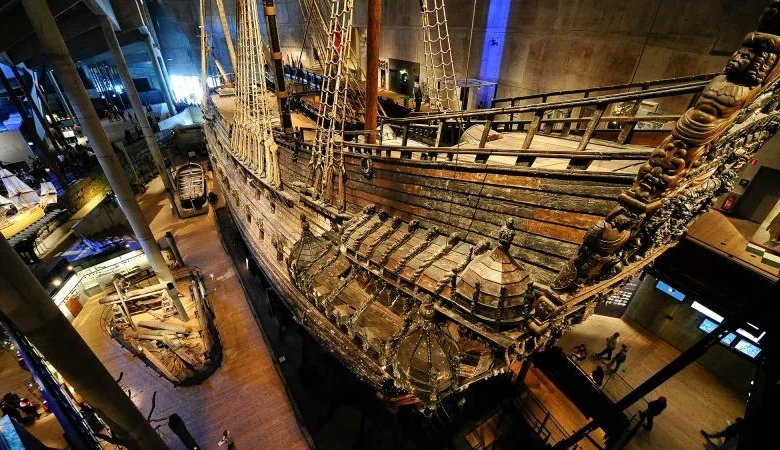
In contrast to the "missing" ships, the Swedish warship Vasa stands as a monument to the risks of over-engineering. Launched in 1628, the ship capsized less than a mile into its maiden voyage. Its preservation is unique; because the Baltic Sea lacks the shipworm Teredo navalis, which destroys wood in warmer waters, the hull remained remarkably intact. Raised in 1961, the ship was found adorned with 700 sculptures and decorations that served as state propaganda for King Gustav II Adolf. The Vasa Museum in Stockholm has since hosted over 25 million visitors, serving as a testament to the preservation efforts required to maintain such a delicate piece of history after three centuries of submersion.
The Casualties of Conflict: Chuuk Lagoon
Chuuk Lagoon in Micronesia stands as a distinct category of shipwreck site. Following "Operation Hailstone" in 1944, the lagoon became the resting place for over 60 Japanese naval vessels. Today, it functions as an accessible, if haunting, subaquatic museum. Unlike the deep-sea wrecks of the Indianapolis, the shallow depth of the lagoon allows for detailed study of the ships’ armaments, communication systems, and personal belongings of the crew. These sites serve as critical data points for historians studying the tactical evolution of naval warfare during the Pacific campaign.

The Legacy of Abandoned Vessels
The MS World Discoverer, which ran aground in the Solomon Islands in 2000, illustrates the contemporary lifecycle of shipwrecks. Unlike the historic vessels preserved for their archaeological value, the MS World Discoverer is a modern derelict. It serves as a stark visual reminder of the sea’s power, resting at a 46-degree angle as it slowly surrenders to the corrosive effects of saltwater. Its presence in Roderick Bay highlights the ongoing challenge of maritime waste management and the environmental impact of shipwrecks on local ecosystems.
The study of these vessels, whether they remain lost in the deep or are displayed in climate-controlled museums, is essential. They are not merely objects of curiosity; they are physical archives that hold the truth about the past, from the mechanics of global trade to the horrors of war and enslavement. As underwater technology improves, our ability to document these sites will continue to expand, ensuring that even the most elusive vessels eventually contribute to our broader historical understanding.