
Tag Us Supreme Court
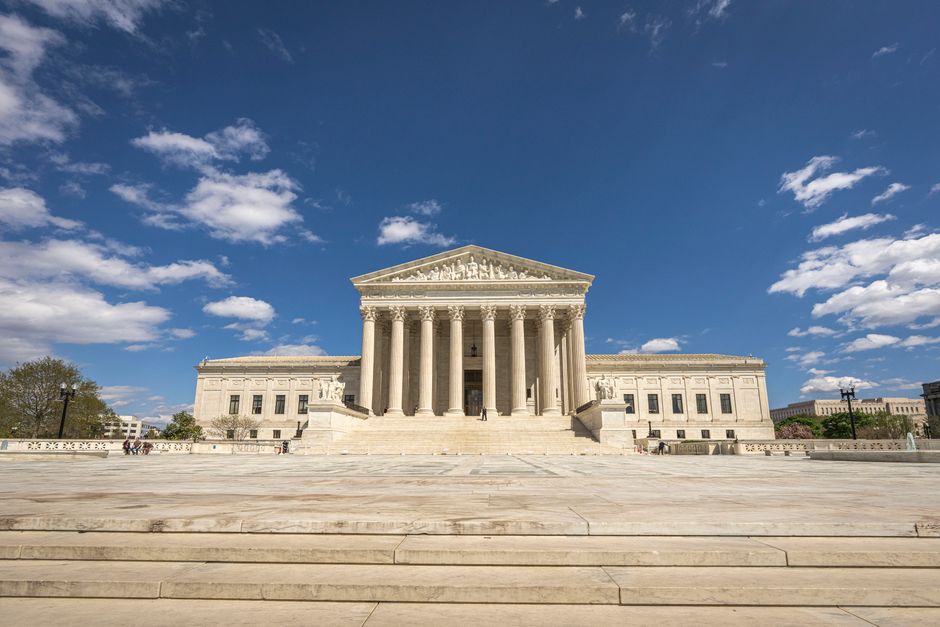
The Supreme Court: A Pillar of American Justice and its Enduring Impact on Tagging Practices
The Supreme Court of the United States, often referred to as SCOTUS, is the highest court in the federal judiciary of the United States. Its decisions are final and binding, influencing legal precedent across the nation and shaping the interpretation and application of the U.S. Constitution. While the Court’s purview extends to a vast array of legal matters, its rulings and the principles it upholds have, directly and indirectly, impacted various aspects of society, including, in a contemporary context, the evolving landscape of digital tagging and online content organization. This article will explore the foundational role of the Supreme Court, its historical significance, and how its jurisprudence, particularly concerning intellectual property, free speech, and digital privacy, offers a framework for understanding the complexities of tagging in the digital age.
At its core, the Supreme Court functions as the ultimate arbiter of legal disputes. Established by Article III of the Constitution, it was designed to provide a unified and authoritative interpretation of federal law. The Court comprises the Chief Justice of the United States and eight Associate Justices, all nominated by the President and confirmed by the Senate for life terms. This independence from political pressure is crucial to its ability to administer justice impartially. The Court’s caseload is discretionary, meaning it chooses which cases to hear, typically selecting those that raise significant constitutional questions or present conflicts in lower court decisions. These carefully chosen cases then set precedents that guide future legal interpretations and practices across all levels of the U.S. judicial system.
The historical trajectory of the Supreme Court is intrinsically linked to the development of American law and governance. Landmark decisions have defined the scope of individual rights, the balance of power between the federal government and the states, and the fundamental principles of democracy. Cases like Marbury v. Madison (1803), which established the principle of judicial review, empowering the Court to declare laws unconstitutional, have solidified its position as a co-equal branch of government. Subsequent rulings, such as those in the Civil Rights era (e.g., Brown v. Board of Education, 1954) and those concerning individual liberties (e.g., Miranda v. Arizona, 1966), have profoundly shaped American society and its legal framework. These historical precedents serve as the bedrock upon which contemporary legal challenges are assessed, including those that might emerge in the burgeoning digital realm.
The concept of "tagging," in its modern digital context, refers to the practice of assigning keywords or metadata to digital content, such as images, videos, articles, or social media posts, to facilitate organization, retrieval, and discovery. While seemingly a mundane technical function, the underlying principles of ownership, attribution, and the dissemination of information intersect with legal doctrines that have been shaped and defined by the Supreme Court over centuries. Understanding the Supreme Court’s role in intellectual property law is therefore essential to appreciating the legal implications of tagging.
Intellectual property law, encompassing copyright, patent, and trademark, is a significant area where Supreme Court jurisprudence directly impacts how content is created, shared, and attributed. Copyright law, for instance, grants creators exclusive rights to their original works, including the right to reproduce, distribute, and display their creations. When users tag content, they are, in essence, interacting with these intellectual property rights. For example, tagging a copyrighted image without permission could, in certain circumstances, be construed as unauthorized reproduction or distribution, potentially infringing upon the copyright holder’s rights. The Supreme Court has consistently affirmed the importance of copyright protection, viewing it as a mechanism to incentivize creativity and innovation. Decisions that clarify the boundaries of fair use, transformative use, and the scope of infringement are crucial for creators and users alike. In the digital age, where content is easily copied and disseminated, these principles become even more critical. The ease with which one can "tag" an image on a social media platform, for instance, raises questions about whether such an action constitutes an infringing act, especially if the tag is associated with commercial use or misattribution.
Moreover, the Supreme Court’s interpretations of trademark law also bear relevance to tagging practices. Trademarks protect brand names and logos, preventing consumer confusion. While less direct than copyright, the misuse of trademarks within tags, especially for deceptive or parasitic purposes, could potentially lead to trademark infringement claims. For example, using a well-known brand’s name in a tag to falsely imply endorsement or affiliation could be legally problematic. The Court’s rulings on trademark dilution and the likelihood of consumer confusion provide a framework for analyzing such scenarios.
Beyond intellectual property, the Supreme Court’s long-standing commitment to the First Amendment, particularly the guarantees of freedom of speech and the press, is a foundational element influencing the digital space and, by extension, tagging. Freedom of speech protects the right to express oneself, which is fundamental to the creation and dissemination of content, including the way that content is described and categorized through tags. However, this freedom is not absolute. The Supreme Court has established limitations on speech that is defamatory, incites violence, constitutes obscenity, or infringes upon the intellectual property rights of others.
In the context of tagging, freedom of speech considerations arise when tags are used to express opinions, critiques, or commentary. For example, tagging a product with negative but truthful feedback is generally protected. However, the line between protected opinion and unprotected defamation can be blurry, and Supreme Court decisions on libel and slander provide guidance. Furthermore, the Court’s jurisprudence on the regulation of online content, particularly concerning platforms’ responsibilities for user-generated content, is evolving and has significant implications for tagging. While platforms are often shielded from liability for user content under Section 230 of the Communications Decency Act, the extent of this immunity and how it applies to the moderation and tagging of content is a subject of ongoing debate and potential legal challenge.
Digital privacy is another area where the Supreme Court’s influence is increasingly felt, and this directly intersects with the data collected and utilized through tagging systems. As more information is tagged and categorized, concerns about how this data is collected, stored, and used by platforms and third parties become paramount. The Supreme Court has addressed privacy rights in various contexts, from search and seizure to the collection of personal information. While specific rulings directly on digital tagging privacy might be nascent, the principles established in cases concerning the Fourth Amendment and expectations of privacy in digital information are highly relevant. The Court’s decisions on what constitutes a "reasonable expectation of privacy" in data held by third parties, or data accessed through digital devices, can inform the legal standards applied to the privacy of tagged data. For instance, if tagged information is considered sensitive or revealing about an individual’s habits or beliefs, and this data is collected without explicit consent or is subject to breaches, it could raise privacy concerns that align with established constitutional protections.
The evolving nature of technology constantly presents new challenges for the legal system, and the Supreme Court plays a crucial role in interpreting existing laws and, at times, shaping new legal principles to address these challenges. As artificial intelligence (AI) becomes more sophisticated in its ability to automatically tag content, generating metadata and categorizing information with minimal human intervention, new legal questions emerge. For example, who is liable if an AI system misidentifies or miscategorizes content, potentially leading to defamation or intellectual property infringement? Does the AI itself have any legal standing, or is liability solely with the developer or user of the AI? The Supreme Court, through its interpretation of existing laws and its potential review of cases involving AI-generated content and liability, will undoubtedly shape the legal landscape in this burgeoning area.
Furthermore, the global nature of the internet and digital tagging means that legal frameworks developed within the United States, as interpreted by the Supreme Court, can have a ripple effect internationally. While other jurisdictions have their own legal systems and precedents, the U.S. Supreme Court’s pronouncements on fundamental rights and legal principles, particularly in areas like intellectual property and free speech, often inform global discussions and legal developments. The principles of fairness, attribution, and responsible information dissemination that underpin the Court’s jurisprudence offer a valuable, albeit not universally adopted, model for addressing the complexities of digital tagging worldwide.
In conclusion, while the Supreme Court may not directly adjudicate cases specifically about "tagging" in the colloquial sense, its enduring legacy of defining constitutional rights, intellectual property law, and privacy principles provides the essential legal bedrock for understanding and navigating the complexities of digital tagging. The Court’s role as the ultimate interpreter of the Constitution ensures that as technology evolves and our methods of organizing and accessing information change, the fundamental legal protections and obligations remain a guiding force. The principles of copyright, fair use, freedom of speech, and privacy, as shaped by centuries of Supreme Court jurisprudence, are indispensable in addressing the legal and ethical considerations surrounding the pervasive practice of tagging in the digital age. SEO-driven keywords in this context include: Supreme Court, SCOTUS, US Law, Constitutional Law, Intellectual Property, Copyright Law, Trademark Law, First Amendment, Freedom of Speech, Digital Privacy, Online Content, Tagging, Metadata, Digital Age, Legal Precedent, Judicial Review, U.S. Constitution.
