Rethinking Microplastic Exposure: How Scientific Rigor is Challenging Assumptions About Plastic in the Human Body

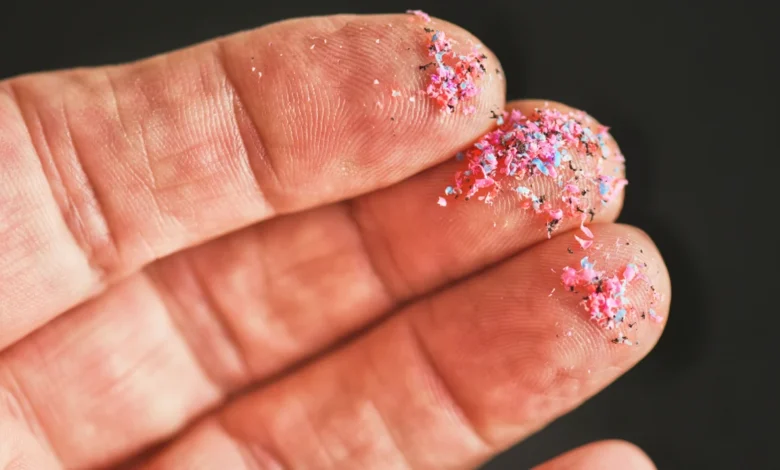
The ubiquity of plastic pollution has shifted from a visible environmental crisis in the world’s oceans to an invisible biological presence within the human body. Over the last decade, scientific literature has increasingly documented the presence of microplastics—defined as plastic particles smaller than five millimeters—in everything from remote Arctic snow to the deepest reaches of the Mariana Trench. However, as the focus turns toward human health, new research is highlighting a critical challenge: the very tools and environments used to study these particles are often so saturated with plastic that they may be skewing the results of global health studies.
Dr. Cassandra Rauert, an environmental chemist at the University of Queensland, has emerged as a leading voice in the effort to bring analytical precision to this emerging field. Her recent work suggests that the scientific community may have overestimated the concentration of certain plastics in human tissue due to laboratory contamination and chemical misidentification. While the presence of plastic in the human body is a confirmed reality, Rauert’s findings indicate that the scale and nature of this exposure require a fundamental reassessment to ensure that future health regulations are based on accurate data.
The Technical Challenge: Distinguishing Lipids from Polyethylene
One of the most significant hurdles in microplastic research is the chemical similarity between plastic polymers and naturally occurring biological substances. In a landmark paper published in 2023, Rauert and her colleagues demonstrated that lipids—the fats found naturally in human blood—can produce "false positives" for polyethylene, the world’s most commonly produced plastic.
The issue lies in the analytical instruments used to detect polymers, such as pyrolysis-gas chromatography-mass spectrometry (Py-GC-MS). These machines break down samples using heat to identify their chemical building blocks. Because lipids and polyethylene share similar hydrocarbon structures, the signals they produce are nearly identical. Rauert’s analysis of 18 previous studies on microplastics in human blood revealed that many had likely failed to account for this overlap, potentially reporting naturally occurring fats as inhaled or ingested plastic.
This discovery has profound implications for the credibility of the field. If the baseline concentrations of microplastics in the human body are being miscalculated, the subsequent toxicological studies—which aim to determine what dose of plastic causes harm—may be operating on flawed premises. Rauert’s work emphasizes that before the scientific community can declare a "safe" or "dangerous" level of plastic exposure, it must first perfect the art of detection.
A Chronology of Microplastic Discovery and Research
The evolution of microplastic research has moved with remarkable speed, transitioning from an ecological concern to a medical one in less than twenty years.
- 2004: Professor Richard Thompson of the University of Plymouth coins the term "microplastics" to describe the accumulation of microscopic plastic fragments in the marine environment.
- 2011: Research begins to highlight the presence of synthetic fibers in sewage and coastal sediments, linking domestic laundry to global plastic distribution.
- 2018: The first major study confirms the presence of microplastics in human stool samples, providing the first definitive proof that plastic is passing through the human digestive tract.
- 2020-2021: Microplastics are detected in the human placenta and lung tissue, raising concerns about the ability of these particles to cross biological barriers.
- 2022: A high-profile study claims to find microplastics in human blood for the first time, sparking a global media frenzy.
- 2023-2024: Researchers like Rauert begin to publish critiques of these findings, calling for "clean room" protocols and more rigorous controls to eliminate the risk of laboratory-induced contamination.
The Clean Room Revolution: Rebuilding the Laboratory
To address the issue of contamination, Rauert and her team at the University of Queensland took the extraordinary step of rebuilding their laboratory from the ground up. In a standard chemistry lab, plastic is an essential material; it is used in pipettes, Petri dishes, storage containers, and even the seals on windows. For a scientist trying to measure particles that are invisible to the naked eye and floating in the air, a standard lab is a "hot zone" of contamination.
Working with architects, Rauert’s team tested over 30 different construction materials. They discovered that nearly every modern building material contained either plastic polymers or plasticizing additives like phthalates. To circumvent this, they constructed a specialized suite of three interconnected rooms made almost entirely of stainless steel and glass.
The facility utilizes a "positive pressure" system, which ensures that when a door is opened, air is pushed out of the room rather than sucked in, preventing outdoor dust and fibers from entering the workspace. The results were stark: levels of plastic and phthalate contamination in the clean room were 100 times lower than in a standard laboratory. This level of environmental control is now being viewed as the "gold standard" for researchers seeking to provide definitive evidence of plastic’s presence in human tissue.
Debunking the "Credit Card" Myth
Perhaps the most famous statistic in the history of plastic pollution is the claim that the average person consumes five grams of plastic every week—the equivalent weight of a credit card. This figure originated from a 2019 report commissioned by the World Wildlife Fund (WWF) and has since been cited by thousands of news outlets and policymakers.
However, Rauert and other analytical chemists have sought to debunk this narrative. While humans are undoubtedly ingesting plastic, the "credit card" estimate is based on extreme assumptions and outdated data regarding the concentration of microplastics in drinking water and shellfish. Rauert’s research into the shedding of particles from food containers suggests that while ingestion is occurring, the actual mass of plastic entering the body is significantly lower than a credit card per week.
The danger of such "clickbait" statistics, according to experts, is that they can lead to public fatigue or skepticism if the science does not bear them out. By refining these estimates, scientists hope to focus public attention on the actual risks, which may be related more to the chemical additives in plastic than the volume of the plastic itself.
Vectors of Exposure: From Kitchens to Car Tires
While the volume of plastic ingestion may be lower than previously feared, the variety of exposure routes is expanding. Rauert’s research identifies several primary vectors through which microplastics and their associated chemicals enter the human body:
- Synthetic Textiles: Polyester and nylon clothing shed millions of microfibers during wear and drying. Inhalation of these fibers in the home environment is a major, yet understudied, pathway.
- Tire Wear: Car tires are composed of synthetic polymers and a cocktail of chemical stabilizers. As tires wear down on the road, they release "tire road wear particles" (TRWP). These particles are frequently found in household dust and on residential balconies, particularly in urban areas.
- Kitchen Utensils: Plastic chopping boards and utensils are significant sources of direct ingestion. When a knife strikes a plastic board, it carves out microscopic shards that are then transferred directly to food.
- Food Packaging: Heating food in plastic containers or using plastic wraps can cause the migration of both microplastics and endocrine-disrupting chemicals into the meal.
The Health Implications: Particles vs. Chemicals
The scientific community currently distinguishes between two types of risk: physical and chemical.
The physical risk involves the plastic particles themselves. The human body is equipped to excrete most large particles through the digestive system. However, the "nano-sized" particles—those small enough to cross the gut wall into the bloodstream or the blood-brain barrier—remain a mystery. Toxicologists are concerned that these shards could cause localized inflammation or physical damage to cells, though Rauert notes that many past studies used "perfect spheres" of polystyrene in labs, which do not accurately represent the jagged, irregular fragments found in the real world.
The chemical risk is better understood but no less concerning. Plastics are often "delivery vehicles" for additives such as phthalates and bisphenols (like BPA). These substances are known endocrine disruptors, which can interfere with hormones, impact fertility, and have been linked to metabolic disorders like Type 2 diabetes. Even if the plastic particle itself passes through the body, it may leave these chemicals behind in the blood or fatty tissues.
Analysis: The Path Toward Regulation
The work of Cassandra Rauert arrives at a pivotal moment for global policy. The United Nations is currently in the process of negotiating a Global Plastics Treaty, with the goal of creating a legally binding international instrument to end plastic pollution. Central to these negotiations is the "precautionary principle"—the idea that in the absence of scientific consensus, the burden of proof falls on those who claim a substance is safe.
However, industry groups often use the "lack of definitive data" as a tactic to delay regulation. Rauert’s push for higher scientific standards is intended to close this loophole. By providing undeniable, contamination-free data, scientists can strip away the "uncertainty" that corporations use to resist change.
The implications of this research are clear: while we may not be eating a credit card a week, the infiltration of synthetic polymers into our homes, our air, and our bodies is an unprecedented biological experiment. The move toward stainless steel labs and more rigorous chemical analysis is not just about scientific pedantry; it is about building the evidentiary foundation necessary to protect human health in a plastic-saturated world. As Rauert suggests, until we can accurately measure the problem, we cannot hope to solve it. Reducing reliance on single-use plastics and returning to traditional materials like wood, glass, and metal remains the most effective individual and societal response to an invisible but pervasive threat.
Related posts: