The Evolution of Live Tourism and the Rise of Ari Emanuel’s Event-Driven Travel Empire

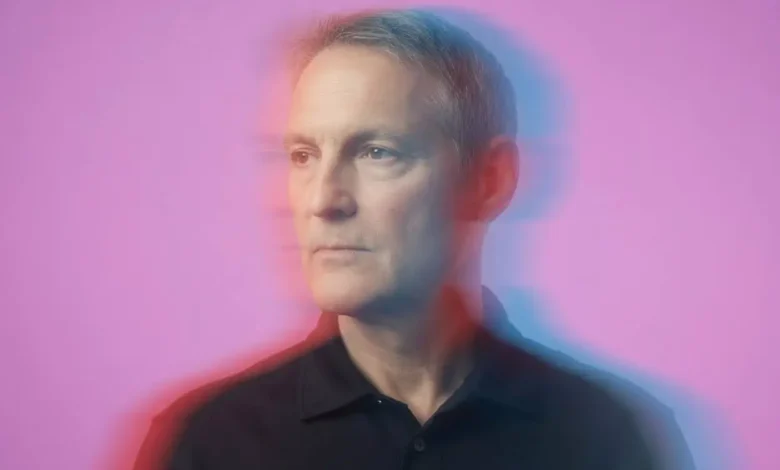
The landscape of global travel is undergoing a fundamental shift, driven not by traditional hoteliers or airline executives, but by a Hollywood powerhouse and a new philosophy of consumer behavior. At the center of this transformation is Ari Emanuel, the CEO of Endeavor and the architect of a burgeoning travel ecosystem that the industry is only beginning to comprehend. By integrating talent representation, event ownership, and high-end hospitality logistics, Emanuel is moving beyond the traditional boundaries of the entertainment industry to capture the most lucrative segment of the modern economy: "Live Tourism."
Live Tourism represents travel specifically organized around scheduled, high-stakes events, ranging from the FIFA World Cup and the Super Bowl to global concert tours and international art fairs. While the concept of traveling for an event is not new, the method of monetization has changed. Historically, the travel industry—comprised of airlines, hotels, and Online Travel Agencies (OTAs)—has functioned by servicing existing demand. In this model, a traveler decides to attend an event and then seeks out a room or a flight. Emanuel’s strategic maneuvers suggest a reversal of this flow: his companies now own the events that create the demand, the platforms that market them, and the infrastructure that converts a fan into a high-spending traveler.
The 2026 World Cup: A Benchmark for Live Tourism
The scale of this shift is best exemplified by the upcoming 2026 FIFA World Cup, which will culminate in a final match at MetLife Stadium in East Rutherford, New Jersey. This tournament is set to be the largest in history, featuring 104 matches across 16 host cities in the United States, Mexico, and Canada. Beyond the pitch, the event represents the highest-grossing World Cup hospitality program ever assembled.
The management of this massive hospitality operation is controlled by companies under Emanuel’s influence, specifically through On Location, the premium hospitality firm acquired by Endeavor in 2020. By securing the rights to manage the travel and hospitality packages for the world’s largest sporting event, Emanuel has positioned his firm to capture revenue at every touchpoint of the fan journey. This includes not just the ticket, but the luxury accommodation, the private transport, and the exclusive pre-match experiences that modern high-net-worth travelers demand.
The 2026 tournament is expected to generate record-breaking revenue for FIFA, with projections exceeding $11 billion for the 2023-2026 cycle. A significant portion of this growth is attributed to the expanded hospitality offerings, which cater to a global elite willing to pay a premium for guaranteed access and seamless logistics in a crowded market.
From Servicing Demand to Originating Demand
The traditional travel industry operates on a reactive basis. When a major event is announced, hotels raise their rates and airlines adjust their schedules. Companies like Expedia, Booking.com, and Marriott are experts at capturing the "servicing" phase of the transaction. However, they remain dependent on external factors to drive traffic to their platforms.
In contrast, the empire Emanuel is building through Endeavor and TKO Group Holdings (the entity formed by the merger of the UFC and WWE) focuses on "originating" demand. When the UFC schedules a title fight in Abu Dhabi or the WWE brings WrestleMania to Philadelphia, they are not just selling tickets; they are creating a reason for thousands of people to book flights and hotels.
By owning the content—the sport, the performers, and the intellectual property—Emanuel’s companies control the "top of the funnel." They are the reason the traveler leaves their home. Over the past nine months, the integration of these assets has accelerated. TKO Group Holdings now operates as a powerhouse in live sports entertainment, providing a year-round calendar of events that ensures a constant flow of Live Tourism. This vertical integration allows the company to offer bundled "experience packages" directly to the consumer, effectively bypassing traditional travel agents and OTAs.
Chronology of an Empire: The Path to Market Dominance
The rise of this new travel model is the result of a decade of aggressive acquisitions and strategic pivots.
- 2016: Endeavor (then WME-IMG) acquires the UFC for approximately $4 billion. This marks the beginning of the firm’s shift from representing talent to owning the platforms where talent performs.
- 2020: Endeavor acquires a majority stake in On Location for $660 million. On Location holds exclusive hospitality rights for the NFL (including the Super Bowl), the NCAA, and the Olympic Games. This acquisition is the cornerstone of the Live Tourism strategy.
- 2021: Endeavor goes public, signaling to Wall Street that its business model is no longer just about Hollywood "ten-percenting," but about global media and experience ownership.
- 2023: Endeavor facilitates the merger of the UFC and WWE to form TKO Group Holdings, a $21 billion entity. This merger creates a massive, global live-event schedule that operates 52 weeks a year.
- 2024 and Beyond: The focus shifts to the 2024 Paris Olympics and the 2026 FIFA World Cup. These events serve as the ultimate proof of concept for the "Live Tourism" model, demonstrating that experience-based travel is the most resilient sector of the industry.
Supporting Data: The Economics of Experience
The financial rationale for Emanuel’s pivot is supported by broader economic trends. Data from various travel associations and financial institutions indicate that consumer spending has shifted dramatically from "goods" to "experiences" over the last decade.
According to a 2023 report by Mastercard Economics Institute, global spending on experiences (such as travel and events) was up 65% compared to 2019, while spending on luxury goods grew by only 12% in the same period. Furthermore, sports tourism is one of the fastest-growing sectors in the travel industry. The global sports tourism market was valued at approximately $587 billion in 2022 and is projected to reach over $1.8 trillion by 2030, growing at a compound annual growth rate (CAGR) of 17.5%.
In the United States, the "Taylor Swift effect" or "Swiftonomics" provided a clear case study for this phenomenon. The Eras Tour reportedly generated $5 billion in economic impact for host cities, with fans spending an average of $1,300 per person on travel, outfits, and tickets. Emanuel’s model aims to institutionalize this effect across multiple sports and entertainment properties, ensuring that the economic windfall from such "passion-point" travel is captured by the event owner rather than distributed across the general travel market.
Official Responses and Industry Reactions
While Emanuel has been vocal about the "convergence of media and sports," the travel industry’s reaction has been a mix of curiosity and concern. During recent earnings calls, executives from major hotel brands like Hilton and Marriott have acknowledged the importance of "event-based travel" as a primary driver of RevPAR (Revenue Per Available Room).
"We are seeing a clear trend where the event is the destination," noted one senior hospitality analyst. "The challenge for hotels is that if the event owner also controls the room blocks and the hospitality packages, the hotel becomes a commodity provider in someone else’s ecosystem. Ari Emanuel isn’t just selling tickets; he’s becoming a travel wholesaler who happens to own the reason people travel."
Industry insiders at FIFA have also commented on the evolution of their hospitality programs. A spokesperson for FIFA’s commercial division recently stated that the partnership with On Location for the 2026 World Cup is designed to "redefine the fan experience," moving away from simple seat-and-meal packages toward integrated travel solutions that handle every aspect of the visitor’s journey.
Broader Impact and Strategic Implications
The implications of Emanuel’s "Live Tourism" strategy are profound for several sectors of the global economy:
1. The Disruption of OTAs
If event owners like TKO and Endeavor continue to bundle travel with tickets, companies like Expedia and Booking.com may find themselves shut out of the most profitable transactions. When a fan buys a "UFC Fight Week Package" that includes a hotel room and a flight, they have no reason to visit a third-party travel site.
2. Urban Planning and Infrastructure
Host cities are increasingly viewing major events as long-term investments in "Live Tourism" infrastructure. The 16 host cities for the 2026 World Cup are investing billions in stadium upgrades, public transit, and airport expansions. Emanuel’s model ensures that these cities remain relevant to the global traveler by providing a steady stream of high-profile events.
3. The Rise of the "Closed-Loop" Ecosystem
The ultimate goal of the Emanuel model is a closed-loop system. Endeavor represents the athlete or artist; TKO or a partner owns the event; On Location sells the travel package; and Endeavor’s marketing arms handle the promotion. In this scenario, the value is retained entirely within the corporate family, leaving traditional travel companies to compete for the "overflow" rather than the primary spend.
4. Luxury and Exclusivity
The focus of Live Tourism is increasingly on the high-end consumer. As seen with the 2024 Paris Olympics—where On Location offered "Gold" packages costing tens of thousands of dollars—the strategy is to maximize the yield per traveler. This mirrors the broader "K-shaped" recovery in travel, where the luxury segment continues to outperform the budget sector.
Conclusion
Ari Emanuel is constructing a travel company for the 21st century—one that recognizes that in a world of infinite digital content, the only thing that remains scarce and valuable is the "being there" experience. The 2026 World Cup will serve as the most visible manifestation of this vision, but the groundwork has already been laid across the UFC, WWE, and the Olympics.
As the travel industry looks toward the next decade, the distinction between "entertainment" and "travel" will continue to blur. The companies that succeed will not be those that simply provide a place to sleep or a way to fly, but those that own the moments that compel people to leave their homes in the first place. In this new era of Live Tourism, Ari Emanuel is not just a super agent; he is the architect of a new global economy.