British Airways Faces Scrutiny After Denying Boarding to Disability Advocate Samanta Bullock on Transatlantic Flight

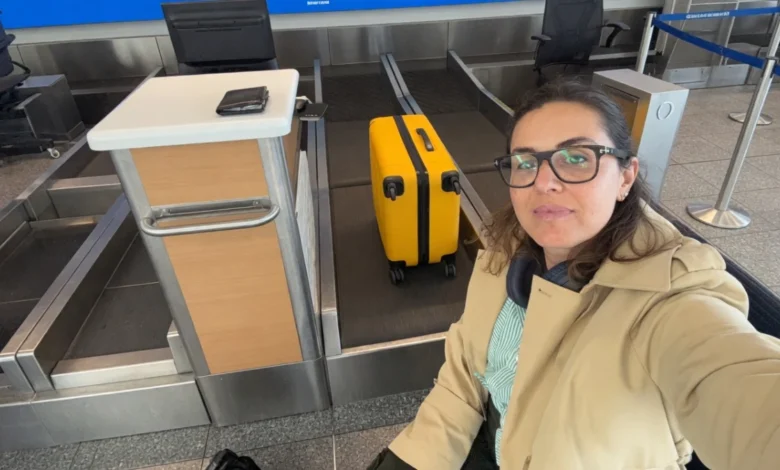
The international aviation community and disability rights advocates are closely monitoring a developing situation involving British Airways following reports that the airline denied boarding to a high-profile passenger at John F. Kennedy International Airport in New York. Samanta Bullock, a globally recognized disability inclusion advocate, former Paralympic athlete, and fashion entrepreneur, alleged that she was barred from her scheduled flight to London because she was a wheelchair user traveling independently. The incident, which occurred as Bullock was returning from a United Nations conference on disability rights, has sparked renewed debate over the accessibility of commercial air travel and the legal obligations of international carriers under global aviation frameworks.
According to Bullock, the refusal of service was predicated on the airline’s assertion that its cabin crew would be unable to assist her with lavatory access or ensure her safe evacuation in the event of an emergency. Bullock, who has traveled independently for over 30 years and is a frequent flyer with British Airways, stated that she had fulfilled all procedural requirements, including pre-booking assistance and presenting all necessary documentation. The ensuing confrontation lasted several hours before she was eventually transferred to an American Airlines flight, a move she claims was made without her explicit consent. While American Airlines personnel reportedly asked similar questions regarding her ability to use the onboard facilities, they ultimately permitted her to board and complete her journey to the United Kingdom.
Profile of the Passenger: A Global Advocate for Inclusion
The incident is particularly notable given Samanta Bullock’s standing within the disability community. Bullock is the CEO of an inclusion-focused firm and has been named one of the "Power 100 Most Influential Disabled People in the UK." Her background as a former professional wheelchair tennis player for Brazil, where she earned a silver medal at the ParaPan American Games, underscores her physical capability and long history of international travel.
Bullock’s career transitioned from athletics to the fashion industry, where she has become a leading consultant for adaptive clothing—garments designed specifically for people with disabilities. Her presence in New York was twofold: she was managing a fashion show for her firm and attending a high-level United Nations conference centered on the rights of persons with disabilities. The irony of being denied boarding on the basis of her disability immediately following a summit dedicated to inclusion has been a central theme in the public discourse surrounding the event. Bullock, who became a wheelchair user at the age of 14 following a gunshot accident, documented the interaction at the airport, stating that she intended to hold the carrier accountable for what she perceives as a violation of her rights and established aviation protocols.
A Chronology of the Dispute at JFK International Airport
The timeline of the incident began when Bullock arrived at JFK International Airport for her scheduled transatlantic flight to London Heathrow. Having pre-booked the necessary assistance services required for wheelchair users, she checked in and proceeded to the boarding area. However, the situation escalated during the boarding process when British Airways staff raised concerns regarding her status as a solo traveler.
According to Bullock’s account, the primary point of contention was the airline’s internal safety policy. Staff reportedly informed her that because she was traveling alone, the crew could not take responsibility for her "personal care" needs, specifically referring to the use of the aircraft’s lavatory. Furthermore, they expressed concerns regarding her ability to evacuate the aircraft in an emergency without a dedicated personal assistant. Bullock countered these claims by highlighting her three decades of independent travel experience and her familiarity with the specific requirements of long-haul flights.
The "hours of discussion" that followed involved multiple levels of airline staff. During this period, Bullock remained at the gate, asserting her right to fly based on her previous history with the airline and her adherence to all pre-flight notification requirements. Despite her protests, British Airways maintained its refusal to board her. Eventually, she was informed that she had been rebooked on a flight operated by American Airlines. Bullock alleges this transfer was performed unilaterally. Upon arriving at the American Airlines gate, she faced similar inquiries regarding her mobility, but the carrier ultimately determined that she met the criteria for travel, allowing her to fly back to London.
Regulatory Framework: The Air Carrier Access Act and International Law
The incident highlights the complex legal landscape governing the rights of disabled passengers on international flights. Because the flight originated in the United States, it falls under the jurisdiction of the Air Carrier Access Act (ACAA) and its implementing regulations, specifically 14 CFR Part 382. These laws prohibit US and foreign carriers from discriminating against passengers on the basis of disability on flights to, from, or within the United States.
Under the ACAA, airlines are generally prohibited from requiring a passenger with a disability to travel with an attendant, except in very specific circumstances. These include situations where the passenger is unable to comprehend or respond appropriately to safety instructions, or if the passenger has a mobility impairment so severe that they are unable to physically assist in their own evacuation. The regulations also state that while cabin crew are not required to provide "extensive" personal care (such as assistance with eating or inside the lavatory), they are required to provide assistance with the use of the onboard wheelchair to move a passenger to and from the lavatory door.
A critical component of these regulations is the requirement for airlines to have a Complaints Resolution Official (CRO) available at the airport. A CRO is a specially trained employee who has the authority to resolve disability-related disputes on the spot. Federal law mandates that the CRO’s decision can only be overruled by the pilot-in-command if a direct safety threat is identified. It remains unclear whether a CRO was consulted during Bullock’s hours-long dispute at JFK, or if the decision to deny boarding was made by ground staff without the requisite regulatory oversight.
Supporting Data: The Rising Tide of Accessibility Complaints
The incident involving Samanta Bullock is not an isolated case but rather part of a broader trend of accessibility challenges in the aviation sector. Data from the United States Department of Transportation (DOT) indicates a consistent volume of complaints related to the treatment of disabled passengers. In recent years, the DOT has moved toward stricter enforcement, issuing significant fines to carriers that fail to meet accessibility standards.
According to the DOT’s Air Travel Consumer Reports, thousands of wheelchairs and mobility scooters are mishandled, damaged, or lost by airlines every year. For a wheelchair user, the chair is not merely luggage but a vital prosthetic extension of their body. Beyond equipment damage, "failure to provide assistance" and "discriminatory treatment" remain among the top categories of disability-related complaints. In the United Kingdom, the Civil Aviation Authority (CAA) has also increased its monitoring of airline performance, publishing annual reports that rank carriers on their accessibility services. British Airways has previously faced criticism in these rankings, though it has made public commitments to improving its "all-inclusive" travel experience.
Official Responses and Industry Implications
While British Airways has not released a comprehensive line-by-line rebuttal of Bullock’s claims, the airline typically maintains that safety is its primary priority. In previous similar instances, carriers have cited the "Safety of Flight" doctrine, which grants airlines broad discretion to refuse passengers if they believe a safety risk exists. However, disability rights legal experts argue that this discretion is often applied inconsistently and can sometimes serve as a pretext for avoiding the logistical complexities of boarding passengers with significant mobility needs.
The decision by American Airlines to allow Bullock to fly on the same route, using similar equipment, complicates British Airways’ potential defense. When two carriers operating under the same regulatory framework (the ACAA) reach different conclusions regarding a passenger’s "fitness to fly," it suggests that the denial of boarding may have been a matter of internal policy or staff error rather than a universal safety requirement.
The implications of this event extend beyond a single flight. For the airline industry, the Bullock case serves as a high-profile reminder of the reputational risks associated with perceived discrimination. For passengers with disabilities, it reinforces a sense of "travel anxiety," where the success of a journey depends less on clear regulations and more on the individual attitudes of gate agents and flight crews.
Analysis: The Path Toward Truly Inclusive Aviation
The Bullock incident underscores a persistent gap between airline policy and the lived experience of disabled travelers. While many airlines have invested in "inclusive training," the practical application of these principles often falters during high-pressure boarding windows. The "lavatory question" raised by BA staff is particularly telling; it reflects a lack of understanding regarding how many disabled passengers manage their own care through the use of specialized medical equipment or timed routines that do not require crew intervention.
Moving forward, disability advocates are calling for several systemic changes:
- Mandatory CRO Involvement: Ensuring that no passenger with a disability is denied boarding without a documented review by a Complaints Resolution Official.
- Enhanced Staff Training: Moving beyond basic compliance to include empathy-based training and technical knowledge of mobility devices.
- Technological Integration: Improving the pre-booking systems so that an airline’s digital record of a passenger’s needs is accurately communicated to the gate staff in real-time.
- Standardization of Safety Assessments: Creating clearer, industry-wide definitions of what constitutes a "safety risk" to prevent arbitrary denials of service.
As Samanta Bullock considers her next steps, which may include formal complaints to the DOT and the UK’s CAA, her experience stands as a landmark case in the ongoing struggle for equitable access to the skies. The outcome of this dispute will likely influence how international carriers handle independent travelers with disabilities in the future, potentially leading to more rigorous enforcement of existing passenger rights. For now, the incident remains a stark example of the barriers that remain even for those who are among the most experienced and influential members of the global disability community.
Related posts: