The Strategic Evolution of Travel Innovation and the Growing Commercial Impact of the Skift IDEA Awards

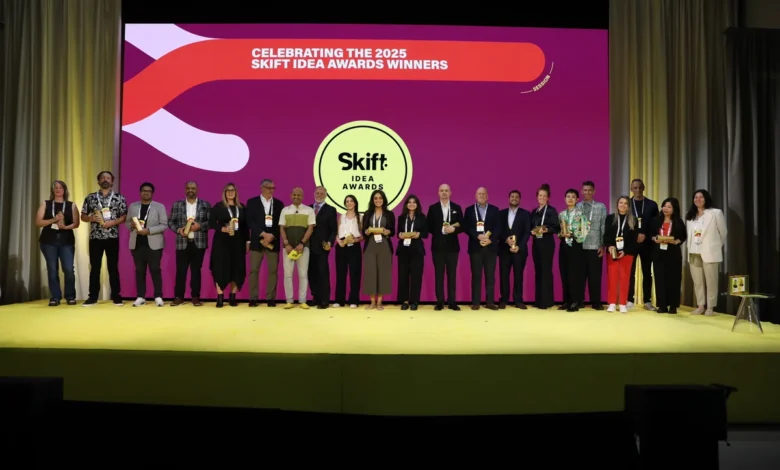
In an era where the global travel industry is increasingly defined by a rapid influx of artificial intelligence and digital transformation, the ability for a brand to distinguish itself through genuine innovation has become a critical competitive advantage. The Skift IDEA Awards have emerged as a definitive benchmark for this distinction, providing a platform where the industry’s most forward-thinking projects are scrutinized and celebrated. For travel companies, the value of such recognition extends far beyond the immediate prestige of a trophy; it serves as a catalyst for internal momentum, a tool for shortening sales cycles, and a powerful signal of market relevance that resonates with investors, partners, and high-tier talent alike. As the gap between marketing claims and operational reality continues to widen, the necessity for objective, third-party validation has never been more pronounced for brands seeking to lead the next generation of hospitality and travel technology.
The Context of Innovation in a Saturated Market
The travel sector is currently navigating a period of unprecedented technological noise. Since the public release of generative AI tools in late 2022, the market has been flooded with "AI-powered" itineraries, chatbots, and service platforms. While many of these initiatives promise to revolutionize the guest journey, only a fraction demonstrate the operational maturity required to deliver long-term value. This saturation has created a "trust deficit" among B2B buyers and consumers who are increasingly skeptical of tech-heavy marketing that lacks a proven track record.
The Skift IDEA Awards—standing for Innovation, Design, and Experience Awards—were established to address this specific challenge. By evaluating entries based on their impact, creativity, and execution, the awards provide a framework for identifying which innovations are truly moving the needle. In the current landscape, winning an IDEA Award functions as a "shorthand" for credibility, allowing brands to bypass the initial skepticism of the market and move directly into high-value strategic conversations.
Case Study: Mandarin Oriental and the Strategy of Guest Experience
One of the most notable successes from the 2025 Skift IDEA Awards cycle was the Mandarin Oriental Hotel Group, which secured the Industry Innovators award in the Hospitality category. Their Guest Experience Programme was recognized not for flashy technology, but for its disciplined, cross-functional approach to improving the guest journey. This win highlights a significant trend in the luxury sector: the move away from "technology theater"—installing gadgets for the sake of appearances—and toward a strategy centered on guest value and long-term brand desirability.
Peter Norris, Vice President of Global Channels at Mandarin Oriental, noted that the award’s primary value was internal and strategic. For a global organization, maintaining focus on a years-long roadmap can be challenging amidst shifting market pressures. The external validation from a respected industry voice like Skift provided the necessary "internal confidence" to sustain investment in their specific vision. It reinforced the idea that innovation is not always about the newest tool, but about how effectively a brand can integrate technology to enhance human-centric service.
Accelerating the Speed of Business: The B2B Advantage
While consumer-facing brands use awards to drive loyalty, B2B entities like Abode Worldwide have found that recognition serves as a potent engine for business development. Abode Worldwide, a public relations and content agency specializing in the short-term rental and hospitality technology sectors, won in the "Problem Solvers: Communications" category for their From Visibility to Value project.
In the professional services and technology consultancy space, the sales cycle can often be prolonged by the need to establish deep trust and demonstrate niche expertise. Jessica Gillingham, founder of Abode Worldwide, observed that the IDEA Award win functioned as a shortcut in this process. By being named a "Problem Solver" by a leading industry authority, the firm was able to accelerate awareness and shorten the trust-building cycles with potential clients. The psychological impact of being associated with "the best" cannot be overstated in a competitive RFP (Request for Proposal) environment, where decision-makers are looking for low-risk, high-reward partnerships.
Positioning in the AI Arms Race: Matador Network and GuideGeek
The "Travel Technology: Best Use of AI" category has become perhaps the most scrutinized segment of the awards program. Matador Network’s win for its AI travel assistant, GuideGeek, illustrates how awards can be used for strategic market positioning. As hundreds of AI tools vie for the attention of destination marketing organizations (DMOs) and travelers, Matador Network utilized its win to place GuideGeek at the center of the industry’s innovation discourse.
Greg Oates, Director of AI Advocacy at Matador Network, highlighted that the award helped position the tool alongside the sector’s most established AI initiatives. This proximity is vital for startups and mid-sized firms looking to compete with legacy players. When a brand is recognized for its "Best Use of AI," it signals to the market that the technology is not merely a beta test, but a functional, scalable solution that has survived expert scrutiny. This level of positioning is essential for accelerating higher-level collaborations with government tourism boards and major corporate partners.
The Chronology of Recognition: How the IDEA Awards Cycle Works
The impact of the Skift IDEA Awards is the result of a rigorous annual cycle designed to capture the full spectrum of the travel industry. Understanding this timeline is crucial for brands looking to maximize the ROI of their participation:
- The Submission Phase: This is the period where companies document their projects, focusing on metrics, design philosophy, and problem-solving capabilities.
- The Evaluation Period: A panel of industry experts and Skift’s editorial team reviews the submissions. Unlike awards based on popular votes, the IDEA Awards are judged on merit, which contributes to their high level of industry respect.
- The Announcement and Ceremony: Winners are announced through Skift’s global platform, reaching an audience of millions of travel professionals.
- The Post-Win Momentum: This is the phase described by winners like Mandarin Oriental and Abode Worldwide, where the award is integrated into pitch decks, recruitment campaigns, and annual reports to drive commercial and cultural value.
Supporting Data: The Value of Third-Party Validation in Travel
Market research consistently supports the idea that third-party validation is a key driver of B2B and B2C success in the travel industry. According to recent industry surveys:
- Trust Factors: Over 70% of B2B buyers in the travel technology space cite "industry reputation" and "proven innovation" as the top two factors when selecting a new vendor.
- Talent Acquisition: In the competitive "war for talent," particularly in software engineering and hospitality management, 65% of candidates report that they are more likely to apply to a company that has recently received industry accolades for innovation.
- Investor Relations: For startups, a recognized award can serve as a "proof of concept" that assists in Series A or B funding rounds, providing venture capitalists with an objective measure of the company’s market standing.
Analysis of Implications: Beyond the Trophy
The broader implication of the Skift IDEA Awards is the professionalization of innovation. In the past, "innovation" was often treated as a nebulous concept or a buzzword relegated to marketing departments. Today, through structured recognition programs, innovation is being treated as a measurable business discipline.
For the industry at large, these awards set a rising floor for quality. When a major player like Mandarin Oriental is recognized for a disciplined guest experience strategy, it forces competitors to re-evaluate their own roadmaps. This creates a "virtuous cycle" where brands are incentivized to move beyond superficial upgrades and invest in deep, meaningful improvements to the travel experience.
Furthermore, the awards help define the "state of the art" for the industry. By looking at the roster of winners each year, analysts can track the shift in industry priorities—from the sustainability-focused initiatives of five years ago to the AI-integrated and experience-driven projects of today.
Looking Ahead to 2026
The companies currently shaping the future of hospitality, destination marketing, and travel technology are those that understand the power of perception compounded over time. As the 2026 Skift IDEA Awards open for submissions, the industry enters a new phase of competition. In a market where every brand claims to be innovative, those who can point to external, expert-led validation will be the ones who secure the fastest trust, the strongest partnerships, and the most resilient market positions.
The 2026 awards represent an opportunity for the next wave of "Problem Solvers" and "Industry Innovators" to step forward. Whether through the application of cutting-edge AI or the refinement of the human guest experience, the goal remains the same: to prove that in the fast-moving world of travel, true innovation is not just about the idea, but about the measurable impact it leaves on the industry.