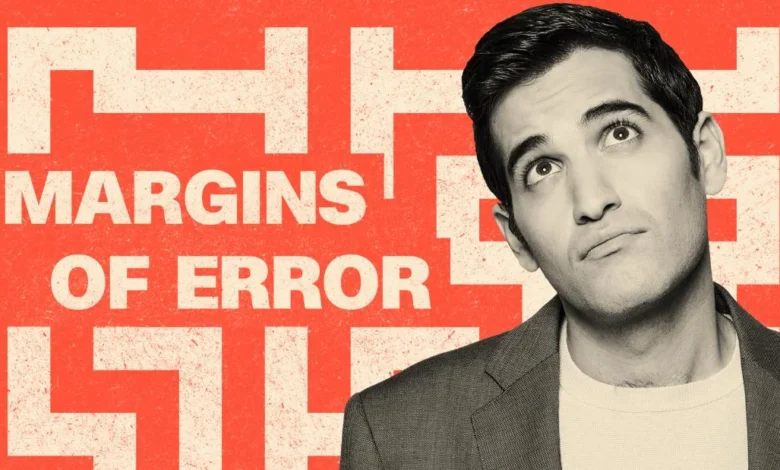
CNN’s "Margins of Error," hosted by renowned data analyst Harry Enten, delves into the often-overlooked statistical underpinnings of everyday life, transforming complex datasets into digestible narratives that illuminate human behavior, societal beliefs, and prevailing trends. The podcast, a specialized offering from CNN Podcasts, challenges listeners to look beyond surface-level observations and understand the quantitative forces shaping our world. From the nuances of regional accents to the intricate economics of happiness and the enduring debate over the metric system, Enten embarks on a mission to decipher what the numbers truly convey about our collective experience.
The podcast distinguishes itself by its commitment to data-driven inquiry, a hallmark of Enten’s journalistic approach. As a senior writer and analyst for CNN, Enten is widely recognized for his ability to translate intricate polling data and statistical analyses into clear, compelling insights, particularly in the realm of politics and public opinion. His transition to a podcast format allows for a deeper, more expansive exploration of topics that extend beyond immediate news cycles, applying the same rigorous analytical lens to universal human phenomena. The program consistently demonstrates how data, when closely examined and properly contextualized, can reveal profound truths about who we are and what drives our decisions.
The Analytical Lens of Harry Enten
Harry Enten’s role as host is central to the podcast’s appeal. Known for his methodical breakdown of statistics and his engaging, often inquisitive, presentation style, Enten guides listeners through a labyrinth of numbers, expert interviews, and personal investigations. His objective is not merely to present data, but to interrogate it, pushing past raw calculations to uncover the deeper implications and underlying societal currents. This approach provides listeners with a unique perspective, encouraging critical thinking about the information that permeates daily life. The podcast leverages Enten’s expertise in identifying trends and anomalies, making abstract data points relevant and relatable to a broad audience. His ability to synthesize diverse information sources—from academic studies to anecdotal evidence—forms the bedrock of the program’s insightful explorations.
Decoding Everyday Life: A Thematic Overview
"Margins of Error" tackles a remarkably diverse range of subjects, categorized broadly into societal norms and behaviors, economic and practical realities, and scientific and future trends. This thematic breadth underscores the podcast’s central premise: that data is omnipresent and capable of explaining virtually any aspect of human existence.
Within societal norms and behaviors, Enten dissects phenomena such as the psychology behind favoring underdogs, the evolving perceptions of those who wear glasses, the surprisingly complex history of bathing habits, and the subtle shifts in regional accents. These episodes often challenge conventional wisdom, revealing that many deeply ingrained beliefs or practices have quantifiable roots or are undergoing measurable transformations.
The podcast also delves into economic and practical realities, examining the elusive connection between money and happiness, the practical challenges of modern travel, the cultural and economic resistance to adopting the metric system in the United States, and the fascinating rebranding of "diet" products to "zero sugar." These discussions often touch upon consumer psychology, historical precedents, and the economic forces that shape our choices and preferences.
Furthermore, "Margins of Error" ventures into scientific and future trends, exploring the accuracy and future of weather forecasting in an era of climate change, the potential for innovative transportation fuels like kelp, and the application of artificial intelligence in optimizing daily routines. These episodes highlight the intersection of data, technology, and environmental considerations, offering a glimpse into the innovations and challenges that lie ahead.
Chronology of Insight: Recent Episodes Highlighted
The podcast’s episode chronology illustrates its consistent output and thematic variety. A selection of recent episodes from mid-2022 provides a snapshot of the compelling and often surprising investigations undertaken by Harry Enten.

"Pains, Trains and Automobiles" (July 5, 2022)
This episode explored the ubiquitous stress associated with modern travel, moving beyond mere anecdotal complaints to examine the quantifiable inefficiencies and annoyances. Enten investigates factors such as cramped legroom, fluctuating gas prices, and opaque service fees that collectively elevate stress levels for travelers. The episode brought in experts who are actively seeking to optimize travel experiences. For instance, discussions touched upon how artificial intelligence (AI) can revolutionize road trip planning, creating routes that are not only faster but also more fuel-efficient and less prone to congestion. One notable reference was to Randy Olson’s work on computing optimal road trips across the U.S., showcasing the practical application of algorithms in minimizing travel time and maximizing sightseeing opportunities. Furthermore, the science behind faster airplane boarding procedures was analyzed, drawing on operational research that suggests specific boarding patterns can significantly reduce turnaround times. The episode also ventured into futuristic concepts, such as the potential of kelp as a sustainable biofuel for transportation, highlighting ongoing research into alternative energy sources to mitigate environmental impact and reduce reliance on fossil fuels. This discussion implicitly touched on global efforts to decarbonize transportation, a sector responsible for a significant portion of greenhouse gas emissions.
"Why are Losers the Favorites?" (June 28, 2022)
Enten probed the curious human inclination to side with underdogs, a phenomenon observed across sports, politics, and various aspects of the human experience. Studies consistently indicate a public preference for the underdog over the favorite, prompting Enten to explore the psychological and sociological roots of this bias. He interviewed Nadav Goldschmied, an expert on the underdog phenomenon, alongside CNN’s Coy Wire, a former Buffalo Bills player who shared firsthand experiences of being underestimated. The episode also featured Neil Paine of FiveThirtyEight, a platform known for its data-driven analysis of sports and politics, providing a statistical context to the discussion. The analysis extended to a lighthearted yet data-informed debate about "America’s Team," concluding through statistical metrics that neither the Dallas Cowboys nor the New York Yankees truly hold this title, challenging popular perceptions with empirical evidence. This episode subtly highlighted the influence of narrative and emotional connection on public opinion, often outweighing pure statistical likelihood.
"Forecasting the Future of Weather" (June 21, 2022)
Recognizing the critical role of weather forecasts in daily life, this episode examined the science and accuracy of meteorological predictions. Despite occasional frustrations when forecasts are incorrect, Enten underscored that modern weather forecasting is more accurate than ever before, thanks to advancements in satellite technology, computational modeling, and data assimilation. Experts explained the complex algorithms and vast data sets utilized by meteorologists to predict atmospheric conditions. However, the episode also addressed the growing challenge posed by climate change, which introduces new variables and complexities into forecasting models. Extreme weather events, increasing variability, and unpredictable patterns are making long-term predictions more challenging, necessitating continuous refinement of models and data collection methods. This segment implicitly touched upon the substantial investments made globally in meteorological infrastructure and research, driven by the economic and safety implications of accurate weather prediction.
"The Mysterious Disappearance of Love, Sex and Romance" (June 14, 2022)
Taking on a more sociological theme, Enten investigated statistical trends suggesting a decline in traditional romance, sex, and certain romantic gestures. The episode examined data indicating increased rates of singlehood and decreased sexual activity among various demographics. Posing as "Sherlock Harry," Enten sought culprits for this decline, exploring potential factors ranging from societal shifts, changing social interaction patterns, and the impact of digital technologies. His investigative journey even led him to a "Bridgerton Ball," providing a unique, experiential counterpoint to the statistical analysis, contrasting historical romantic ideals with contemporary realities. This episode inferred a broader societal shift in relationship dynamics, possibly influenced by economic pressures, evolving gender roles, and the pervasive influence of dating apps and social media, which reshape how individuals meet, interact, and form connections.
"Why Americans Won’t Give an Inch on Metric" (June 7, 2022)
This episode delved into the enduring American resistance to adopting the metric system, positioning the U.S. as one of the few nations yet to fully embrace it. Enten explored the historical, cultural, and economic reasons behind this steadfast adherence to imperial units. The discussion highlighted how national pride, deeply ingrained historical practices, and significant economic costs associated with conversion have created formidable barriers. Converting all infrastructure, manufacturing, and educational materials would entail a massive financial undertaking, encountering resistance from industries and the general public alike. The episode also touched upon political considerations, where attempts at metrication have often faced public backlash. This topic underscored the powerful inertia of established systems and the complex interplay of culture, economy, and politics in resisting seemingly logical changes.
"Cashing in on Happiness" (May 24, 2022)
Enten investigated the perennial question of how much money is required to achieve happiness. He explored whether pursuing higher incomes guarantees greater contentment or if happiness plateaus after a certain financial threshold. Drawing on insights from Matt Killingsworth, a researcher who developed an app to track happiness in real time, the episode examined the nuanced relationship between wealth and well-being. Killingsworth’s work, along with other psychological studies, suggests that while increased income generally correlates with increased happiness up to a certain point (often cited as around $75,000 to $100,000 annually for emotional well-being, though this can vary by region and cost of living), beyond that, the correlation weakens, and other factors become more dominant. The podcast highlighted the importance of spending on experiences rather than material possessions as a key to finding joy, a theory Harry personally tested through an adventurous trapeze experience at Trapeze School New York. This episode offered a data-backed perspective on consumer behavior and psychological fulfillment.
"Do I Sound Funny to You?" (May 3, 2022)
This episode tackled the fascinating world of accents, challenging the common perception that "no one thinks they have an accent" by asserting that everyone does. Enten explored the unique linguistic variations across the United States and raised the question of whether these distinct ways of speaking are disappearing due to increased mobility, media influence, and societal homogenization. He investigated what cultural and historical elements might be lost if regional accents become less pronounced. To illustrate the point, Enten even experimented with adopting an entirely new accent himself, providing a tangible demonstration of linguistic adaptability. The episode implicitly discussed sociolinguistic research on "dialect leveling" and the factors contributing to the convergence or divergence of speech patterns, underscoring the deep connection between language, identity, and geographical belonging.
The Broader Impact: Data as a Mirror
"Margins of Error" serves as more than just a podcast; it is a profound exercise in data literacy and critical thinking. By deconstructing complex social phenomena through a statistical lens, Harry Enten encourages listeners to question assumptions, challenge conventional wisdom, and appreciate the hidden narratives embedded within numerical data. The podcast’s ability to take seemingly mundane or abstract topics and imbue them with analytical rigor makes it a valuable resource for understanding the contemporary world.
The implications of such data-driven journalism are significant. In an era saturated with information, the capacity to discern reliable patterns and interpret statistical significance is crucial. "Margins of Error" equips its audience with a framework for analyzing everyday experiences, demonstrating how everything from personal habits to national policies can be understood through a quantitative perspective. It fosters a deeper appreciation for the work of researchers, scientists, and analysts who meticulously collect and interpret data to inform our collective knowledge. The podcast implicitly advocates for an evidence-based approach to understanding societal challenges and personal choices, offering a unique blend of intellectual curiosity and journalistic integrity.