National Guardsman and suspect hospitalized following late-night shooting incident near U.S. Capitol

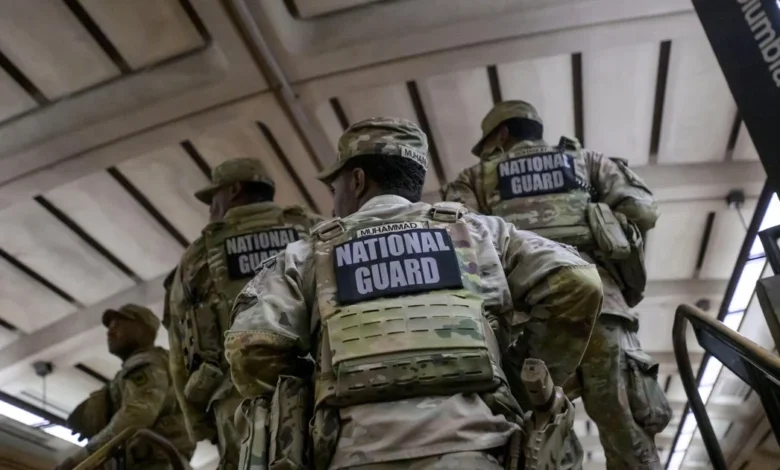
A late-night confrontation in the Capitol Hill neighborhood of Washington, D.C., resulted in a shooting involving members of the National Guard and a civilian suspect, marking yet another violent episode in the nation’s capital. The incident, which occurred shortly after 11:00 p.m. on Sunday, October 18, 2026, has once again brought the presence and role of federal military assets in domestic policing to the forefront of national discourse.
According to preliminary reports provided by interim D.C. Metropolitan Police Chief Jeffrey Carroll during a press briefing early Monday morning, the encounter began when a group of National Guardsmen, stationed in a vehicle in the Capitol Hill area, observed a physical altercation unfolding on the street. In an attempt to de-escalate the situation and intervene, the Guardsmen approached the individuals involved. Authorities allege that during the interaction, the suspect produced a firearm. Despite commands from the personnel to drop the weapon, the suspect reportedly pointed the firearm in the direction of the Guardsmen, prompting the military members to return fire.
Both the suspect and one of the National Guardsmen sustained gunshot wounds to the leg. Emergency services transported both individuals to local hospitals, where they are currently receiving treatment. Medical personnel have characterized their injuries as non-life-threatening.
Chronology of the Incident
The events leading to the shooting occurred in a high-traffic area of Washington, D.C., known for its proximity to federal office buildings and legislative infrastructure.
- 11:00 p.m. EDT: National Guardsmen, operating as part of the ongoing deployment ordered by the federal government, were conducting a patrol inside a van near the Capitol complex.
- 11:05 p.m. EDT: The personnel observed a violent altercation involving a civilian and attempted to intervene to restore order.
- 11:07 p.m. EDT: The suspect allegedly drew a handgun. Guardsmen issued verbal commands for the suspect to surrender the weapon.
- 11:08 p.m. EDT: After the suspect allegedly leveled the weapon at the Guardsmen, a brief exchange of gunfire took place.
- 11:15 p.m. EDT: Local D.C. police and medical responders arrived on the scene to secure the area and provide aid to the wounded.
Chief Carroll noted that the Metropolitan Police Department is leading the investigation into the shooting, as is standard procedure for officer-involved incidents within the city limits. Investigators are currently reviewing body-worn camera footage and local surveillance recordings to piece together the exact sequence of events.
Contextualizing the National Guard Presence
The presence of the National Guard in the streets of Washington, D.C., is the result of a sweeping federal directive initiated by President Trump over a year ago. The mission, intended to combat rising crime rates in the capital, has fundamentally altered the daily landscape of the city. While proponents of the deployment argue that the visible military presence serves as a necessary deterrent to criminal activity, civil liberties groups and local government officials have frequently expressed concern regarding the militarization of civilian law enforcement.
The legal and operational boundaries for these soldiers remain a point of significant contention. Guardsmen operating under this deployment are tasked with providing supplemental security, yet they are not trained in the same manner as municipal police officers, leading to ongoing debates about the adequacy of their training for civilian interaction.
A History of Escalating Violence
This Sunday’s shooting is not an isolated event but rather the latest in a series of violent encounters involving federal personnel in the District. The atmosphere remains particularly tense following the November 2025 ambush near the White House, an event that deeply scarred the local community and forced a reassessment of security protocols for deployed units.
In that incident, two National Guardsmen were ambushed while on patrol, resulting in one fatality and another soldier sustaining critical injuries. The suspect, identified as 29-year-old Rahmanullah Lakanwal, an Afghan national, was subsequently apprehended. Lakanwal currently faces over a dozen federal charges, including the murder of a person assisting an officer of the United States and the discharge of a firearm during a violent crime. The case is being closely watched, as it represents a significant test of the federal government’s ability to prosecute crimes against its personnel under the current deployment authority. Lakanwal has entered a plea of not guilty, and the case remains in the pre-trial phase.
Statistical Analysis of the Deployment
Since the inception of the current deployment, D.C. Metropolitan Police have reported a shift in the types of interactions between security forces and the public. Data from the first three quarters of 2026 suggests that while "official" crime statistics in certain categories—such as property theft—have seen marginal fluctuations, the frequency of high-stakes, armed encounters involving security personnel has increased.
Analysts suggest that the infusion of military assets into a dense, urban environment creates a "complexity multiplier." Unlike municipal police officers, who are familiar with the nuances of neighborhood dynamics and de-escalation tactics specific to the city, National Guard units are primarily trained for combat and rapid response. This divergence in operational philosophy, according to public policy researchers, creates a higher probability of force being used in ambiguous situations where a municipal officer might have relied on alternative tactics.
Official Responses and Public Reaction
The incident has drawn swift reaction from local and federal leaders. The office of the Mayor of Washington, D.C., issued a brief statement reiterating the need for clear coordination between federal military command and local law enforcement. "Every interaction between security personnel and the public must be handled with the utmost care," the statement read. "We are awaiting the results of the Metropolitan Police Department’s investigation to determine how this escalated to a shooting."
Meanwhile, representatives for the National Guard Bureau have stated they are cooperating fully with the investigation. "Our soldiers are here to support public safety, and our priority remains the welfare of our personnel and the community they serve," a spokesperson said during a press availability on Monday morning.
Broader Implications for National Security Policy
The persistent presence of the National Guard in Washington, D.C., is entering a new phase of political scrutiny. With the 2026 mid-term election cycle approaching, the effectiveness of the President’s "crackdown on crime" policy is becoming a major campaign issue.
Critics of the policy argue that the repeated incidents of violence involving Guardsmen prove that the federal government is ill-equipped to manage domestic policing, calling the policy an overreach that violates the traditional separation between military and civilian law enforcement. Conversely, supporters point to the necessity of maintaining order in the nation’s capital, suggesting that the risks faced by the Guardsmen are reflective of a dangerous environment that required a robust federal intervention in the first place.
As the investigation into the Sunday night shooting continues, the incident serves as a grim reminder of the tensions inherent in this long-term military deployment. The fact that an attempt to intervene in a common street fight resulted in a shooting underscores the volatility of the current security environment. For the residents of Capitol Hill and the broader D.C. area, the incident brings the reality of the federal presence into sharp focus, raising critical questions about how long this policy can remain sustainable without further risk to both the public and the service members tasked with policing them.