Congressional investigation launched into Donald Trump Jr. financial ties with Russian oligarch Umar Kremlev

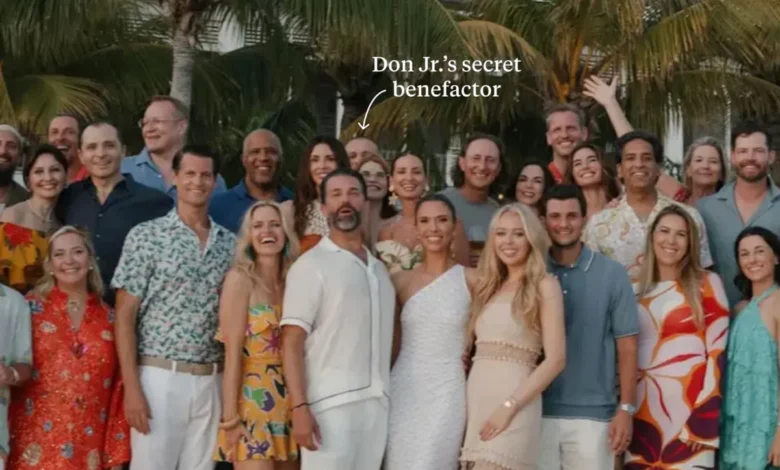
The House Oversight Committee has formally initiated a high-stakes investigation into the financial entanglement between Donald Trump Jr. and Umar Kremlev, a prominent Russian oligarch with deep ties to the Kremlin. The inquiry, led by the committee’s ranking Democrat, Rep. Robert Garcia of California, centers on revelations that Kremlev bankrolled a significant portion of Trump Jr.’s wedding festivities earlier this year. The investigation seeks to determine whether these payments constitute a breach of ethics or a broader national security vulnerability, given Kremlev’s proximity to Russian President Vladimir Putin and his leadership role within the International Boxing Association (IBA).
The Genesis of the Inquiry
The investigation was triggered by an extensive investigative report published by ProPublica, which detailed how Kremlev covertly financed hundreds of thousands of dollars in expenses related to the multi-day wedding celebration of Donald Trump Jr. and his wife, Bettina Trump. The event, which took place in the Bahamas, involved the rental of private islands and high-end hospitality services.
In response to these findings, Rep. Garcia issued formal letters to both the White House and Trump Jr., demanding a comprehensive disclosure of all financial records, communications, and correspondence between the president’s son and the Russian oligarch. Garcia’s correspondence underscores a growing concern regarding the intersection of private wealth and public office. "The secretive, close relationship between the son of a sitting U.S. President and a member of Russian dictator Vladimir Putin’s inner circle raises serious national security and public corruption concerns," Garcia stated in his official letter. He explicitly noted that this situation may represent the most significant allegation of personal financial compromise involving the president’s immediate family to date.
A Chronology of the Wedding Weekend
The wedding festivities spanned three days in May, a timeline that has become central to the controversy. According to public records and social media documentation, the sequence of events was as follows:
- Friday, May 22: The couple officially exchanged vows on a private island in the Bahamas. This ceremony was described by the family as an intimate affair attended primarily by immediate family members, including Jared Kushner.
- Saturday, May 23: The festivities continued with a large-scale event on the same island. It is this segment of the celebration that investigators believe was fully bankrolled by Kremlev.
- Sunday, May 24: The final reception took place on a neighboring private island. This event featured a formal first dance and a five-tier wedding cake. Evidence suggests this venue was also secured through payments facilitated by entities associated with the IBA.
Wedding planner Lewis Miller, in an interview with Hello! magazine, described the weekend as a "progression" of themes. Miller noted that the transition from a serene ceremony to a "colorful" and "tropical" reception required significant logistical coordination and substantial financial backing, much of which the investigation now suggests originated from Kremlev’s Dubai-based accounts.
The Role of the International Boxing Association
Umar Kremlev is a controversial figure in international sports governance. As the head of the International Boxing Association (IBA), he has presided over a body that has faced severe scrutiny from the International Olympic Committee (IOC) and other global sporting authorities. The IBA has been heavily subsidized by Gazprom, the Russian state-owned energy giant, creating a direct financial link between the Russian state and the organization Kremlev leads.
Analysts point out that the use of an IBA-affiliated entity in Dubai to process wedding expenses creates a complex trail of financial obfuscation. By routing funds through a corporate shell linked to a Russian state-backed sports entity, the payments were effectively shielded from immediate public scrutiny. For ethics investigators, the question is not merely who paid the bill, but what, if anything, was expected in return. The potential for a "quid pro quo" arrangement—or the perception thereof—remains a primary focus for the House Oversight Committee.
Official Responses and Counter-Narratives
Following the public release of the financial findings, both the Trump family and the White House issued statements intended to downplay the significance of the payments.
Donald Trump Jr. and Bettina Trump issued a joint statement via Instagram, characterizing the funds as a gesture of friendship rather than a political transaction. "Our dear friend Umar very generously hosted two incredible nights of celebrations for us," the statement read. "It was an extraordinarily generous wedding gift from a friend, and something for which we were and remain incredibly grateful. Friendship doesn’t require a political motive."
President Donald Trump weighed in shortly thereafter, distancing himself from the event and the financier. In a statement released through the White House, the President claimed he had no knowledge of Kremlev’s identity. "I have no idea who Umar is, never heard of him, and he didn’t pay for Don and Bettina’s wedding, which took place at a totally different location, and on a different day from the wedding," the President stated. He categorized the events bankrolled by Kremlev as an "afterparty" and dismissed the controversy as "not a big deal."
Implications for Transparency and Ethics
The investigation into the Trump-Kremlev connection arrives at a time of heightened sensitivity regarding foreign influence in American politics. The precedent for oversight regarding the financial activities of presidential family members is well-established, but the specific involvement of a Russian oligarch adds a layer of geopolitical gravity that few previous inquiries have faced.
Beyond the immediate legal questions, the incident raises broader concerns regarding the "soft power" tactics employed by Russian entities to cultivate relationships with influential American figures. By embedding themselves into the personal lives of high-profile individuals, foreign actors may attempt to bypass traditional diplomatic channels, creating private networks of influence that are difficult for intelligence and ethics watchdogs to track.
Rep. Garcia’s demand for documents—specifically "financial records of all purchases made for your wedding by foreign nationals"—is designed to test the limits of executive privilege and the extent to which the President’s family can maintain a firewall between their private lives and the administration’s official duties. If the records reveal that Kremlev’s generosity was part of a larger, coordinated effort to gain access to the Trump inner circle, the investigation could evolve from an ethics inquiry into a broader probe of foreign interference.
Current Status and Future Outlook
As of this writing, Donald Trump Jr. has not formally responded to the document requests issued by the House Oversight Committee. The committee is expected to pursue the matter with subpoenas if voluntary cooperation is not forthcoming.
Independent ethics watchdogs have emphasized that even if no laws were explicitly broken, the appearance of a Russian oligarch financing the wedding of a president’s son is inherently problematic. "The optics alone are corrosive to public trust," noted one Washington-based policy analyst. "When a member of the First Family accepts hundreds of thousands of dollars in gifts from someone so closely aligned with a hostile foreign power, it creates a vulnerability that our adversaries are experts at exploiting."
The Paper Trail podcast, produced by ProPublica, continues to track the financial movements associated with the IBA and its affiliates. As the investigation progresses, the committee will likely seek to interview financial intermediaries and wedding vendors to construct a complete map of the payments. For now, the case remains a focal point of partisan friction, with Democrats highlighting the potential security risks and the Trump camp maintaining that the scrutiny is a politically motivated effort to distract from other national issues. The final determination of whether these transactions crossed legal lines will depend on the clarity of the financial trail and the ability of Congress to compel testimony from those involved in the weekend’s elaborate festivities.