Rep. Thomas Massie introduces articles of impeachment against Defense Secretary Pete Hegseth over Iran war conduct and executive overreach


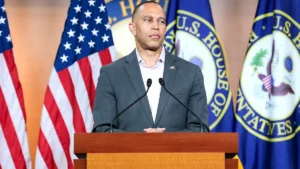
In a dramatic move on the floor of the House of Representatives, outgoing Kentucky Republican Representative Thomas Massie has formally introduced eight articles of impeachment against Secretary of Defense Pete Hegseth. The resolution, filed Tuesday, accuses the Defense Secretary of engaging in a pattern of constitutional violations, ranging from the unauthorized prosecution of the ongoing conflict with Iran to the suppression of congressional oversight and the intimidation of elected officials.
Massie, a staunch constitutionalist and a long-time critic of interventionist foreign policy, positioned the articles as a necessary defense of the separation of powers. His move comes during a turbulent political season, following his own defeat in a primary contest against a challenger backed by President Donald Trump. Despite the political headwinds, Massie’s filing forces the House to address the resolution within a 48-hour window, though leadership is expected to suppress any substantive movement on the articles.
The Constitutional Conflict: The War Powers Resolution
At the heart of the impeachment articles lies the 1973 War Powers Resolution, a legislative safeguard designed to prevent the executive branch from unilaterally engaging in protracted military conflicts. The resolution mandates that the president notify Congress within 48 hours of deploying armed forces into hostilities and stipulates that such operations must cease within 60 days unless Congress provides explicit authorization or a formal declaration of war.
Massie argues that Secretary Hegseth has consistently subverted this framework. The conflict in Iran, which saw the initiation of Operation Epic Fury in late February, has been a flashpoint for constitutional debate. While the administration contends that the initial phase of the operation concluded in early May, subsequent military actions have kept the theater of operations active. By continuing these engagements without legislative approval, Massie asserts that Hegseth has effectively rendered the War Powers Resolution obsolete, violating the oath of office to uphold the Constitution.
Chronology of the Iran Conflict
The timeline of the current administration’s military involvement in the region is characterized by shifting definitions of "hostilities" and "ceasefires":
- February 2026: Operation Epic Fury is launched against Iranian targets.
- May 2026: The administration declares the conclusion of the initial phase of Operation Epic Fury.
- July 10, 2026: President Trump formally notifies Congress that military action has restarted following the expiration of a one-month-long ceasefire.
- September 15, 2026: Rep. Thomas Massie introduces articles of impeachment against Secretary Hegseth, citing ongoing unauthorized strikes and lack of congressional mandate.
President Trump has consistently maintained that he possesses the unilateral authority to engage in such conflicts, famously labeling the War Powers Resolution as unconstitutional. This stance has placed the Department of Defense in a position where it is operating under direct executive orders that explicitly bypass the legislative branch’s oversight capacity.
Allegations of Misconduct and Human Rights Concerns
Beyond the procedural arguments regarding the War Powers Resolution, Massie’s articles of impeachment highlight specific instances of alleged negligence and abuse of power. One of the most contentious points is the March 2026 bombing of a girls’ school in Iran. While a preliminary Pentagon assessment suggested that the United States was likely responsible for the strike, the report concluded that the target was not intentionally selected. Massie’s articles argue that the lack of rigorous oversight and the failure to implement sufficient safeguards to minimize civilian casualties constitute a gross dereliction of duty.
Furthermore, the articles touch upon the intersection of military authority and domestic political retribution. The document highlights the demotion of Senator Mark Kelly, a retired Navy captain and prominent Democrat. Senator Kelly had previously issued a public call for service members to refuse orders he deemed illegal under international and domestic law. The administration’s subsequent move to demote Kelly is cited by Massie as an attempt to punish a member of a co-equal branch of government for exercising legislative and oversight responsibilities—a move he describes as an abuse of the powers entrusted to the Secretary of Defense.
Broader Patterns: The Caribbean and Yemen
The impeachment articles further broaden the scope of the investigation by including the administration’s actions in other theaters. This includes the strikes on maritime vessels in the Caribbean and the high-profile capture of former Venezuelan President Nicolas Maduro. Massie categorizes the capture of Maduro as a kidnapping of a sovereign foreign leader, asserting that such actions bypass international law and congressional awareness.
Additionally, the articles address the ongoing military strikes against Houthi militants in Yemen. By bundling these diverse theaters of operation under a single resolution, Massie is attempting to paint a picture of a defense establishment that has systematically operated outside the bounds of constitutional constraint, prioritizing executive intent over the established laws of the United States.
Official Responses and Internal Dynamics
The Pentagon has responded to the impeachment effort with a firm defense of Secretary Hegseth’s tenure. Pentagon press secretary Kingsley Wilson issued a statement characterizing Hegseth as a "transformative leader" who has successfully navigated the complexities of modern warfare while streamlining the Department of Defense.
"The entire Department is unified behind the Secretary’s vision and will continue working to put our warfighters and America first," Wilson stated, dismissing the impeachment effort as a distraction from the department’s mission. Within the halls of Congress, however, the atmosphere is more complex. While the Republican-led House is widely expected to sideline the articles, the move underscores a deepening rift between the traditional non-interventionist wing of the GOP and the current administration’s aggressive foreign policy posture.
Analysis of Implications
The introduction of these articles represents a significant, if likely symbolic, check on executive power. The implications of this conflict extend beyond the current administration, touching on the long-term erosion of congressional authority in matters of war and peace. If the legislative branch continues to defer to the executive in military matters, the War Powers Resolution—intended to serve as a critical check—risks becoming a historical relic.
Furthermore, the targeting of a member of Congress, such as the case involving Senator Kelly, sets a concerning precedent for civil-military relations. The assertion of executive privilege over the oversight of military conduct creates a structural vulnerability that could impact the department’s transparency for years to come.
As the House prepares to address the procedural requirements of the resolution, the primary outcome will likely be a public record of dissent rather than a shift in executive policy. However, for observers of constitutional law, the documentation filed by Representative Massie provides a detailed roadmap of the grievances held by those who believe the executive branch has overstepped its bounds in the post-war era. Whether this leads to a broader debate on war powers reform remains to be seen, as the political landscape shifts toward the next legislative cycle and the conclusion of the current administration’s term.
Related posts: