Federal Firefighting Crisis Intensifies as Aggressive Suppression Policies Meet Record-Breaking Wildfire Activity

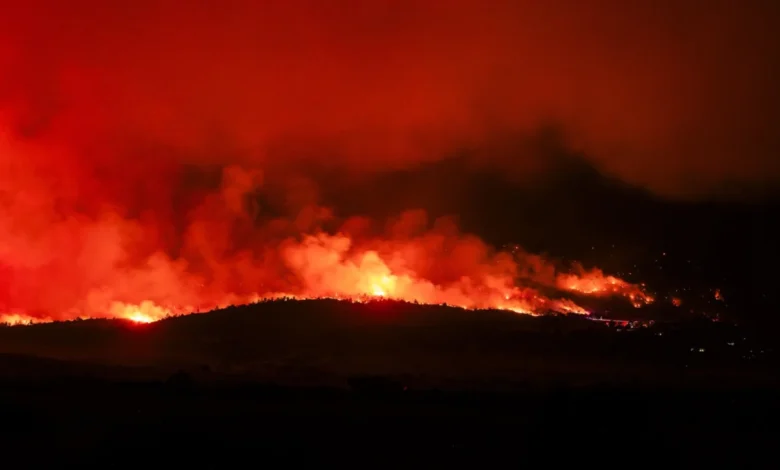
The United States wildland firefighting apparatus is currently facing an unprecedented convergence of systemic labor shortages, extreme climate-driven fire behavior, and top-down mandates for aggressive suppression. As the 2026 fire season reaches its closing stages, data indicates that the federal government’s strategy—which prioritizes rapid containment above all else—is placing extreme physical and psychological strain on a depleted workforce. With nearly 8.5 million acres burned as of mid-September, the disconnect between official claims of "full capacity" and the lived reality of frontline personnel has reached a critical juncture.
A Season of Unrelenting Intensity
The 2026 fire season has been characterized by its duration and ferocity. By mid-September, the country had already recorded approximately 54,400 individual blazes, consuming 149 percent of the 10-year average acreage. The National Interagency Fire Center (NIFC) maintained a "Preparedness Level 5" (PL5) status—the highest possible indicator of resource depletion—for 48 consecutive days. This duration is nearly double the historical 10-year average, signaling that the nation’s firefighting infrastructure was stretched to its absolute breaking point for nearly two months.
The Aspen Acres fire in Rye, Colorado, has become a somber symbol of this year’s volatility. Burning through more than 73,000 acres, it stands as the eighth-largest fire in Colorado history. Its growth reflects a broader trend: fires are starting earlier in the spring and burning with greater intensity late into the autumn, leaving crews with virtually no "shoulder season" to recover or perform necessary preventative maintenance.
Chronology of a Breaking Point
The crisis did not emerge overnight; it is the culmination of decades of underinvestment and changing environmental conditions.
- April 2026: Firefighting crews are deployed significantly earlier than in previous years, initiating a cycle of near-nonstop assignments that would continue through the summer.
- July 2026: In testimony before a congressional subcommittee, US Forest Service (USFS) Chief Tom Schultz stated, "Our firefighting workforce is stronger than at any point in recent years… we are fully staffed and equipped."
- August 2026: The rate of firefighter entrapments hits a 20-year high. By mid-month, 12 instances of crews being overrun by fire are documented, highlighting the extreme risk environment.
- Late August 2026: The Knowles fire in Colorado claims the lives of three firefighters, with subsequent injuries leaving another crew member deceased and one severely burned, marking the deadliest entrapment incident in over a decade.
- September 2026: A coalition of five senators—Michael Bennet, Alex Padilla, Ron Wyden, Adam Schiff, and John Hickenlooper—sends a formal letter to the Departments of Interior and Agriculture, warning that the federal suppression budget is nearly exhausted and that supervisory roles are being filled by unqualified personnel.
The Human Cost and Labor Shortage
The core of the issue lies in the chronic erosion of specialized leadership. Roles such as taskforce leaders, division supervisors, and heavy equipment bosses require years of specialized training and field experience. As these veterans have retired or moved to other sectors, the USFS and Department of the Interior (DOI) have struggled to replace them.
"Firefighting capacity is kind of like wages, and the fire environment is like inflation—it has not kept up," notes one veteran fire captain based in the Pacific Northwest. This sentiment is echoed by Bobbie Scopa, a retired fire chief and vice-president of Grassroots Wildland Firefighters, who emphasizes that the current staffing model forces individuals to double up on responsibilities. "It is not like we are trying to add bureaucracy; we are trying to keep people alive," she states.
This exhaustion has manifested in a dramatic rise in safety incidents. According to the Wildland Fire Lessons Learned Center, the frequency of entrapments—where fire suddenly shifts and cuts off escape routes—is at its highest point in two decades. Fire ecologists like Timothy Ingalsbee, executive director of Firefighters United for Safety, Ethics and Ecology, attribute this directly to the "aggressive direct attack" strategy mandated by the current administration.
Policy Divergence: Suppression vs. Strategy
A significant point of contention is the Trump administration’s recent directives. Both Secretary of Agriculture Brooke Rollins and Interior Secretary Doug Burgum have issued mandates pushing for a return to "full suppression." This policy effectively removes the discretion of local fire managers to use "managed fire" strategies, which allow fires to burn in remote areas to clear out heavy fuel loads (brush and dead timber) that otherwise feed catastrophic future blazes.
While administration officials argue that these mandates are necessary to protect communities, critics argue that the policy is counterproductive. By suppressing every fire, the federal government is ensuring that vegetation continues to build up in the wilderness. When a fire eventually escapes containment—as they inevitably do under extreme heat and drought conditions—the resulting blaze is fueled by decades of accumulated debris, leading to the "supercharged" fires now observed across the West.
"We’re going to kill people trying to put out those last couple percent, and we’re going to spend a lot of money doing it," Scopa warned. This "last couple percent" refers to the final efforts to extinguish fires in deep, inaccessible terrain where the risk to personnel far outweighs the tactical gain.
Analytical Outlook and Future Implications
The implications of the 2026 season are profound for the future of land management in the United States. With the federal government’s $6 billion suppression budget nearly depleted, agencies are being forced to shift funds from other essential departments, such as forest restoration and recreation, to cover the ballooning costs of emergency response.
From an organizational standpoint, the disconnect between the USFS leadership’s public assertions of "full staffing" and the ground-level reports of "depleted rosters" suggests a looming crisis in retention. If firefighters are consistently pushed beyond their limits, the industry risks a "brain drain" that could leave the nation unable to manage the increasing fire activity forecasted by climate models.
The current strategy of aggressive, all-out suppression appears to be a short-term political response to the public pressure of visible wildfires, but it may be creating a long-term ecological and human-safety debt. As long as the fire environment continues to evolve due to climate volatility, the traditional model of relying on a dwindling, fatigued force to perform direct, high-risk attacks will remain increasingly unsustainable.
For the remainder of the 2026 season, the focus remains on navigating the final, high-risk weeks of autumn. However, the questions posed by Congress, union advocates, and safety experts remain: How can the federal government rectify its leadership shortage, and can it move toward a more sustainable, nuanced approach to fire management before the next season begins? Without a fundamental shift in policy and an honest accounting of the risks being asked of firefighters, the cycle of exhaustion, danger, and record-breaking destruction is likely to continue.
Related posts: