California Lawmakers Move to Establish Environmental Reparations for Families Impacted by Urban Oil Drilling

California is on the cusp of a landmark shift in environmental policy as Governor Gavin Newsom prepares to sign Assembly Bill 1661, a legislative maneuver that could redefine how the state addresses the legacy of industrial pollution in marginalized communities. The bill directs $5 million in penalties collected from non-compliant oil wells in Inglewood directly to 1,000 households that have suffered respiratory and reproductive health impacts due to their proximity to the expansive Inglewood Oil Field. This move marks one of the most significant efforts in the United States to transition from merely regulating environmental harm to providing tangible financial restitution for those who have lived in the shadow of urban extraction.
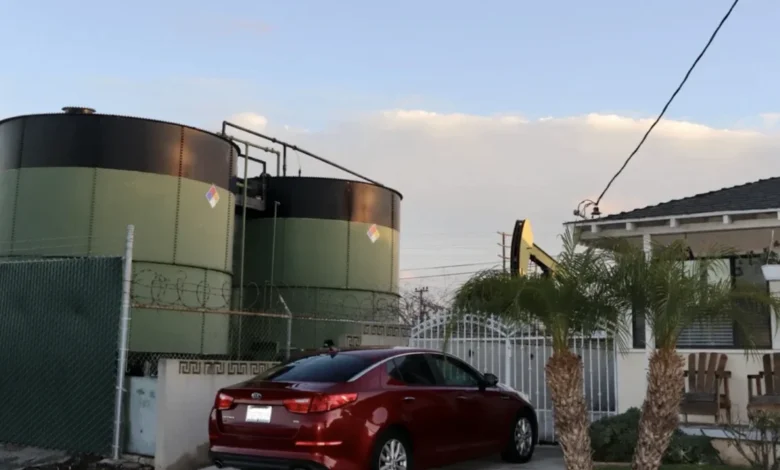
The Inglewood Oil Field, a sprawling site that has operated for over a century, sits at the center of a complex intersection of environmental justice, public health, and urban planning. For decades, residents—many of whom are Black—in neighborhoods such as Inglewood, Ladera Heights, and Baldwin Hills have navigated a landscape defined by the constant, sulfurous hum of pumpjacks. For longtime residents like Regina Martin, the physical markers of the oil industry were not just an eyesore, but a persistent, often unrecognized, health hazard. What once seemed like a normalized aspect of childhood—the distinct smell of sulfur and the prevalence of childhood asthma—is now being reframed by legislators as a systemic failure to protect public health.
A Chronology of Conflict and Legislative Action
The path to AB 1661 did not occur in a vacuum; it is the culmination of years of grassroots advocacy and strategic legislative pressure aimed at the fossil fuel industry’s footprint in Los Angeles.
The timeline of this shift began in earnest with increased scrutiny regarding the proximity of drilling to residential areas. In 2024, Governor Newsom signed AB 2716, a critical precursor to the current legislation. AB 2716 mandated the eventual closure of the Inglewood Oil Field by 2030 and established a rigorous penalty structure for "low-producing" wells. These wells, which often continue to operate despite minimal output, are notorious for leaking methane and volatile organic compounds (VOCs) into the surrounding air and groundwater.
Under the provisions of the 2024 law, operators are hit with a $10,000 monthly penalty per low-producing well. This revenue is strictly earmarked for a community repair and reinvestment fund. AB 1661 now creates the mechanism to distribute that collected revenue directly to the people most affected by the field’s operations. By October 2026, the framework for these payments is expected to be finalized, signaling a transition from the collection of punitive fines to the active disbursement of aid.
The Scope of Environmental Health Impacts
The scientific consensus regarding urban oil drilling has grown increasingly clear over the last two decades. Studies consistently link the proximity of residential housing to oil extraction sites with a higher incidence of adverse health outcomes. According to data from public health agencies and environmental justice researchers, populations living within a one-mile radius of active drilling sites experience statistically significant increases in asthma, bronchitis, and other respiratory distress.
Furthermore, research published by organizations such as Black Women for Wellness has highlighted disproportionate reproductive health challenges, including higher rates of preterm births and complications that many activists link to chronic exposure to airborne pollutants emitted by the machinery. The $5 million fund is designed to offer up to $5,000 per qualifying household. While the sum may not equate to the total lifelong cost of medical bills or the loss of property value, supporters view it as a symbolic and necessary acknowledgment of the state’s obligation to its most vulnerable citizens.
Official Responses and the Mechanics of Aid
Assemblymember Isaac G. Bryan, the lead architect of this legislation and the first Black legislator to chair the California Assembly’s Natural Resources Committee, has been vocal about the moral imperative behind the bill. "The company has essentially just been extracting from the community with no investments in the community, no care in the community, and what feels like no regard at times for the broader community," Bryan stated during the legislative proceedings. He characterizes the aid as a long-overdue debt, noting that while the state cannot retroactively cure the health ailments of decades past, it can alleviate the financial burden that often accompanies such trauma.
The implementation of the program, however, presents logistical challenges. Los Angeles County is currently tasked with designing an application process that is both rigorous and accessible. Advocates like Tianna Shaw-Wakeman, the environmental justice program director at Black Women for Wellness, have cautioned against making the application process too exclusionary. There is a strong push to utilize "self-attestation" for applicants, acknowledging that many low-income families may suffer from environmental illnesses that remain undiagnosed due to a lack of consistent healthcare access or the prohibitively high cost of medical documentation.
Broader Implications: A National Model?
The enactment of AB 1661 places California at the forefront of the "environmental reparations" movement. By linking corporate penalties directly to individual household aid, the state is testing a model that could be replicated across the country. If successful, this framework could force energy companies to internalize the cost of their externalities in a way that goes beyond traditional fines paid to state treasuries.
The legislation also addresses the tax implications of such payments. Recognizing that these funds are intended as restitution for harm, the state has moved to shield these disbursements from taxation. Assemblymember Tina McKinnor, who introduced the accompanying tax-shield legislation, emphasized that the state must ensure recipients "receive the full benefit" of these programs, preventing the government from clawing back in taxes what it has provided in aid.
Challenges Beyond the Payout
Despite the optimism surrounding the bill, community groups remain vigilant about the limitations of the current plan. The $5 million fund will support 1,000 households, yet the number of families living within the 2.5-mile radius of the Inglewood Oil Field reaches well into the tens of thousands. Critics and advocates alike point out that this is merely a pilot program and does not address the full scope of the harm inflicted on the region.
Furthermore, the issue of gentrification looms large. As the state moves toward closing urban oil fields, the land they occupy becomes prime real estate. Community leaders are warning that the closure of these sites must be accompanied by robust housing protections. There is a pervasive fear that as the environmental hazards are removed, the property values will spike, leading to the displacement of the very people who fought for the cleanup.
"We can’t replace toxic oil extraction with gentrification," says Shaw-Wakeman. "There is still a lot more to address beyond those 1,000 households."
Future Outlook and Conclusion
The movement in California serves as a test case for whether the American legal and political system can effectively transition from a framework of "mitigation" to one of "restitution." While the current legislative effort is focused on a specific geographic area, the implications for environmental justice policies are national in scale.
As the state prepares to implement these payments, the eyes of environmental activists and policymakers remain fixed on the Inglewood model. The success or failure of this program—measured by how effectively it reaches the most impacted families and whether it creates a sustainable path for community restoration—will likely influence how other states handle the complex, multi-generational legacy of urban industrialization. For now, the bill represents a historic, albeit initial, step toward addressing the profound health and economic inequalities that have been drilled into the foundation of California’s urban landscape.