A Culinary Map of China: Essential Dishes and the History of a Global Gastronomic Powerhouse

China possesses one of the most geographically diverse and historically significant food cultures on the planet, making the attempt to codify a single "best of" list an exercise in immense complexity. With eight major culinary traditions—often referred to as the Eight Great Traditions—the country offers a spectrum of flavors ranging from the numbing heat of Sichuan’s peppercorns to the delicate, umami-rich profiles of Cantonese steamed seafood. For the international traveler or the curious gastronome, understanding Chinese cuisine requires a foundational knowledge of the dishes that have defined its regional identities and imperial history. By examining these essential staples, one gains not just a meal, but a window into the socio-economic and environmental evolution of the Middle Kingdom.

The Imperial Legacy of Peking Duck
Peking duck stands as perhaps the most globally recognized symbol of Chinese culinary sophistication. Its origins can be traced back over 1,500 years to the Southern and Northern Dynasties, when it was first served in Nanjing, the former imperial capital. When the Ming Dynasty shifted the seat of power to Beijing in the early 15th century, the refined techniques of roasting duck migrated north with the imperial court.
The dish is defined by a meticulous preparation process: the duck is air-dried, glazed with a maltose syrup, and roasted in a closed or hung oven until the skin reaches a glass-like crispness while the meat remains succulent. The modern service style—where the skin and meat are carved into thin slices and wrapped in a delicate pancake with scallions, cucumber, and sweet bean sauce—became the standard in the 19th century. Data from the Beijing Catering Industry Association suggests that the city serves over 20 million ducks annually, underscoring its role as both a cultural icon and a significant economic driver for the capital’s tourism sector.

The Evolution of Sichuan Spice: Mapo Tofu and Dan Dan Mian
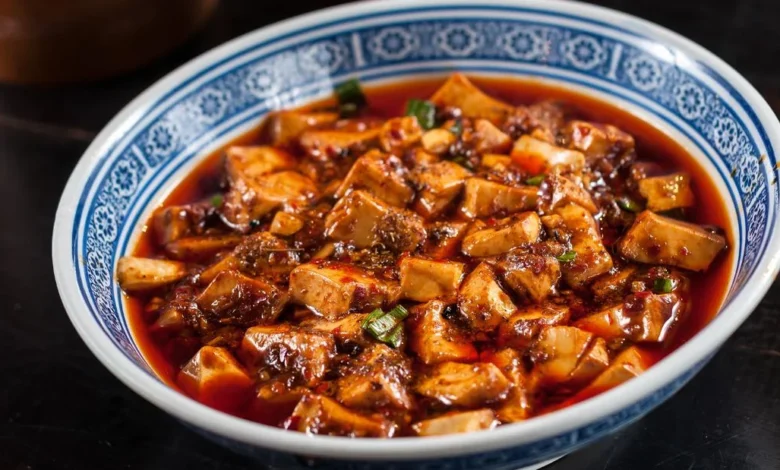
Sichuan cuisine is characterized by the use of "mala" (numbing and spicy) flavors, a sensory experience driven by the inclusion of Hanyuan peppercorns and broad bean chili paste. Mapo Tofu, a dish that has achieved near-universal status, serves as an example of how regional peasant food can ascend to global prominence. Legend dates the dish to the 1860s, created by an elderly woman with a pockmarked face (the literal translation of "mapo") in Chengdu.
Similarly, Dan Dan Mian (Dan Dan noodles) offers a narrative of the working-class origins of Sichuanese street food. The name refers to the "dan dan"—a carrying pole used by 19th-century hawkers to transport mobile kitchens. Today, the dish is a staple of global Chinese menus, though purists argue that the true version requires the distinct texture of pan-fried pork (rou saozi) and a precise balance of preserved vegetables, soy sauce, and chili oil. Food historians note that the global proliferation of these dishes has significantly increased the demand for Sichuan-specific agricultural exports, particularly the Pidu district’s fermented broad bean paste.

Cantonese Refinement and the Art of Dim Sum
Cantonese cuisine, centered in the Pearl River Delta, emphasizes the freshness of ingredients and the subtle enhancement of natural flavors. Dim sum, a cornerstone of this tradition, is not a specific dish but a service style that encompasses a vast array of small, steamed, fried, and baked plates. The practice of "yum cha" (drinking tea) alongside these snacks reflects a centuries-old social ritual.
Beyond dim sum, the Cantonese tradition is responsible for technical marvels like steamed fish and roast goose. The art of steaming a whole fish—where timing is calculated in seconds to ensure the flesh remains tender—is often cited by chefs as the ultimate test of culinary discipline. Furthermore, the use of wood-fired ovens for roasting meats, such as Char Siu (barbecue pork) and roast goose, demonstrates a commitment to traditional heat-management techniques that continue to influence professional kitchen practices worldwide.

Hunanese Chili and the Regional Identity of Fish Heads
In the mountainous province of Hunan, the culinary philosophy is radically different from the mildness of the coast. Xiang cuisine, as it is known, is defined by an aggressive use of fresh, dried, and pickled chilies. A survey of Hunanese food habits indicates that the local palate considers a dish incomplete if it lacks the heat of chili, a preference deeply rooted in the province’s humid climate, where spicy food is believed to assist in perspiration and the expulsion of internal dampness.
The signature dish, duo jiao yu tou (steamed fish head with chopped salted chili), exemplifies this. The duo jiao—chilies preserved in salt, ginger, garlic, and baijiu—creates a complex, fermented spice profile that cuts through the richness of the fish. This dish is not only a local favorite but a testament to the preservation techniques that have allowed the region to maintain its distinct culinary identity despite modern industrial food trends.

Street Food Culture: Jian Bing and Rou Jia Mo
China’s street food culture provides a necessary counterbalance to the formality of imperial or banquet-style dining. Jian bing guozi, a Tianjin-born breakfast staple, is a masterclass in textures. It consists of a thin crepe made from mung bean flour, topped with eggs, scallions, and a deep-fried crisp called guozi. It is a high-turnover food that reflects the rapid pace of urban life in northern China.
Similarly, the rou jia mo from Xi’an is often dubbed the "Chinese hamburger." Historical records link the dish to the Qin Dynasty, though its modern form involves a slow-braised pork belly filling served inside a crispy, hand-fired flatbread. The mo (bread) must be toasted until it displays specific patterns—described as "tiger’s back" and "chrysanthemum heart"—which indicate the correct structural integrity to hold the juices of the meat.

The Social Fabric of Congee and Dim Sum
The role of congee (rice porridge) in Chinese society extends beyond simple nutrition; it is a therapeutic agent and a comfort food. Used for everything from weaning infants to recovering from illness, congee is a blank canvas that changes according to regional availability. In the south, it is often paired with century eggs and lean pork, while in the north, millet and pumpkin are preferred.
The broader implications of these culinary practices are profound. As China continues to urbanize, the preservation of these traditional techniques has become a point of national interest. The Ministry of Culture and Tourism has, in recent years, included several regional cooking techniques in its list of Intangible Cultural Heritage. This move acknowledges that the recipes for dishes like the Fujian-style taro paste or the Chaozhou-style beef balls are not just food, but records of migration, trade, and cultural adaptation.

Conclusion: A Dynamic Gastronomic Landscape
The dishes mentioned here—from the delicate xiaolongbao (soup dumplings) of Shanghai to the hearty, pickled mustard-braised pork belly of the Hakka people—represent only a fraction of China’s total culinary output. Yet, they serve as essential markers. They tell the story of a country that has transitioned from agrarian roots to a global economic powerhouse without abandoning the foundational flavors of its past.
For the observer, these dishes provide a logical, fact-based understanding of how Chinese geography—the mountains of Hunan, the coast of Guangdong, the plains of the north—has dictated the evolution of human taste. As these traditions continue to influence global dining, they remain, at their core, a testament to the ingenuity of generations of cooks who transformed humble ingredients into the foundational pillars of world gastronomy.