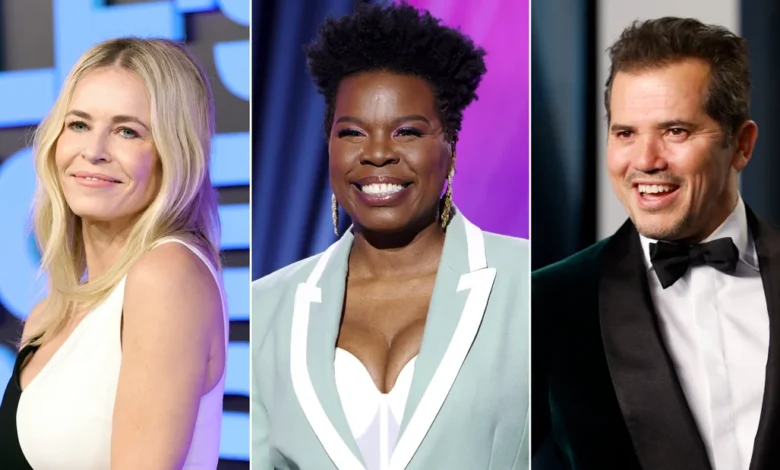
Chelsea Handler, Leslie Jones and John Leguizamo among guest hosts to step in for Trevor Noah on ‘The Daily Show’

The shifting landscape of late-night television is undergoing yet another significant transformation as Comedy Central prepares to turn the page on a defining era. With Trevor Noah’s tenure at the helm of “The Daily Show” coming to a close, the network has unveiled an ambitious, star-studded roster of rotating guest hosts to carry the torch into 2023. This strategic pivot marks the beginning of a new chapter for the influential satirical news program, setting the stage for what industry insiders anticipate will be a prolonged audition process to determine the permanent successor of one of television’s most visible satirical platforms.
Beginning Tuesday, January 17, 2023, the desk will be occupied by an eclectic group of comedy heavyweights, political satirists, and cultural commentators. The initial lineup announced by Comedy Central boasts a formidable array of talent, including Al Franken, Chelsea Handler, D.L. Hughley, Leslie Jones, John Leguizamo, Hasan Minhaj, Kal Penn, Sarah Silverman, Wanda Sykes, and Marlon Wayans. Additionally, the network confirmed that the program’s familiar roster of correspondents and contributors will step into the hosting chair in the weeks following the initial rollout, with specific dates and pairings to be announced at a later time.
The Transition and the End of an Era
Trevor Noah’s departure brings to a close a remarkably successful seven-year run that began in September 2015, when he succeeded comedy icon Jon Stewart. When Noah took over the franchise, the television industry heavily scrutinized whether any successor could fill the massive shoes left by Stewart, who had spent 16 years building the program into a cultural and political powerhouse. Noah, a relatively unknown South African stand-up comedian to American mainstream audiences at the time of his hiring, quickly forged his own distinct path.
Over his tenure, Noah successfully modernized the show for the digital and social media age, expanding its reach across YouTube, podcasts, and various streaming platforms. His international perspective injected a unique, globalized lens into domestic American politics, race relations, and foreign policy. Furthermore, Noah navigated the unprecedented logistical challenges of the COVID-19 pandemic, hosting remote versions of the show from his apartment before successfully orchestrating a triumphant return to the studio in front of a live audience.
Noah’s announcement in late September 2022 that he would be stepping down caught both fans and industry analysts by surprise. During a taping of the show, Noah reflected on his time, expressing a deep desire to return to touring, stand-up comedy, and exploring other creative endeavors. His final week of hosting culminated in a celebratory and emotional broadcast, marking the end of a pivotal chapter in late-night history.
A Strategic Pivot to an Ensemble Approach
Comedy Central’s decision to utilize a rotating cast of guest hosts rather than immediately naming a permanent replacement is a calculated move frequently employed by television networks facing high-stakes transitions. This strategy allows the network to test audience engagement, media reception, and on-air chemistry with various comedic styles without prematurely locking into a long-term commitment.
The selected guest hosts represent a broad spectrum of comedic approaches, political backgrounds, and demographic identities. Hasan Minhaj, a former “Daily Show” correspondent and the creator of Netflix’s “Patriot Act,” brings an established pedigree in investigative political satire. Veterans of the comedy circuit like Chelsea Handler, Sarah Silverman, and Wanda Sykes offer decades of distinct personal brand recognition, sharp social commentary, and established fan bases. Meanwhile, actors and public figures such as John Leguizamo and Kal Penn bring unique intersections of cultural advocacy, acting experience, and sociopolitical discourse to the desk.
Industry analysts note that this decentralized approach mirrors broader trends across the television landscape, where traditional formats are continually reimagined to compete with fragmented digital media consumption. By leaning into an ensemble methodology, Comedy Central is not only testing potential future hosts but also acknowledging the changing ways viewers consume late-night comedy—favoring variety, shareable digital clips, and diverse viewpoints.
Official Statements and Leadership Perspectives
Leadership at Paramount Global, Comedy Central’s parent company, has emphasized optimism and continuity as the network navigates the transition. Chris McCarthy, president and CEO of Paramount Media Networks, released a statement underscoring the profound impact Noah had on the franchise.
"As we enter Trevor’s final week, we want to thank him for his many contributions," McCarthy stated. "Trevor redefined the show, as did Jon Stewart before him, and as we look to the future, we are excited to reimagine it yet again with the help of this incredible list of talent and correspondents along with the immensely talented ‘Daily Show’ team."
While network executives have remained tight-lipped regarding whether a permanent host will emerge from this group of guest curators or if the rotating format will persist indefinitely, the underlying message is clear: the institutional knowledge of the existing behind-the-scenes production staff will remain a stabilizing anchor during the transition.
The Broader Implications for Late-Night Television
The shakeup at “The Daily Show” occurs against a backdrop of sweeping transformation across the entire late-night television genre. Over the past several years, the traditional five-nights-a-week broadcast format has faced mounting economic and viewership pressures. The migration of younger audiences away from linear cable television toward on-demand streaming services, TikTok, and YouTube has forced networks to fundamentally rethink how late-night content is produced, distributed, and monetized.
Competitors across network and cable television have similarly experimented with format changes. The retirement of legendary hosts, budget contractions, and the rise of digital-first creators have collectively accelerated a generational shift. In this context, “The Daily Show” has historically functioned as a cultural incubator, launching the careers of numerous prominent comedic voices, including Stephen Colbert, Steve Carell, Samantha Bee, John Oliver, and Hasan Minhaj.
By inviting a diverse array of guest hosts back to the platform that helped shape modern political satire, Comedy Central is positioning the franchise to recapture the experimental energy that has historically defined its brand. Whether this rotating showcase serves as an extended audition for a single successor or the blueprint for a permanent ensemble-driven future remains one of the most closely watched questions in the entertainment industry.
For viewers, “The Daily Show” continues to broadcast weeknights at 11:00 p.m. ET/PT on Comedy Central, with episodes becoming available for streaming the following morning on Paramount+. As the new roster of hosts prepares to take the desk in January, the program enters a crucial test of its enduring cultural relevance and its capacity to adapt to an ever-evolving political and media landscape.
Related posts: