The Battle for Terminal Space: Why Airport Gate Seating is Designed for Scarcity and Social Friction

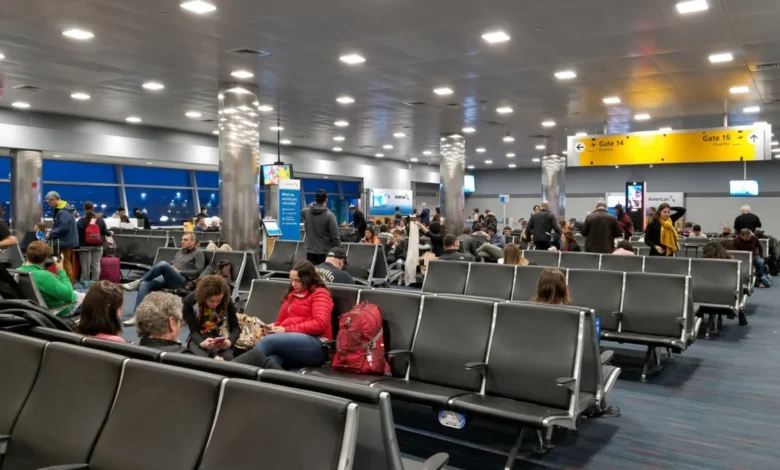
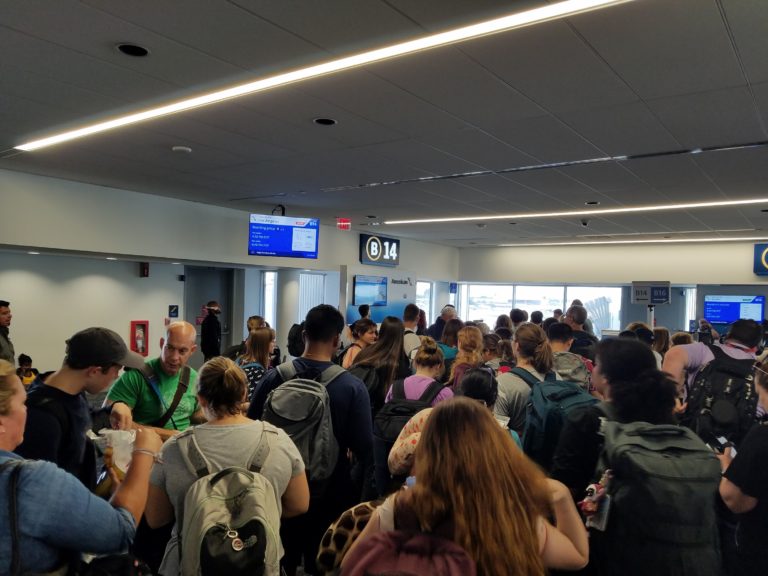
A recent viral social media post from a Frontier Airlines passenger highlighting the frustration of luggage occupying scarce gate seating has reignited a long-standing debate regarding airport infrastructure and passenger comfort. The traveler, who noted that they had recently suffered a personal tragedy, expressed deep exhaustion while witnessing carry-on bags occupying chairs that could have provided much-needed relief to standing passengers. This incident is not merely an example of individual etiquette lapses; it is a symptom of a systemic design philosophy that prioritizes commercial revenue and operational efficiency over the physical comfort of the air traveler.
The Reality of Terminal Planning and Capacity Constraints
To understand why a passenger might find themselves standing at a gate despite the presence of "empty" seats occupied by bags, one must look at the mathematical formulas employed by airport planners. According to the Federal Aviation Administration’s (FAA) terminal planning guidance, gate areas are rarely designed to seat 100% of a flight’s passenger load. Instead, planners utilize complex algorithms that factor in aircraft size, boarding patterns, and the "load factor"—the percentage of seats occupied on an aircraft.
For instance, guidelines often assume that only a specific percentage of passengers will be present in the gate area at any given time. Many travelers are assumed to be in transit, dining in the terminal, or browsing retail outlets. Consequently, an airport might plan for an 80% aircraft load factor, and further assume that only 70% of those individuals will require a seat at the gate. For a standard 172-seat Boeing 737, this could result in a seating capacity of fewer than 100 chairs. This design strategy serves a dual purpose: it minimizes the square footage required for gate hold areas—which are incredibly expensive to build and maintain—and it maximizes the amount of space available for high-margin retail and food-and-beverage concessions.

The Economic Imperative of Retail Over Comfort
The fundamental tension in modern airport design lies in the competition between seating and commercial activity. Airports are essentially captive marketplaces. While airlines pay landing fees and rent for terminal space, airports generate significant revenue through commissions on concessions. Every square foot dedicated to a row of chairs is a square foot that cannot be used for a boutique shop, a duty-free store, or a restaurant.
When a passenger sits in a gate chair, they are essentially "taking" space that provides no direct revenue to the airport authority. By limiting the total number of seats, airports inadvertently—or perhaps intentionally—nudge passengers back into the terminal’s commercial zones. This "forced circulation" keeps passengers walking past storefronts, increasing the likelihood of impulse purchases. From a facility management perspective, the gate area is not meant to be a lounge; it is a staging area intended for rapid turnover, not long-term occupancy.
The Psychology of Social Territory and "Bag Creep"
Beyond the hard math of planning, human behavior plays a significant role in the scarcity of seats. The phenomenon of "bag creep"—where a carry-on, a personal item, and a coat are spread across two or three seats—is driven by a desire for personal space in an environment that is intentionally designed to be high-density.
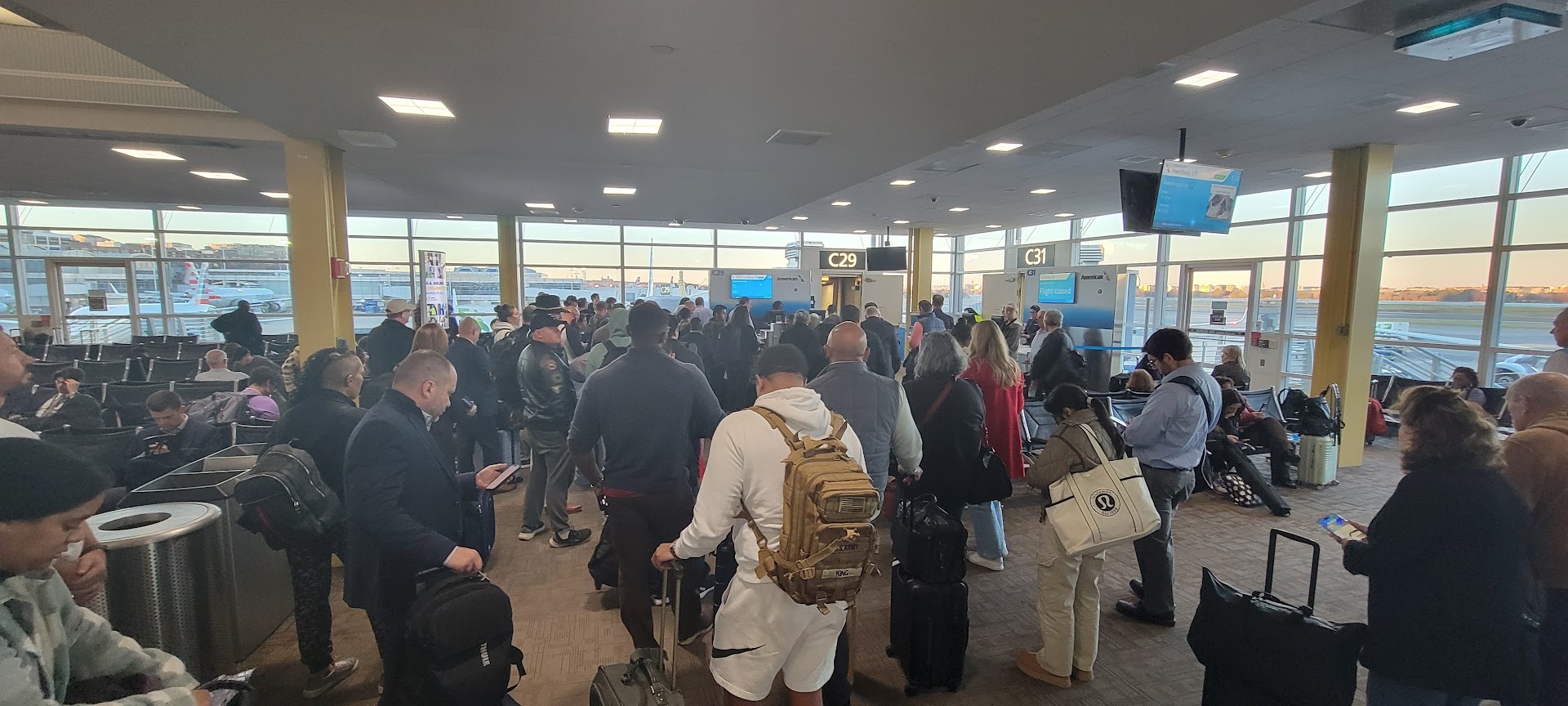
Studies on passenger behavior, such as those conducted at major international hubs like Taipei’s Songshan Airport, indicate that passengers naturally gravitate toward positions that offer a sense of privacy and a clear line of sight to flight information boards. When a terminal is crowded, the "buffer" seat—an empty chair left between strangers—becomes a contested resource. A bag placed on that seat serves as a territorial marker, signaling that the space is occupied even if it is technically vacant.
For the average traveler, the social cost of challenging this behavior is high. As evidenced by the recent Frontier passenger’s reluctance to confront others due to personal grief, the gate area is a high-stress environment where passengers are often balancing fatigue, time pressure, and the anxiety of impending travel. This creates a "bystander effect," where individuals will choose to stand or sit on the floor rather than engage in a confrontation with a stranger over a seat.
Evolution of Airport Furniture and the "Hostile Design" Approach
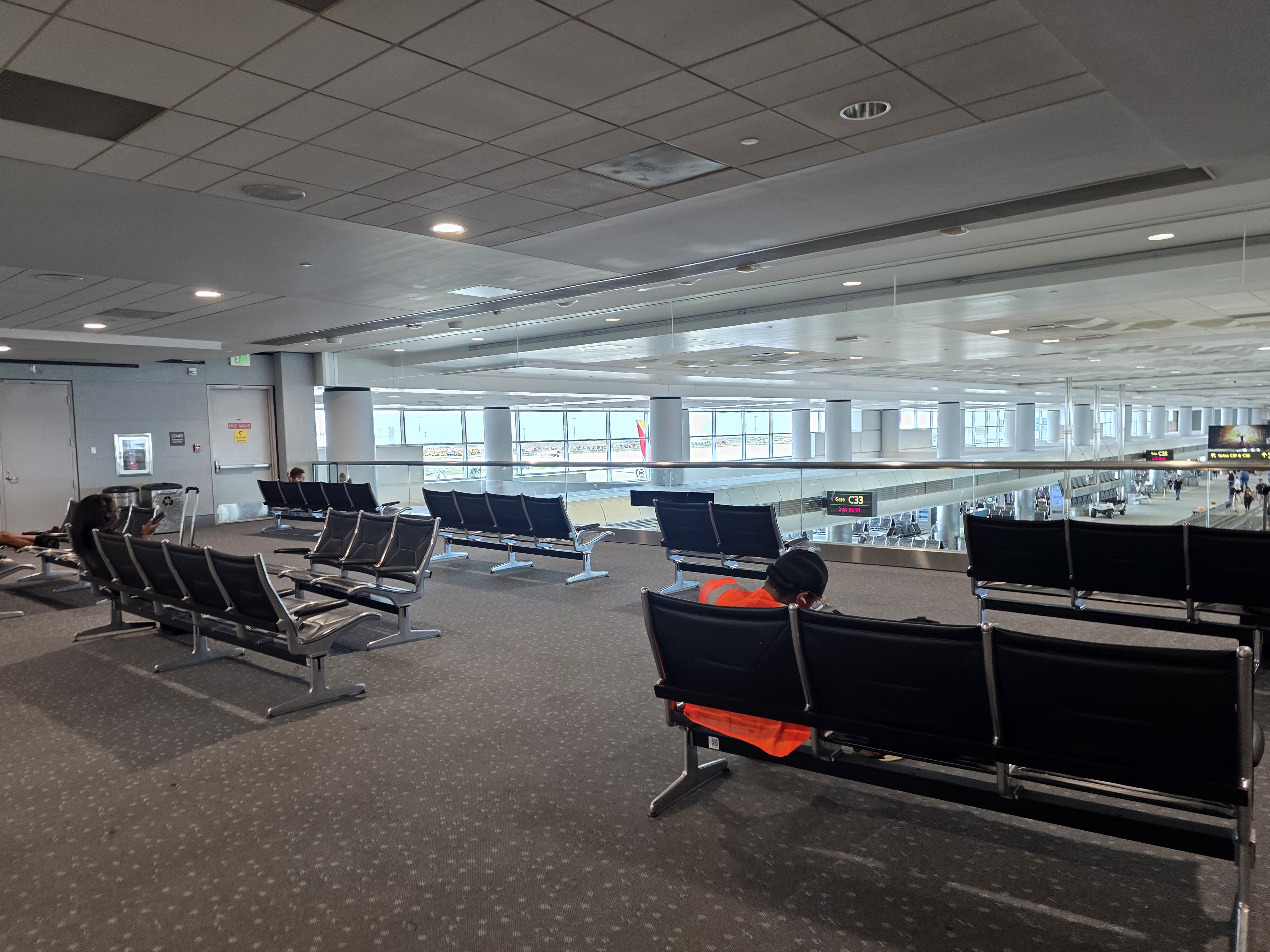
The aesthetic of the modern airport gate—characterized by rows of connected metal chairs with fixed armrests—is a direct descendant of the Eames Tandem Sling Seating, introduced in the early 1960s. While these designs were initially praised for their durability and ease of cleaning, they have evolved into a form of "hostile design" in the modern era.
The inclusion of fixed, non-removable armrests between every seat serves a specific operational function: it prevents passengers from lying down across multiple chairs to sleep. While this keeps the terminal looking orderly and ensures that the maximum number of people can sit upright during a busy boarding process, it creates a miserable environment for passengers experiencing long delays or overnight cancellations. The move toward modular, high-durability furniture reflects a shift in priority from the comfort of the passenger to the ease of facility maintenance. Modern materials like powder-coated steel and replaceable seat pads are optimized for heavy use and rapid cleaning, rather than ergonomic support.
Industry Responses and Potential Solutions
Some airports and airlines have begun to recognize the disconnect between modern passenger expectations and legacy terminal design. Recent innovations in terminal layout, such as those seen in newer facilities like Kansas City International or the modernized terminals at New York’s LaGuardia, have begun to integrate more varied seating options. These include "work pods" with integrated power, soft seating areas for families, and dedicated circulation paths that keep boarding lines from interfering with seated passengers.
Furthermore, some airlines are taking steps to mitigate the seat-to-bag ratio issue. Capital One’s airport lounge model, for example, has pioneered the use of under-seat storage compartments and integrated jacket hooks. These simple design features reduce the "clutter" that causes passengers to use extra chairs for their personal belongings. By providing a designated place for a bag that is not on a chair, the facility naturally frees up seating for humans.
The Impact on the Passenger Experience
The broader implication of this design philosophy is a degradation of the overall travel experience. As gate areas become more crowded and the "policing" of seating becomes a social burden, the stress levels of the average passenger rise significantly before they even step onto the aircraft. When an airline like Frontier, which operates on a low-cost, high-density business model, faces these issues, the frustration is often amplified. Passengers are already paying for every aspect of the travel experience, from carry-on bags to water; finding that they cannot access a seat that they feel entitled to often acts as a flashpoint for deeper dissatisfaction with the industry.
Looking forward, as passenger volumes continue to reach pre-pandemic levels, the limitations of current terminal infrastructure will become even more apparent. Unless airport authorities begin to prioritize "passenger throughput" as a form of comfort—rather than just an exercise in spatial optimization—the friction between passengers and their luggage for the limited, metal-framed seats of the airport gate will continue to be a defining feature of the modern air travel experience. The current model serves the needs of the airport’s balance sheet and the airline’s boarding efficiency, but it leaves the passenger as an afterthought in a system that views them more as a commodity than a customer.
Related posts: