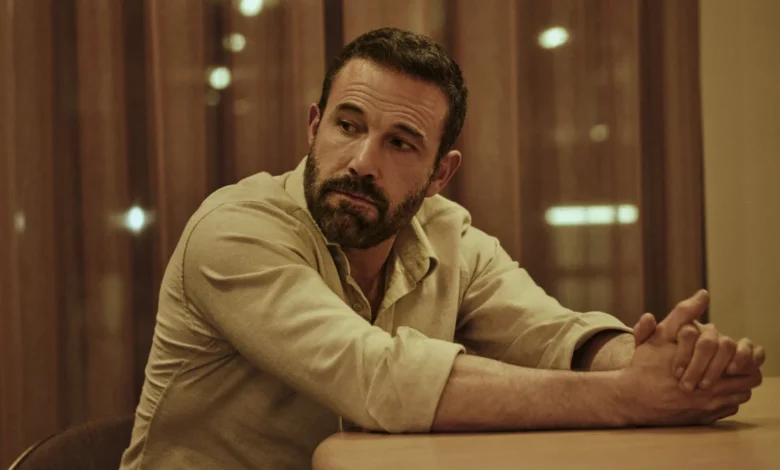
In a significant move poised to reshape the landscape of cinematic post-production, streaming giant Netflix has finalized its acquisition of InterPositive, an artificial intelligence (AI) filmmaking startup co-founded by acclaimed actor and director Ben Affleck. The transaction, confirmed through a recent regulatory filing, saw Netflix pay a substantial $587 million in cash for the innovative company, underscoring the streaming service’s aggressive pursuit of AI integration to enhance content creation and streamline production workflows. This disclosure provides the definitive financial terms for a deal initially announced in March, which at the time left the monetary details undisclosed.
A Strategic Investment in the Future of Filmmaking
The initial announcement of the acquisition in March 2026 generated considerable buzz within both the entertainment and technology sectors. While Netflix confirmed its intent to bring InterPositive’s entire team under its corporate umbrella, along with Ben Affleck joining as a senior advisor, the financial specifics remained a subject of speculation. Reports from Bloomberg following the initial announcement had suggested the deal could reach a valuation of up to $600 million, a figure now largely corroborated by the official $587 million cash payment. The confirmation of such a hefty cash outlay highlights Netflix’s conviction in InterPositive’s technology and its potential to deliver a tangible competitive advantage in a fiercely contested streaming market.
InterPositive’s core offering revolves around advanced AI tools designed to assist filmmakers in the post-production phase, specifically addressing common "real-world production challenges." Ben Affleck, speaking at the time of the initial acquisition, articulated his vision for InterPositive as a means to "protect the power of human creativity." He explained that the company’s AI-driven solutions are engineered to rectify issues such as missing shots, facilitate complex background replacements, and correct inconsistent or incorrect lighting, thereby freeing up human artists to focus on more creative and less labor-intensive tasks. This emphasis on augmenting rather than replacing human ingenuity has been a key message from Affleck, positioning InterPositive as a collaborative tool for filmmakers.
Chronology of a Landmark Acquisition
The timeline of this significant acquisition underscores Netflix’s calculated approach to integrating cutting-edge technology:
- Early 2020s: The foundation of InterPositive, co-founded by Ben Affleck, with a focus on developing AI solutions for post-production challenges. The company operates largely under the radar, building its proprietary technology.
- March 5, 2026: Netflix publicly announces its intent to acquire InterPositive. The announcement includes statements from both Netflix and Ben Affleck, highlighting the strategic alignment and Affleck’s continued involvement as a senior advisor. However, financial terms are withheld, fueling industry speculation.
- March 11, 2026: A report by Bloomberg, citing unnamed sources familiar with the negotiations, suggests the deal could be valued at approximately $600 million, signaling the significant financial commitment Netflix was prepared to make.
- Mid-2026 (Specific Date Varies by Filing): Netflix files its quarterly or annual regulatory reports with the U.S. Securities and Exchange Commission (SEC). Within these filings, specifically in a document referencing the 2026 fiscal period ending June 30, the precise cash payment of $587 million for InterPositive is disclosed, providing transparency on the financial terms of the acquisition. This filing officially confirms the substantial investment.
- Ongoing: Integration of InterPositive’s team and technology into Netflix’s existing production infrastructure commences, with Affleck taking on his advisory role to guide the adoption of the AI tools across Netflix’s vast content pipeline.
InterPositive’s Technology: Bridging Gaps in Post-Production
At its heart, InterPositive’s technology leverages sophisticated generative AI and computer vision algorithms. These tools are designed not merely to automate but to intelligently analyze raw footage and suggest or execute improvements that would traditionally require extensive manual effort, specialized visual effects (VFX) teams, and significant time. For instance, in scenarios where a crucial shot might be compromised by poor lighting conditions, InterPositive’s AI can intelligently reconstruct and re-light the scene to match other footage, ensuring continuity and visual fidelity. Similarly, complex background replacements, which often involve arduous rotoscoping and compositing, can be expedited and refined using the AI, drastically reducing post-production timelines and costs.
The "missing shots" capability is particularly intriguing. While not implying the AI can invent entire scenes from scratch, it suggests an ability to generate interstitial frames, smooth out continuity errors, or even reconstruct elements within a scene based on available data and learned patterns. This could prove invaluable for productions facing tight schedules, budget constraints, or unforeseen on-set challenges that result in incomplete footage. By focusing on these specific, labor-intensive aspects of post-production, InterPositive aims to empower filmmakers to achieve higher quality results more efficiently, allowing creative talent to focus on storytelling and artistic vision rather than technical remediation.
Netflix’s Broader AI Strategy and Industry Context
The acquisition of InterPositive is not an isolated incident but rather a clear manifestation of Netflix’s aggressive and comprehensive strategy to embed AI across its entire operational spectrum. In its most recent earnings report, Netflix revealed that approximately 300 of its titles have already utilized generative AI technologies in various capacities this year. This statistic underscores a pervasive shift within the company towards AI-driven efficiencies and innovations, ranging from content recommendation algorithms and production scheduling to script analysis and, increasingly, post-production.
Netflix’s move comes at a time when the entertainment industry is grappling with the profound implications of AI. The 2023 Writers Guild of America (WGA) and SAG-AFTRA strikes prominently featured demands for protections against AI’s potential misuse, particularly concerning intellectual property, fair compensation, and the specter of job displacement. While these concerns are valid and necessitate careful navigation, companies like Netflix are also exploring AI’s potential to unlock new creative possibilities, reduce production bottlenecks, and deliver higher quality content to subscribers more rapidly.
Industry analysts suggest that Netflix’s investment in InterPositive is a strategic response to several pressures:
- Competitive Advantage: In a crowded streaming market, differentiation through exclusive, high-quality content is paramount. AI tools that accelerate production and enhance visual fidelity can give Netflix an edge.
- Cost Efficiency: Post-production, especially VFX, is notoriously expensive and time-consuming. AI promises to automate repetitive tasks, potentially leading to significant cost savings and faster time-to-market for new titles.
- Scalability: With hundreds of original productions annually, Netflix needs scalable solutions. InterPositive’s AI can help standardize quality and efficiency across a massive volume of content.
- Talent Augmentation: By offloading tedious tasks to AI, human artists and filmmakers can dedicate their expertise to more complex creative challenges, potentially leading to more innovative and artistically ambitious projects.
Implications for Content Creation and the Workforce
The integration of InterPositive’s technology into Netflix’s workflow is expected to have multi-faceted implications. For Netflix productions, it could mean:
- Faster Turnaround Times: Expedited post-production processes could significantly reduce the time from principal photography to release, allowing Netflix to bring new content to subscribers more frequently.
- Enhanced Visual Quality: AI-driven corrections and enhancements could elevate the overall visual quality of productions, making them more competitive with high-budget studio films.
- Budget Optimization: Reduced reliance on extensive manual VFX work could free up budget for other aspects of production, such as improved scripts, diverse locations, or higher caliber talent.
- Creative Flexibility: Filmmakers might feel more empowered to take creative risks, knowing that certain technical challenges in post-production can be more easily mitigated by AI.
However, the broader industry implications also warrant careful consideration. The substantial investment signals a growing trend towards AI adoption across Hollywood. This could spur other studios and production houses to invest in similar technologies, potentially leading to an industry-wide transformation of post-production pipelines.
For the creative workforce, particularly those in VFX, compositing, and other post-production roles, the introduction of advanced AI tools presents a complex picture. While Ben Affleck emphasizes "protecting human creativity," the reality is that automation invariably shifts job requirements. Some routine tasks may be significantly reduced or eliminated, necessitating a reskilling of the workforce towards more supervisory, AI-prompting, or specialized creative roles that AI cannot yet replicate. Industry bodies and unions will likely continue to monitor these developments closely to ensure fair labor practices and opportunities for artists in an evolving technological landscape.
Expert Analysis and Future Outlook
Technology and entertainment analysts view Netflix’s acquisition as a shrewd long-term play. "This isn’t just about saving a few bucks on CGI," commented Dr. Evelyn Reed, a media technology professor at the University of Southern California. "It’s about vertical integration of advanced tech into the core content engine. Netflix is positioning itself to be not just a distributor but a highly efficient, tech-forward content creator, leveraging AI to gain a significant edge in speed, quality, and cost control."
The involvement of a high-profile figure like Ben Affleck also lends credibility and visibility to the integration of AI in creative fields. His advocacy for AI as a tool to enhance human artistry, rather than diminish it, could help bridge the gap between technological innovation and the often-skeptical creative community.
Looking ahead, the successful integration of InterPositive’s AI into Netflix’s global production pipeline could set new industry standards. It could catalyze further investment in generative AI tools specifically tailored for filmmaking, potentially leading to innovations in pre-visualization, virtual production, and even new forms of interactive storytelling. The $587 million cash outlay for InterPositive is more than just an expenditure; it’s a profound statement of Netflix’s strategic direction, cementing its commitment to leveraging artificial intelligence as a cornerstone of its future content creation and competitive strategy. As the company continues to rollout these capabilities, the entertainment world will be watching closely to see how this significant investment reshapes the art and business of filmmaking.
Related posts: