Federal Judge Dismisses Actress Qorianka Kilchers Lawsuit Accusing James Cameron of Misappropriating Her Likeness for Avatar

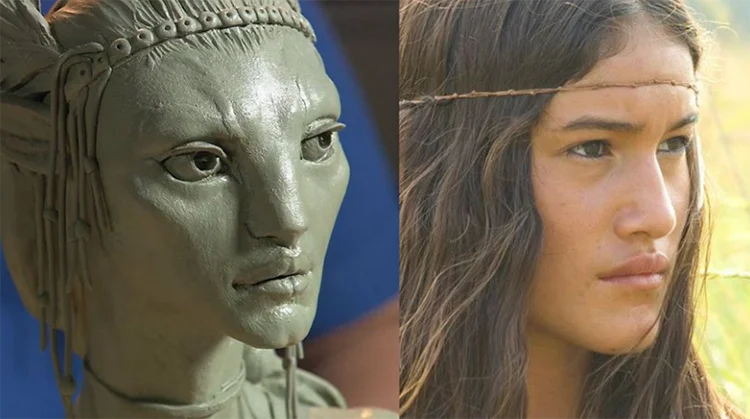
A federal district court in California has dealt a significant early setback to actress Qorianka Kilcher in her high-stakes legal battle against acclaimed filmmaker James Cameron. U.S. District Judge Wesley Hsu of the U.S. District Court for the Central District of California has dismissed a lawsuit alleging that Cameron misappropriated Kilchers facial features and likeness to design Neytiri, the iconic central alien protagonist of the blockbuster Avatar franchise. While the court has granted Kilcher leave to amend and refile her complaint, the presiding judge expressed deep skepticism regarding the viability of the legal theory under which the claims were brought, casting a shadow over the future of the litigation.
The lawsuit centers on assertions that Cameron utilized biometric facial features and likeness characteristics derived from Kilcher—specifically stemming from her critically acclaimed performance as Pocahontas in Terrence Malicks 2005 historical drama The New World—without her consent, compensation, or proper credit. Kilchers legal team framed the case around the federal Lanham Act, arguing that the alleged unauthorized use of her likeness misled the public into believing she endorsed, sponsored, or was officially affiliated with the multibillion-dollar cinematic universe. Despite the dismissal, the legal challenge brings to light complex intersections between digital filmmaking, biometric design inspiration, intellectual property rights, and the limitations of federal trademark law in protecting an actors physical likeness.
The Genesis of the Dispute and Allegations
The core of Kilchers legal grievance revolves around the visual conception and digital rendering of Neytiri, the fierce Na’vi princess played via performance capture by actress Zoe Saldaña in the original 2009 film and its subsequent sequels. In her initial complaint, Kilcher alleged that the cinematic juggernaut—which has earned nearly $3 billion globally, making it the highest-grossing film in cinematic history—was constructed, in material part, on what she characterizes as the unauthorized commercial exploitation of a minor’s biometric facial features.
According to court filings, the grievance was not merely speculative. Kilcher alleged that Cameron personally approached her shortly after the release of the original film in 2010. During this encounter, the director allegedly remarked that her physical appearance and beauty served as his early inspiration for the creation and visual design of Neytiri. For Kilcher, this alleged admission served as the smoking gun, confirming long-held suspicions that her physical attributes were harvested from her breakout performance in The New World and translated into a digital canvas.
The legal action was formally brought under the provisions of the federal Lanham Act, which primarily governs trademarks, unfair competition, and false advertising. Kilcher argued that by utilizing her likeness to build the foundational architecture of the franchises primary character, consumers and fans were fundamentally deceived into drawing a direct connection between her persona and the multi-billion-dollar enterprise, thereby creating a false association in the marketplace of commercial entertainment.
Judicial Skepticism and the Central District Court Ruling
During the recent hearing, Judge Wesley Hsu dismantled the current framework of Kilchers Lanham Act claims, indicating a fundamental disconnect between the plaintiffs factual allegations and the statutory requirements of the federal law.
In delivering his ruling, Judge Hsu noted that the complaint failed to identify any explicit statement within the films themselves, or in promotional materials distributed by the defendants, representing that Kilcher sponsored, endorsed, approved, or maintained any professional affiliation with the Avatar project. The judge emphasized that the plaintiffs theory relied entirely on indirect consumer inference—the notion that audience members might independently deduce a connection upon learning that Kilcher’s likeness allegedly served as a design foundation for the character of Neytiri.
Legal scholars note that establishing a Lanham Act violation based on false endorsement or misappropriation of likeness requires more than speculative consumer assumptions; it typically demands a clear, affirmative misrepresentation by the defendant that links a celebrity’s identity to a commercial product in a way that deceives the purchasing public. Because the complaint lacked allegations of direct, explicit misrepresentations by Cameron or his production companies, Judge Hsu expressed substantial doubt that Kilcher would be able to satisfy the necessary legal thresholds, even if she were to submit a thoroughly amended complaint.
Nevertheless, in accordance with standard judicial procedure in early-stage civil litigation, the court extended to Kilcher the opportunity to cure the noted deficiencies by filing an amended complaint. Judge Hsu stated that he would reserve final judgment on several auxiliary issues raised by the defense until a later date, leaving a narrow window for the plaintiff to reformulate her legal strategy.
Chronology of Events and the 16-Year Delay
The timeline of the dispute spans well over a decade and a half, introducing significant procedural and equitable hurdles for the plaintiff. The core events trace back to the mid-2000s, during the pre-production and visual development phases of the original Avatar film, which spent years in conceptualization before its landmark theatrical release in December 2009.
Key Milestones in the Timeline:
- 2005: Qorianka Kilcher gains widespread international recognition for her mature and nuanced portrayal of Pocahontas opposite Colin Farrell in Terrence Malick’s period drama The New World.
- Late 2000s: James Cameron and his visual effects teams develop the conceptual framework, character models, and performance-capture technology for the Na’vi inhabitants of Pandora.
- 2009 to 2010: The original Avatar premieres, shattering global box office records. Kilcher alleges that shortly after the release, Cameron approached her and acknowledged that her features provided early inspiration for Neytiri.
- 2010 to 2025: A prolonged period during which Kilcher’s career continued across various film and television projects, while the Avatar franchise expanded with sequels and massive merchandising campaigns.
- September 2026: Kilcher formally files her federal lawsuit in the U.S. District Court for the Central District of California, prompting immediate scrutiny from legal analysts regarding the timeliness of the claims.
The passage of 16 years between the alleged initial inspiration and the filing of the lawsuit has emerged as a primary point of contention for James Cameron and his legal defense team. Defense counsel has forcefully pointed to the delay as a glaring indicator of untimeliness, raising potential affirmative defenses such as laches—an equitable legal doctrine that bars a plaintiff from maintaining a lawsuit if they have unreasonably delayed in bringing the action, to the prejudice of the defendant. Furthermore, the defense has underscored the undeniable realities of digital filmmaking and performance capture, noting that the physical appearance and movement of Neytiri were ultimately realized through the casting, physical performance, and facial mapping of actress Zoe Saldaña, whose contributions fundamentally shaped the character over multiple installments.
Broader Legal and Industry Implications
The dismissal of Kilchers lawsuit highlights the evolving, often legally ambiguous frontier of biometric rights, digital likeness appropriation, and intellectual property protection within the modern entertainment industry. As computer-generated imagery (CGI), artificial intelligence, and performance-capture technologies continue to advance at an exponential rate, courts are increasingly tasked with drawing boundaries between artistic inspiration, historical reference, and the unlawful misappropriation of a performers physical identity.
In traditional Hollywood production, artists and directors frequently draw inspiration from real-world aesthetics, historical figures, fine art, and contemporary actors when conceptualizing fictional characters. However, as digital rendering tools become sophisticated enough to map, replicate, and synthesize biometric facial structures with pinpoint accuracy, performers are growing increasingly vigilant regarding the commercial use of their physical attributes.
While Kilcher’s Lanham Act claims have hit a formidable roadblock under Judge Hsu’s initial evaluation, the case serves as a harbinger of future legal battles concerning digital identity rights. If Kilcher chooses to file an amended complaint, her legal team will likely need to pivot away from generalized consumer confusion theories and explore alternative causes of action—such as state-level right of publicity violations, breach of implied contract, or unjust enrichment—each of which carries its own distinct statute of limitations and evidentiary burdens.
As the litigation stands, the early dismissal serves as a cautionary tale for plaintiffs attempting to apply traditional trademark frameworks to the fluid, intangible processes of character design in major motion pictures. With Judge Hsu granting leave to amend, all eyes remain fixed on the Central District of California to see whether Kilcher’s legal representatives can salvage the complaint, or if this high-profile legal challenge will be permanently brought to a close.