Trump Drastically Reduces Utah National Monuments Reopening Sacred Lands to Mining and Extraction

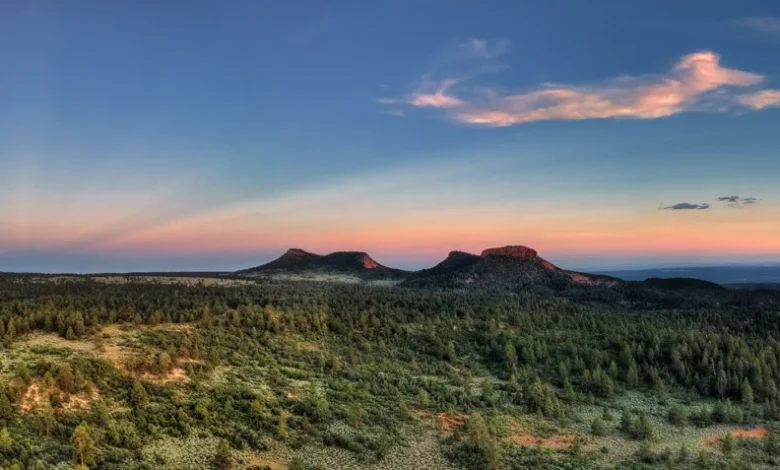
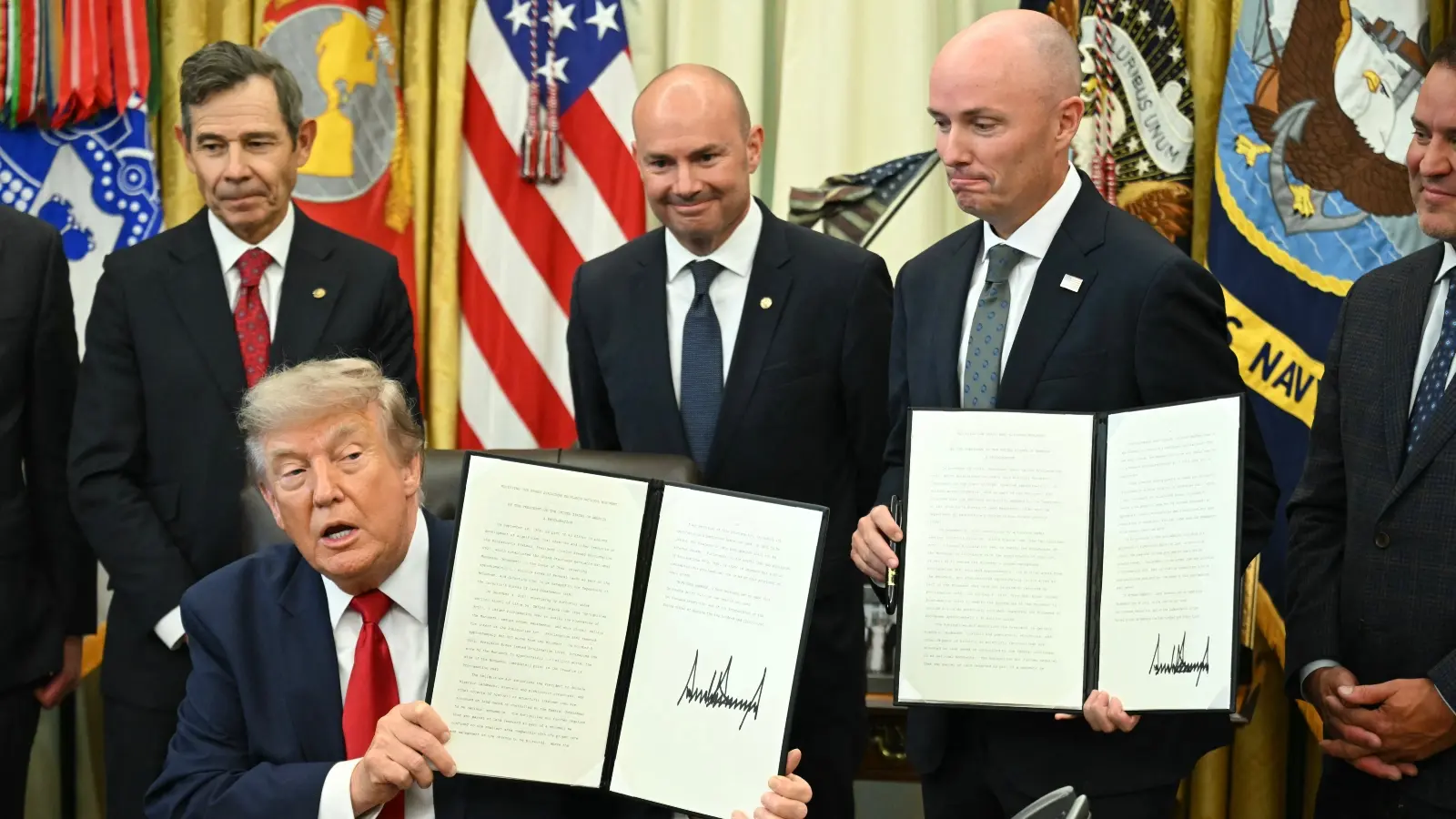
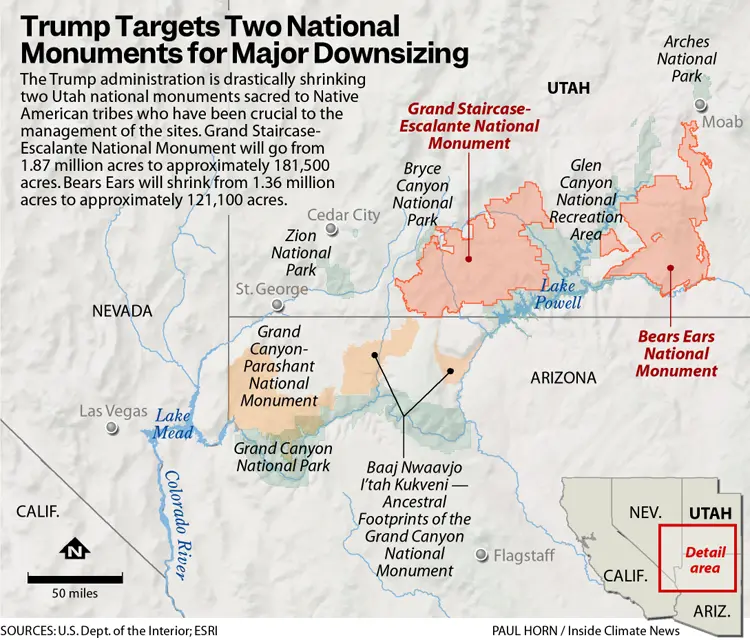
In a move that has reignited one of the most contentious legal and environmental battles in American history, President Donald Trump signed two executive orders on Monday that drastically reduced the size of the Bears Ears and Grand Staircase-Escalante National Monuments in southern Utah. The orders effectively strip protections from nearly 2.7 million acres of public land, shrinking the combined area of the monuments from over 3 million acres to just 302,600 acres. This action represents an even more aggressive reduction than the one undertaken during the first Trump administration, which was later reversed by President Joe Biden.
The decision to gut the monuments marks a pivotal shift in federal land management policy, prioritizing industrial extraction and local ranching interests over the preservation of archaeological sites and ecological biodiversity. While the administration frames the move as a restoration of local control and an expansion of public access, the orders have drawn immediate condemnation from Tribal Nations, environmental conservationists, and legal scholars who argue the president lacks the statutory authority to rescind monument designations.
The Scope of the Reductions
The scale of Monday’s executive action surpasses previous attempts to downsize these protected areas. In December 2017, the first Trump administration reduced Bears Ears National Monument from 1.35 million acres to approximately 228,000 acres—an 85 percent cut. Simultaneously, Grand Staircase-Escalante was reduced from nearly 1.9 million acres to about 1 million. Following his inauguration, President Biden issued a proclamation in 2021 that not only restored the original boundaries but slightly expanded them to ensure the protection of vital cultural resources.
Under the new orders signed this week, however, the monuments have been cut to less than a quarter of what remained after the 2017 shrinking. Bears Ears, a landscape defined by twin buttes and thousands of ancient cliff dwellings, and Grand Staircase-Escalante, a "geologic staircase" spanning eons of Earth’s history, now face their smallest footprints since their inception. The orders are set to take effect in 60 days, at which point the excluded lands will be reopened to "entry, location, selection, sale, or other forms of appropriation."
During the signing ceremony, flanked by Utah Republican leaders, President Trump asserted that the previous designations had created "burdensome" restrictions that made it impossible for citizens to hunt, fish, or even walk on the land. Fact-checking of these claims, however, reveals that both monuments remained open to the public for recreational activities, including hunting and fishing, under their previous management plans. The primary restrictions involved prohibitions on new mining claims, oil and gas leasing, and large-scale commercial development.
Historical and Legal Context: The Antiquities Act of 1906
The legal foundation for the creation of these monuments is the Antiquities Act of 1906. Signed into law by President Theodore Roosevelt, the Act grants the President the authority to designate "historic landmarks, historic and prehistoric structures, and other objects of historic or scientific interest" as national monuments. Roosevelt used this power to protect the Grand Canyon, which was later elevated to National Park status by Congress.
The current administration’s use of the Act to reduce monuments is a point of intense legal debate. While the Act clearly grants the power to create monuments, it does not explicitly grant the power to abolish or significantly diminish them. Legal experts, including John Ruple, a law professor at the University of Utah’s Wallace Stegner Center, argue that this power is reserved exclusively for Congress.
The executive orders follow a June decision in the 10th Circuit Court of Appeals that revived a lawsuit from the state of Utah. That lawsuit challenged the Biden administration’s 2021 restoration of the monuments, arguing that the Antiquities Act was intended for small, discrete sites rather than vast landscapes. By shrinking the monuments now, the Trump administration may be attempting to render that specific lawsuit moot, as the boundaries the state was suing to change no longer exist in the eyes of the executive branch.
Impact on Tribal Sovereignty and Cultural Heritage
The reduction of Bears Ears is particularly significant for the five Tribal Nations—the Navajo Nation, Hopi Tribe, Ute Indian Tribe, Ute Mountain Ute Tribe, and Pueblo of Zuni—who comprise the Bears Ears Inter-Tribal Coalition. The monument was the first in U.S. history to be established at the request of a coalition of tribes and the first to be managed through a formal co-stewardship agreement between the federal government and Indigenous leaders.
Monday’s orders effectively terminate the inter-tribal working group, ending the co-stewardship model that had been hailed as a landmark for tribal sovereignty. Tribal officials stated they were not consulted prior to the decision. Davina Smith-Idjesa, a member of the Navajo Nation, described the proclamations as a painful reminder of historical displacement.
"This is not a political talking point for me. This is home," Smith-Idjesa said during a press conference. "My ancestors knew this land. I know where our people go to pray, to gather medicines, to gather food and to heal. This is our grocery store, our medicine cabinet, our classroom, our church."
The region is home to over 100,000 archaeological sites, including ancient granaries, rock art, and dwellings. Conservationists fear that without monument protections, these sites will be vulnerable to looting, vandalism, and damage from industrial machinery.
Economic Drivers and Extraction Interests
The driving force behind the boundary changes appears to be the potential for resource extraction. The Kaiparowits Plateau within Grand Staircase-Escalante contains one of the largest coal deposits in the United States, while the areas surrounding Bears Ears are known for significant uranium deposits.
The uranium industry, in particular, has a long and troubled history in the Four Corners region. During the mid-20th century, uranium mining left a legacy of environmental contamination and health crises among local Indigenous populations. Smith-Idjesa noted that members of her own family suffered from illnesses related to past mining operations. The prospect of reopening these lands to new claims has raised alarms about potential groundwater contamination and the long-term health of the ecosystem.
The administration’s "energy dominance" agenda views these public lands as assets for economic growth. By reducing the monument sizes, the federal government can offer leases to mining and drilling companies that were previously barred from the area. Proponents of the reduction, including Utah Governor Spencer Cox, argue that the large monument designations were "federal overreach" that stifled local economies and limited the state’s ability to manage its own resources.
Political Reactions and Public Sentiment
The decision has split along sharp partisan lines. While Utah’s Republican delegation celebrated the orders as a victory for "state’s rights," Democratic lawmakers have vowed to fight the move in both the courts and the halls of Congress.
Senator Ben Ray Luján of New Mexico criticized the administration for prioritizing corporate interests over the American public. "While these monuments are in Utah, they belong to all of us across the United States," Luján said. "The administration is on the wrong side of history here, ignoring the voices of Tribal Nations and the millions of Americans who want these places protected."

Data from the 2024 "Conservation in the West" poll conducted by Colorado College suggests that the administration’s actions may be at odds with public sentiment. The poll found that a vast majority of Western voters—regardless of party affiliation—support the protection of public lands and the maintenance of national monuments. Despite this, the administration’s policy roadmap, often linked to the "Project 2025" initiative, suggests that this is only the beginning of a broader effort to repeal or significantly weaken the Antiquities Act.
Future Implications and Legal Challenges
The immediate future of the Utah monuments will likely be decided in a courtroom. Earthjustice, along with a coalition of environmental groups and the Inter-Tribal Coalition, has already announced plans to file lawsuits challenging the legality of the executive orders. They argue that the 1906 law provides no "reverse gear" for the president.
If the courts allow the reductions to stand, it could set a precedent for the elimination of other protected areas. Earlier this year, the administration signaled interest in reviewing the status of newer monuments in California and Nevada. Furthermore, the Department of Justice recently issued an opinion asserting that the president has the inherent power to eliminate national monuments entirely—a stance that contradicts decades of legal understanding.
As the 60-day window before the orders take effect begins, the landscape of southern Utah remains in a state of uncertainty. For the scientific community, the loss of protection for Grand Staircase-Escalante threatens ongoing paleontological research in a region that has yielded dozens of new dinosaur species in the last two decades. For the Tribal Nations, the fight is a continuation of a centuries-old struggle to protect their ancestral heritage.
The outcome of the looming legal battle will determine whether the Antiquities Act remains a powerful tool for conservation or if the fate of America’s most iconic landscapes will become subject to the shifting priorities of each successive presidential administration. For now, the vast vistas of Bears Ears and the rugged canyons of Grand Staircase-Escalante stand at the center of a national debate over the very definition of public land.
Related posts: