Texas Offshore Wind Stalls Amid Political Resistance and Regulatory Hurdles Despite States Leading Energy Status

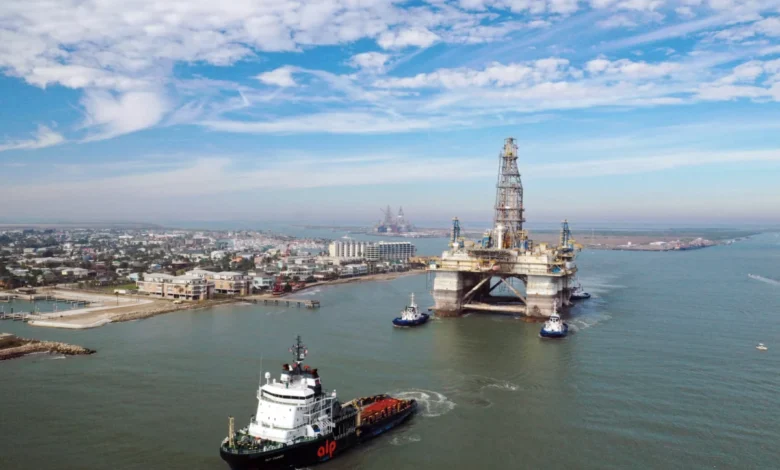
Texas currently stands at a crossroads of energy policy, maintaining a dominant lead in onshore wind production while simultaneously orchestrating a calculated blockade against the development of offshore wind energy in the Gulf of Mexico. While five offshore wind projects along the United States’ East Coast have recently resumed construction following a federal judge’s decision to block a previous administration’s stop-work order, the Texas coastline remains conspicuously devoid of similar activity. This absence is not due to a lack of natural resources or technical capability, but rather a concerted effort by state leadership to signal to investors that the Lone Star State is closed for business regarding offshore renewable energy.
Texas has long been an energy powerhouse, producing more than 20 percent of the nation’s wind-sourced electricity through its vast onshore farms. Studies from the National Renewable Energy Laboratory (NREL) and various academic institutions suggest that the state’s offshore potential is equally formidable. The Gulf of Mexico offers shallow waters, high wind speeds, and a proximity to industrial coastal hubs that make it an ideal candidate for large-scale wind arrays. Furthermore, Texas possesses a uniquely qualified workforce with decades of experience in constructing and maintaining offshore oil and gas rigs—skills that are directly transferable to the wind industry. Despite these advantages, a federal auction of seabed leases held nearly three years ago resulted in a total absence of bids for Texas sites, a failure experts attribute directly to political hostility.
A Chronology of Institutional Resistance
The timeline of Texas’s resistance to offshore wind reached a critical juncture in August 2023, when the Biden administration offered the first-ever federal leases for wind development in the Gulf of Mexico. This move was part of a broader federal strategy to produce 30 gigawatts of offshore wind energy by 2030, a goal intended to power 10 million homes and eliminate 78 million metric tons of carbon dioxide emissions. The auction included one site off the coast of Lake Charles, Louisiana, and two sites approximately 30 nautical miles off the coast of Galveston, Texas.
While the Louisiana lease was successfully sold for $5.6 million to RWE Offshore US Gulf, LLC, the Texas sites received no bids. This outcome was anticipated by industry analysts who had observed a series of preemptive strikes by Texas officials. General Land Office (GLO) Commissioner Dawn Buckingham, whose office manages state-owned submerged lands and whose approval is required for the transmission cables that connect offshore turbines to the mainland grid, had signaled well in advance that such approvals would be withheld. Buckingham’s public stance was that her office would not facilitate the infrastructure necessary for federal wind projects to reach the Texas market, citing a desire to protect the state’s "best interests" while dismissing federal "green" policies as folly.
Parallel to the GLO’s resistance, the Texas Legislature has seen a flurry of activity aimed at curbing renewable expansion. During the 2023 and 2025 legislative sessions, nearly a dozen bills were introduced to create new regulatory hurdles for offshore wind. State Senator Mayes Middleton, a Republican representing Galveston and the head of an oil company, was a primary driver of this legislation. Middleton has publicly vowed to continue filing bills to ensure that offshore wind never gains a foothold in Texas waters. Although some of these bills failed to pass, their mere introduction served as a powerful deterrent to capital markets, branding Texas as a high-risk environment for renewable investment.
The Role of Regulatory Agencies and Fossil Fuel Advocacy
The opposition is not limited to the GLO or the legislature; it extends to the Railroad Commission of Texas, the state’s primary regulator of the oil and gas industry. Commissioner Wayne Christian has emerged as a vocal critic of the federal government’s push for offshore wind. In letters addressed to Governor Greg Abbott and Commissioner Buckingham, Christian expressed grave concerns that offshore wind would disrupt the state’s fossil fuel dominance and harm coastal economies reliant on fishing and tourism.
Christian’s arguments often center on the perceived unreliability of renewable energy. He has consistently advocated for "dependable, affordable" energy grounded in methane (natural gas), arguing that wind energy requires massive subsidies and backup generation to account for weather variability. In a recent statement, Christian reaffirmed his position, stating that he would continue to protect the resources that have made Texas the energy capital of the world against what he terms "ideologically driven" federal mandates.
This protectionist stance is reflected in the state’s fiscal priorities. While officials lobbied against federal wind leases, the Texas Legislature approved a $7.2 billion fund consisting of low-interest loans and bonus grants specifically designed to incentivize the construction of new gas-fueled power plants. This creates a starkly uneven playing field where the state actively subsidizes fossil fuel expansion while placing regulatory roadblocks in front of carbon-neutral alternatives.
Technical Potential vs. Economic Reality
The tragedy of the stalled offshore wind industry in Texas lies in the sheer scale of the missed opportunity. The Bureau of Ocean Energy Management (BOEM) has identified that nearly one-third of the shallow-water offshore wind potential in the United States is located off the shores of Texas and Louisiana. The technical capacity is staggering; a 2025 study by Texas A&M University at Galveston found that Texas holds approximately half of the Gulf’s technical capacity for offshore wind. If fully realized, this could meet more than 160 percent of the state’s projected energy needs for 2025.

Modern offshore turbines are significantly more efficient than their onshore counterparts. With rotor blades reaching heights of nearly 900 feet, these coastal turbines can generate up to three times the power of a standard land-based turbine. The federal government estimated that the two Galveston sites alone could have generated enough electricity to power 1.3 million homes.
However, the economic structure of the Texas energy market presents its own set of challenges. Unlike Louisiana, where integrated utilities can distribute the high upfront costs of new infrastructure across a stable ratepayer base, Texas operates under the Electric Reliability Council of Texas (ERCOT), a highly competitive and deregulated market. New energy sources with high initial capital expenditures, such as offshore wind, nuclear, or hydrogen, find it difficult to compete with established, low-cost resources like solar and onshore wind without state-level support or long-term power purchase agreements.
Stakeholder Concerns: Tourism, Fishing, and Wildlife
While political opposition is the primary driver of the stalemate, other stakeholders have raised legitimate concerns regarding the impact of offshore wind on the Gulf’s ecosystem and economy. The Southern Shrimp Alliance, representing shrimpers across eight states, has been active in negotiations with BOEM to ensure that wind farms do not "catastrophically disrupt" traditional shrimping grounds. Through their advocacy, the number of potential development areas was reduced from thirteen to a few carefully selected sites to minimize impact on sensitive species like red snapper and endangered sea turtles.
Tourism and aesthetics also play a role in local discourse. Some residents in Galveston and surrounding coastal communities fear that giant turbines will mar the horizon and discourage visitors. However, proponents like Anna Weiss of Vision Galveston point out that the proposed sites are 30 nautical miles offshore—far beyond the visible horizon for most beachgoers. Furthermore, the Texas shoreline is already heavily industrialized with oil platforms and shipping lanes, suggesting that the visual impact of wind turbines would be a continuation of, rather than a departure from, the existing coastal landscape.
Environmental groups, including the National Wildlife Federation and the National Audubon Society, have weighed in with a more global perspective. While acknowledging the need for responsible siting to avoid bird collisions and noise pollution during construction, these organizations argue that the threat posed by climate change far outweighs the localized risks of wind development. The Audubon Society’s 2025 report highlighted that two-thirds of North American bird species face extinction due to rising temperatures, framing offshore wind as a "solvable problem" in the fight against a much larger existential crisis.
Federal Volatility and the Chilling Effect on Capital
The instability of federal energy policy has further complicated the landscape. The oscillation between administrations has created a "chilling effect" on capital markets. Investors are wary of committing billions of dollars to multi-year projects that could be halted by executive orders or regulatory shifts.
A prominent example of this volatility occurred when the federal administration reportedly agreed to pay TotalEnergies, a French energy major, nearly $1 billion to abandon its wind farm plans off the coasts of New York and North Carolina. In exchange, the company was encouraged to redirect those funds into new oil and gas projects within the United States. Such moves signal to the global energy market that offshore wind remains a political football, making it difficult for developers to secure the long-term financing necessary for Gulf projects.
Broader Implications and Future Outlook
Despite the current impasse, there remains a disconnect between the state’s political leadership and its citizenry. A 2025 poll conducted by Texas A&M University at Galveston revealed that 71 percent of Texans support the development of wind energy off the state’s coast. Furthermore, more than 75 percent of respondents ranked both onshore and offshore wind among the top five energy sources they would like the state to incentivize.
The demand for energy in Texas is only expected to grow. Projections suggest the state will add up to 5 million more residents by 2036, placing immense strain on the existing grid. On peak days, renewables already prove their worth; in February 2025, solar and wind met 83 percent of morning demand and provided nearly 70 percent of the state’s total power for the day.
The refusal to embrace offshore wind represents a strategic gamble by Texas officials. By doubling down on fossil fuel infrastructure and actively discouraging renewable investment, the state is betting that methane will remain the dominant global energy currency for decades to come. However, as the global industry matures and the costs of offshore technology continue to fall, the economic pressure to tap into the Gulf’s wind potential may eventually become too great for even the most entrenched political opposition to ignore. For now, the "energy capital of the world" remains a house divided, leading the nation in the winds of the plains while turning its back on the gales of the Gulf.