Senate Republicans Vote to Overturn Boundary Waters Mining Ban Using Congressional Review Act

In a move that has ignited a fierce debate over the balance between environmental conservation and industrial resource extraction, the United States Senate voted 50-49 on Thursday to overturn a 20-year moratorium on mining in the Boundary Waters Canoe Area Wilderness of northeastern Minnesota. The resolution, passed under the framework of the Congressional Review Act (CRA), seeks to reopen more than 225,000 acres of federal land to copper and nickel mining, specifically targeting the mineral-rich Duluth Complex. The decision represents a significant victory for mining interests and their supporters in the Republican party, while drawing sharp condemnation from environmental advocates, tribal nations, and local recreation-dependent businesses.
The Boundary Waters, a sprawling expanse within the Superior National Forest, comprises over one million acres of pristine forest, thousands of glacial lakes, and hundreds of miles of streams. It is the most visited wilderness area in the United States, serving as a cornerstone for a regional outdoor recreation economy that generates hundreds of millions of dollars annually. The move to rescind protections for this watershed marks a pivotal moment in federal land management policy, signaling a shift toward prioritizing domestic mineral production in the face of rising global demand for materials essential to the technology and defense sectors.
The Congressional Review Act and Legal Controversies
The primary mechanism for this legislative action was the Congressional Review Act, a 1996 law designed to allow Congress to overturn federal agency rules with a simple majority vote. Originally championed by former House Speaker Newt Gingrich, the CRA was intended as a tool for regulatory oversight, allowing a new Congress to quickly rescind rules finalized by a previous administration. Unlike traditional legislation, a CRA resolution cannot be filibustered in the Senate, making it a potent weapon for the majority party.
However, the application of the CRA in the case of the Boundary Waters is viewed by legal experts as highly unconventional and potentially outside the scope of the law’s original intent. Historically, the CRA has been applied to "rules" as defined by the Administrative Procedure Act. The mining ban in Minnesota, however, was established through a "Public Land Order" issued by the Department of the Interior.
Blaine Miller-McFeeley, a senior legislative representative at Earthjustice, noted that the use of the CRA in this context is "extraordinarily legally questionable." Furthermore, the CRA typically applies to rules issued within the last 60 legislative days. The Boundary Waters protections were finalized more than three years ago during the Biden administration, raising significant questions about the timeline and the precedent this sets for the permanent dismantling of federal land protections. Critics argue that if this resolution survives legal challenges, it could expose any past land management decision—including the establishment of national monuments or wildlife refuges—to sudden political reversals.
The Duluth Complex and the Twin Metals Project
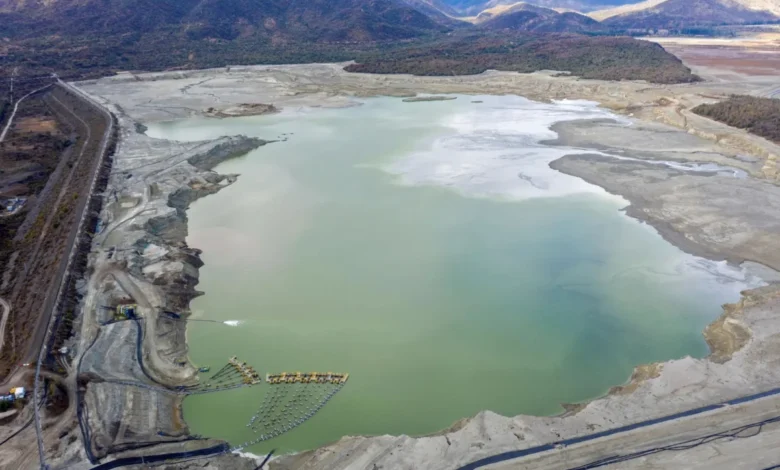
At the heart of the legislative battle is the Duluth Complex, one of the world’s largest undeveloped deposits of copper, nickel, and platinum-group metals. The primary beneficiary of the Senate’s vote is Twin Metals Minnesota, a subsidiary of the Chilean mining giant Antofagasta. Twin Metals has long sought to develop an underground sulfide-ore copper mine just five miles from the edge of the Boundary Waters wilderness.
Proponents of the mine argue that the project is essential for national security and the transition to a low-carbon economy. They contend that the United States must decrease its reliance on foreign adversaries for critical minerals. Senator Mike Lee of Utah and other Republican leaders have framed the mining ban as an overreach of the "administrative state" that stifles economic growth and American energy independence.
However, the history of the Twin Metals project has been clouded by concerns regarding political influence. The company was previously controlled by billionaire Andrónico Luksic, whose family retains a majority stake in Antofagasta. During the first Trump administration, Luksic’s ties to the Trump family—specifically his role as a landlord to Ivanka Trump and Jared Kushner in Washington, D.C.—drew intense scrutiny from ethics watchdogs. Despite the change in leadership at the company, the project remains a flashpoint for discussions regarding the intersection of corporate interests and federal policy.
Economic Drivers: The AI Boom and Defense Needs
The renewed push for mining in Minnesota is fueled by a dramatic shift in global commodity markets. Copper, in particular, has become a "critical" mineral due to its indispensable role in the burgeoning artificial intelligence sector. Data centers, which power AI algorithms, require vast amounts of copper for electrical wiring, cooling systems, and power distribution.

A recent study by S&P Global projected that copper demand will increase by 50 percent by 2040, driven largely by AI infrastructure and the ongoing electrification of the global economy. Similarly, nickel is a vital component in high-capacity batteries for electric vehicles and is increasingly sought after by the defense industry for use in aerospace and military hardware. A report from the Carnegie Endowment for International Peace predicted a significant nickel deficit by 2035, noting that the United States currently has a limited ability to scale domestic production.
Despite these demands, critics point out a fundamental flaw in the "national security" argument for the Minnesota mine. The United States currently lacks the smelting and processing infrastructure to handle the type of ore found in the Duluth Complex. Consequently, the raw minerals extracted from the Boundary Waters watershed would likely be shipped overseas—often to China or other international hubs—for processing before being sold back to American manufacturers. This bottleneck suggests that domestic mining alone may not achieve the goal of supply chain independence.
Tribal Sovereignty and Environmental Risks
The Senate’s decision has been met with profound opposition from the Bois Forte Band, the Fond du Lac Band, and the Grand Portage Band of Chippewa. These tribal nations hold extensive treaty rights in northeastern Minnesota, guaranteed by the 1854 Treaty of La Pointe. These rights include the ability to hunt, fish, and gather in the region, activities that are central to their cultural identity and subsistence.
Senator Martin Heinrich of New Mexico, speaking on the Senate floor, emphasized that the use of the CRA effectively silences tribal voices. "By overturning the Public Land Order with a CRA resolution, Senate Republicans will not only cut tribes out of the conversation; they disrespect tribal treaty rights and directly risk those tribes’ guaranteed access to their traditional way of life," Heinrich stated.
The environmental risks associated with sulfide-ore mining are well-documented. Unlike iron ore mining, which has a long history in Minnesota, sulfide-ore mining carries a high risk of acid mine drainage. When sulfide minerals are exposed to air and water, they create sulfuric acid, which can leach heavy metals into the surrounding environment. Because the Boundary Waters is a water-based wilderness characterized by interconnected lakes and a high water table, any pollution from a mine could spread rapidly and prove impossible to contain.
In 2016, the U.S. Forest Service conducted a scientific review and determined that a sulfide-ore mine in this specific watershed could cause "serious and irreplaceable harm." The agency concluded that the risk of contaminating the pristine waters of the Boundary Waters was too high to justify the industrial development, a stance that has been echoed by non-partisan researchers and environmental scientists for a decade.
Chronology of the Boundary Waters Conflict
The conflict over mining in the Superior National Forest has spanned multiple presidential administrations, reflecting the deep political divide over land use:
- 2016: The Obama administration refuses to renew two mineral leases held by Twin Metals, citing environmental risks to the Boundary Waters. The U.S. Forest Service begins a study to determine if a 20-year withdrawal from mining is warranted.
- 2018: The first Trump administration reverses the Obama-era decision, reinstating the mineral leases for Twin Metals and abruptly cancelling the environmental study before its completion.
- 2022: The Biden administration’s Department of the Interior cancels the Twin Metals leases again, citing legal errors in their reinstatement.
- 2023: Secretary of the Interior Deb Haaland signs Public Land Order 7917, officially withdrawing 225,504 acres of the Superior National Forest from mineral leasing for 20 years.
- 2025-2026: Following a change in congressional leadership and the return of the Trump administration, Republicans begin utilizing the Congressional Review Act to target environmental regulations and land orders from the previous four years.
- April 2026: The Senate passes the CRA resolution to repeal the 20-year mining ban.
Broader Implications and Future Precedents
The passage of the Boundary Waters resolution is being viewed as a "test case" for a broader strategy to dismantle federal environmental protections. If the CRA can be successfully used to overturn a Public Land Order, it opens the door for similar attacks on other protected areas. Senator Mike Lee has already indicated plans to use the CRA to eliminate management plans for the Grand Staircase-Escalante National Monument in Utah.
Furthermore, this move coincides with a bipartisan push for "permitting reform." While many lawmakers agree that the National Environmental Policy Act (NEPA) needs updates to accelerate the deployment of clean energy infrastructure, environmentalists fear that the combination of NEPA rollbacks and CRA weaponization will leave the nation’s most sensitive ecosystems vulnerable to industrial exploitation without adequate oversight.
The resolution now heads to President Trump’s desk, where he is expected to sign it into law. While the legislative path seems clear, the battle is far from over. Environmental groups and tribal nations have signaled their intent to challenge the legality of the CRA’s application in federal court. As the legal system prepares to weigh in, the fate of the Boundary Waters remains a symbol of the national struggle between the immediate demands of industrial growth and the long-term preservation of the natural world.