The Rise of the Wooden Skyscraper: How Mass Timber is Redefining Urban Resilience and Sustainability

The architectural landscape of the 21st century is undergoing a quiet but profound transformation, shifting away from the rigid, carbon-intensive dominance of steel and concrete toward a material as old as civilization itself: wood. In a wind-swept forest, the swaying of pines and firs is a survival mechanism, an evolutionary adaptation that allows trunks to flex rather than snap under the pressure of a gale. For decades, this same principle was applied to the steel skeletons of the world’s tallest skyscrapers, allowing them to oscillate safely during hurricanes and seismic events. Today, however, architects are no longer just mimicking the mechanics of the forest; they are physically transplanting the forest into the city skyline through the use of mass timber.
Mass timber, an umbrella term for engineered wood products like cross-laminated timber (CLT) and glue-laminated timber (glulam), is enabling a new generation of high-rise structures that are environmentally regenerative, seismically resilient, and aesthetically transformative. The recent completion of "The Hive" in Vancouver and the record-breaking "Ascent MKE" in Milwaukee mark a pivotal moment in this movement, signaling that the era of the wooden skyscraper has moved from experimental concept to commercial reality.
The Engineering of Modern Giants: CLT and Glulam
To understand how a 25-story building can be safely constructed from wood, one must look at the sophisticated engineering of mass timber. Unlike traditional "stick-frame" construction used in residential housing, mass timber involves bonding multiple layers of wood together to create massive, structural elements.
Cross-laminated timber (CLT) consists of layers of kiln-dried lumber stacked in alternating directions—usually at 90-degree angles—and bonded with structural adhesives under high pressure. This cross-layering provides the material with exceptional dimensional stability and strength-to-weight ratios that rival those of reinforced concrete and steel. Glue-laminated timber (glulam), meanwhile, involves bonding layers of wood with the grain running parallel, making it ideal for the heavy-duty columns and beams that support a building’s primary vertical loads.
These materials allow for the prefabrication of entire building components in a controlled factory environment. Panels and beams are cut with millimeter-level precision using CNC (computer numerical control) machines, then shipped to the construction site for rapid assembly. This process not only reduces construction timelines by up to 25 percent but also significantly minimizes the noise, dust, and waste typically associated with urban construction sites.
A Chronology of Vertical Growth
The journey toward the modern timber high-rise has been defined by a steady progression of height records and regulatory shifts. For much of the 20th century, building codes restricted wooden structures to just a few stories due to fire concerns. However, as fire testing and structural engineering proved the viability of mass timber, those limits began to rise.
In 2017, the University of British Columbia completed Brock Commons Tallwood House, an 18-story student residence that stood as a global proof-of-concept. This was followed in 2019 by the Mjøstårnet building in Brumunddal, Norway, which reached 280 feet. The momentum reached a new peak in August 2022 with the opening of the Ascent MKE building in Milwaukee, Wisconsin. Standing at 284 feet and 25 stories, Ascent is currently recognized by the Council on Tall Buildings and Urban Habitat (CTBUH) as the world’s tallest timber-concrete hybrid building.
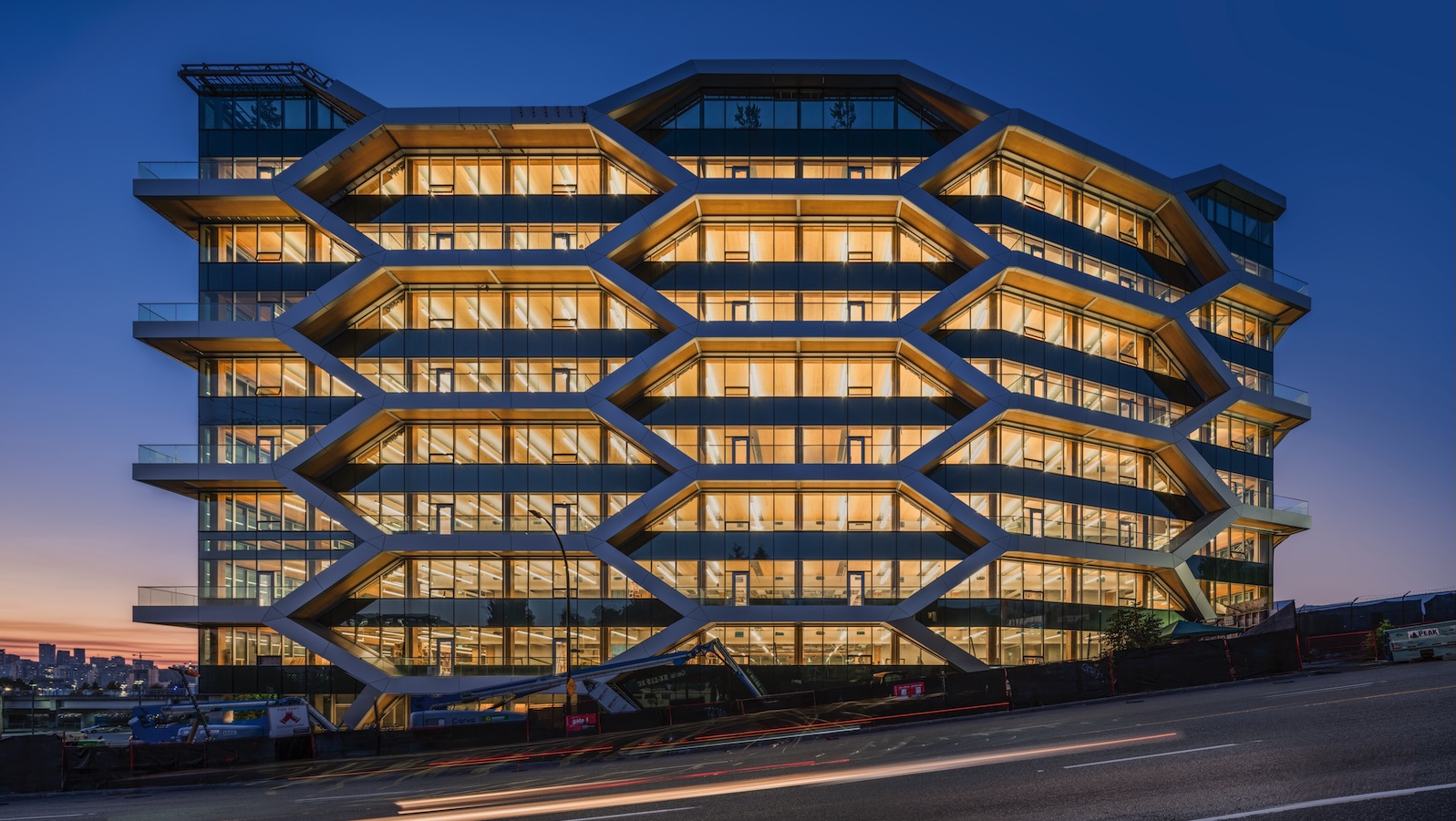
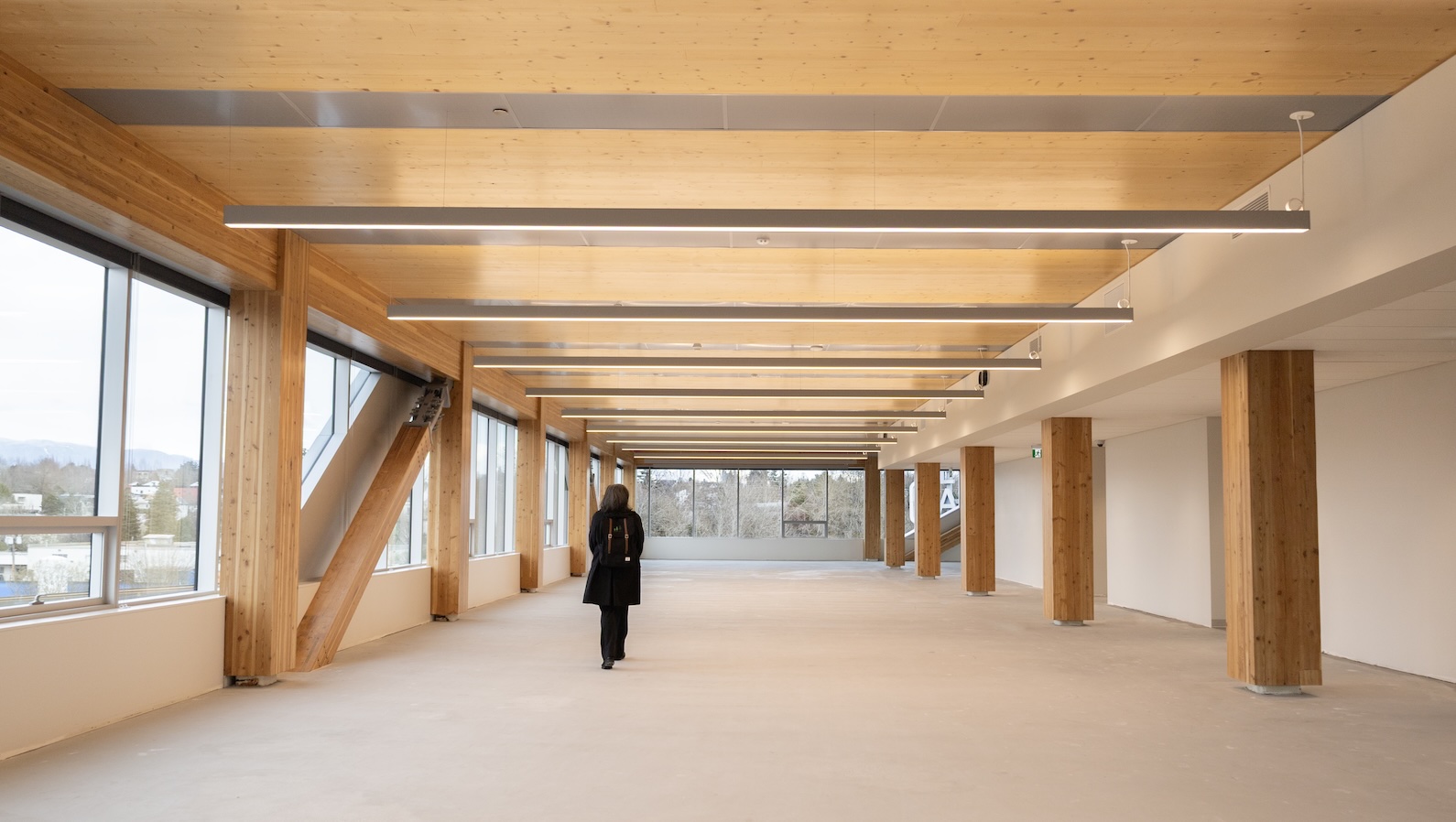
The most recent milestone occurred in Vancouver with the completion of "The Hive." While not the tallest in the world, this 10-story office building represents a breakthrough in seismic engineering. Designed by the architecture firm Dialog, The Hive is North America’s tallest brace-framed, seismic-force-resisting timber structure. Its completion underscores the growing confidence of developers in using wood for high-density commercial spaces in regions prone to earthquakes.
Seismic Resilience and the Science of Shaking
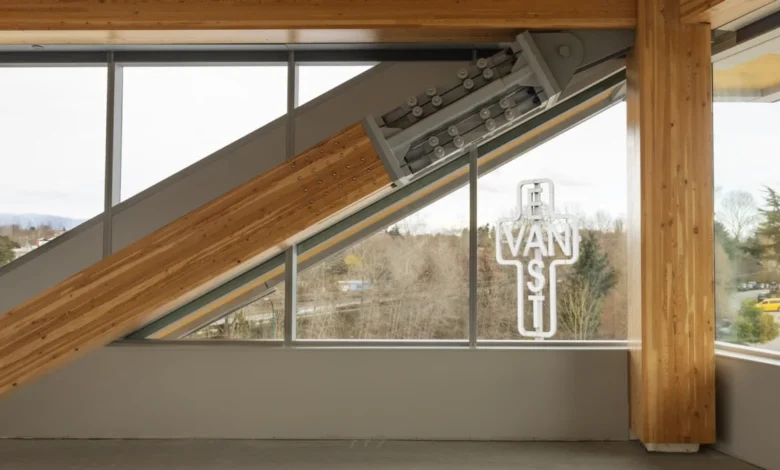
Building tall with wood in the Pacific Northwest or other seismic zones requires addressing the immense energy released during an earthquake. Traditionally, buildings relied on rigid concrete cores or steel braces to resist these forces. The Hive, however, utilizes Tectonus dampers—sophisticated mechanical devices that act as giant shock absorbers. These dampers dissipate seismic energy and, crucially, help the building "recenter" itself after the shaking stops, preventing the permanent tilting or structural deformation that often leads to the demolition of traditional buildings after a major quake.
Further evidence of timber’s resilience was demonstrated recently at the University of California, San Diego (UCSD). Researchers conducted the "NHERI TallWood" project, which involved building a full-scale, 10-story mass timber structure on one of the world’s largest outdoor shake tables. The structure was equipped with a "rocking wall" system—a massive CLT wall anchored to the foundation with high-strength steel rods that allow the building to rock and then snap back into place.
During the testing phase, engineers simulated 88 different earthquake scenarios, including the intensity of the devastating 1994 Northridge earthquake. "It performed phenomenally," noted Shiling Pei, a professor at the Colorado School of Mines and the lead researcher on the project. The building emerged from the simulations with virtually no structural damage, proving that mass timber is not just a "green" alternative, but potentially a safer one for earthquake-prone metropolitan areas.
The Environmental Imperative: Carbon Sequestration
The primary driver behind the mass timber revolution is the urgent need to decarbonize the construction industry. The "Big Two" of traditional construction—concrete and steel—are responsible for approximately 15 percent of global carbon dioxide emissions. Cement production alone accounts for about 8 percent of the world’s CO2, largely due to the chemical process of calcination and the high heat required for kilns.
In contrast, wood acts as a "carbon sink." As trees grow, they absorb CO2 from the atmosphere through photosynthesis, storing the carbon in their fibers. When that wood is harvested and turned into CLT or glulam, the carbon remains "locked" within the building for its entire lifespan. Estimates suggest that one cubic meter of CLT can sequester roughly one ton of CO2.
"We are essentially building carbon warehouses in our cities," says Alessandro Palermo, a structural engineer at UCSD. By substituting timber for concrete and steel, architects can achieve a "double-dip" climate benefit: they avoid the massive emissions associated with mineral extraction and industrial processing, while simultaneously removing existing carbon from the atmosphere.
Forest Health and Resource Management
Critics often question whether a global shift toward timber construction would lead to deforestation. However, proponents and foresters argue that mass timber can actually improve forest health when managed correctly. Because CLT and glulam are engineered from smaller pieces of wood, they can be manufactured from small- and medium-diameter trees that were previously considered of low commercial value.
The U.S. Forest Service and other agencies have noted that thinning these smaller trees is essential for reducing the risk of catastrophic wildfires. Decades of fire suppression have left many forests dangerously overcrowded. By creating a high-value market for this "restoration wood," mass timber provides an economic incentive for forest management projects that remove excess fuel, thereby protecting old-growth stands and enhancing biodiversity. Furthermore, unlike the finite resources required for steel and concrete, timber is a renewable resource that can be harvested indefinitely through sustainable forestry practices.
Addressing the Fire Safety Paradox
The most common hurdle for mass timber adoption is the public perception of fire risk. The idea of a wooden skyscraper often evokes images of "stick-built" houses that burn quickly. However, mass timber behaves fundamentally differently in a fire.
Because CLT and glulam are so dense, they do not ignite easily. When exposed to flame, the outer layer of the wood chars at a predictable rate (approximately 1.5 inches per hour). This char layer acts as an insulating barrier, protecting the structural integrity of the inner core of the beam. This phenomenon is similar to how a large log in a campfire takes hours to burn through, even as smaller twigs are consumed instantly.
Building regulators in jurisdictions like British Columbia and Wisconsin have implemented rigorous fire-testing requirements. In many cases, mass timber structures are required to demonstrate a two- or three-hour fire resistance rating, ensuring that the building remains stable long enough for occupants to evacuate and for firefighters to suppress the blaze.
Biophilia and the Human Element
Beyond the technical and environmental metrics, there is a human-centric argument for mass timber. Architects frequently cite "biophilia"—the innate human tendency to seek connections with nature—as a reason for the material’s popularity. Exposed wood in interior spaces has been shown in various studies to reduce heart rates, lower stress levels, and improve cognitive performance among occupants.
"It has a tactile quality about it that people want to interact with," says Katie Mesia, a design resilience leader at the architecture firm Gensler. In an era where urban dwellers spend 90 percent of their time indoors, the warmth and texture of wood offer a psychological reprieve from the sterile environments of glass and drywall.
Conclusion: The Future of Urban Density
The transition to mass timber is not a total abandonment of modern materials; most timber high-rises still utilize concrete foundations and steel connectors. Instead, it is a sophisticated hybridization that leverages the strengths of each material to meet the challenges of the 21st century.
As cities continue to grow and the climate crisis intensifies, the ability to build high-density, resilient housing that heals the atmosphere rather than harming it is no longer a luxury—it is a necessity. From the streets of Vancouver to the skyline of Milwaukee, the wooden skyscraper is proving that the most advanced technology for the future of the city may have been growing in the forest all along.