California Moves to Phase Out Toxic Forever Chemical Pesticides in Agricultural Sector to Protect Public Health and Food Supply

California Assemblymember Nick Schultz has introduced landmark legislation aimed at fundamentally altering the landscape of American agriculture by phasing out the use of pesticides containing per- and polyfluoroalkyl substances, commonly known as PFAS or "forever chemicals." The proposed bill, AB 1603, seeks to implement a comprehensive ban on the manufacture, sale, and use of these persistent synthetic compounds in agricultural applications across the state by 2035. As the leading producer of fruits, nuts, and vegetables for the United States, California’s regulatory shift is expected to have profound implications for food safety standards nationwide and may force a reckoning within the global chemical manufacturing industry.
The legislation arrives amid growing scientific consensus regarding the health risks associated with PFAS, a class of thousands of synthetic chemicals defined by their carbon-fluorine bonds—among the strongest in organic chemistry. These bonds allow the chemicals to resist heat, water, and grease, making them ideal for industrial use but also rendering them nearly indestructible in the environment. Assemblymember Schultz, representing Burbank, expressed significant concern during a recent public briefing, noting that while California has been a leader in removing PFAS from consumer products like food packaging and cosmetics, their continued presence in the agricultural sector represents a major regulatory blind spot.
The Scope of PFAS Contamination in California Agriculture
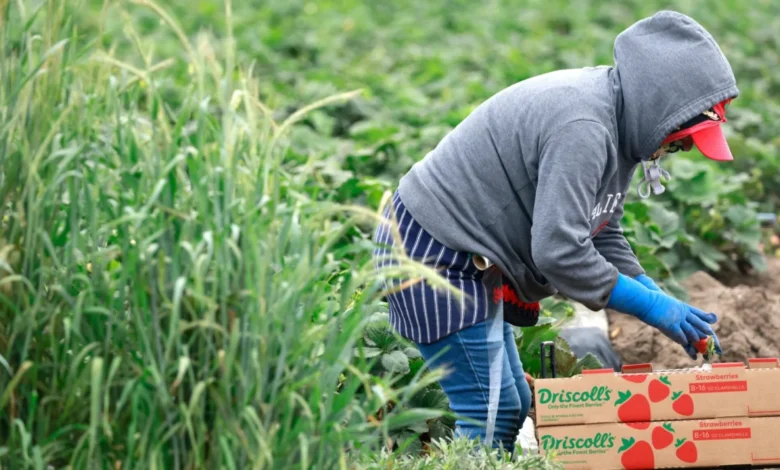
The scale of PFAS application on California’s farmlands is extensive. According to an exhaustive analysis of state pesticide use data conducted by the Environmental Working Group (EWG), more than 2.5 million pounds of pesticides containing PFAS were applied to California crops between 2018 and 2023. These chemicals are not merely accidental contaminants; in many cases, they are "intentionally added" ingredients designed to enhance the stability and efficacy of the pesticide formulas.
The EWG’s research further indicates that these chemicals are making their way into the American diet. Residues of at least one PFAS-containing pesticide were detected on nearly 40 percent of conventional produce grown in California. Of particular concern is the fungicide fludioxonil, which was found on 90 percent of tested samples of peaches, plums, and nectarines grown within the state. Fludioxonil has been linked in various toxicological studies to hormone disruption and potential reproductive issues, raising alarms for public health advocates.
The presence of these chemicals on produce presents a unique challenge for consumers. While health organizations typically recommend washing fruits and vegetables to remove surface residues, the very nature of PFAS—designed specifically to resist water and environmental degradation—suggests that standard rinsing may be ineffective at removing these specific compounds. This "waterproof" quality ensures the chemicals remain on the food through the supply chain and into the kitchens of American families.
Chronology of Legislative and Regulatory Action
The introduction of AB 1603 is the latest step in a multi-year effort by California lawmakers to address the "forever chemical" crisis. The state has previously passed legislation to ban PFAS in firefighting foam, children’s products, and paper-based food packaging. However, the agricultural sector remained a significant gap in the state’s environmental protections.
The timeline for AB 1603 includes a tiered approach to the phase-out:
- Early 2025: Introduction of AB 1603 by Assemblymember Schultz.
- 2030 Deadline: A ban on the use of 23 specific PFAS pesticides that are already prohibited in the European Union but currently allowed in California.
- 2035 Deadline: A total ban on the manufacture, sale, and use of all PFAS-containing pesticides within the state.
The bill also includes immediate transparency requirements. Until the phase-out is complete, the legislation would mandate that growers and local communities be explicitly informed when PFAS pesticides are being utilized. Currently, many farmers may be unaware that the products they purchase and apply to their fields contain these persistent toxins, as labeling requirements have historically been opaque regarding "inert" or secondary ingredients.
Regional Impacts: A Case Study of the Salinas Valley
The human cost of pesticide exposure is perhaps most visible in Monterey County, home to the Salinas Valley, often referred to as the "Salad Bowl of the World." Between 2018 and 2023, more than half a million pounds of PFAS pesticides were applied in this county alone. The region has served as a living laboratory for researchers from the University of California, Berkeley, who have spent decades studying the health of farmworker families.
The CHAMACOS study (Center for the Health Assessment of Mothers and Children of Salinas) has provided pioneering data on how pesticide exposure affects childhood development. Salinas City Councilmember Andrew Sandoval highlighted that children in these communities are frequently born with measurable levels of pesticides in their systems. Longitudinal data from these studies have linked early exposure to cognitive difficulties, behavioral problems, and mental health issues that persist into adulthood.
The discovery that these pesticides also contain PFAS adds a new layer of complexity to the public health crisis in agricultural regions. Because PFAS accumulate in the body over time—a process known as bioaccumulation—farmworkers and their families face a "double burden" of acute pesticide toxicity and the long-term chronic risks associated with forever chemicals, including increased cancer risks and immune system suppression.
Scientific and Health Implications of PFAS Exposure
The health risks associated with PFAS are well-documented by the Centers for Disease Control and Prevention (CDC) and the Environmental Protection Agency (EPA). Because these chemicals do not break down, they remain in the human bloodstream for years. Exposure has been linked to a variety of serious conditions, including:
- Cancer: Increased risks of kidney and testicular cancer.
- Metabolic Issues: Higher cholesterol levels and interference with natural hormones.
- Developmental Problems: Lower birth weights and developmental delays in children.
- Immune System Suppression: Impaired response to vaccines and increased susceptibility to infections.
The EPA has historically maintained that pesticides are safe when used according to label directions. However, recent EPA investigations have focused primarily on PFAS leaching into pesticides from fluorinated plastic storage containers. Assemblymember Schultz argues that this focus is too narrow, as it ignores the millions of pounds of PFAS that are active ingredients or intentionally added stabilizers within the pesticides themselves. "It’s there because they were directly sprayed onto our crops and onto our fields," Schultz stated, emphasizing that the contamination is a result of systemic application rather than incidental contact.
Global Context and Economic Pressures
In drafting AB 1603, California is looking toward international standards, specifically those of the European Union. The EU has already taken aggressive steps to outlaw several commonly used PFAS pesticides, such as bifenthrin and trifluralin, citing both environmental persistence and human health concerns. By aligning California’s regulations with those of the EU, the bill seeks to create a more uniform global standard for agricultural safety.
The economic implications of this bill are significant. California’s agricultural industry is a multi-billion-dollar engine that supplies a vast majority of the nation’s leafy greens, grapes, and various tree nuts. Critics of the bill may argue that a ban could increase costs for farmers or reduce crop yields if viable alternatives are not readily available. However, proponents argue that the long-term costs of environmental remediation and healthcare for affected populations far outweigh the short-term economic adjustments required by the industry.
Furthermore, as the "breadbasket of the United States," California’s standards often become the de facto national standards. If chemical manufacturers are forced to reformulate their products to maintain access to the California market, those reformulated, PFAS-free products are likely to become the new standard for the rest of the country.
Broader Implications and the Path Forward
The introduction of AB 1603 signals a shift in how the United States approaches agricultural regulation. For decades, the focus has been on the immediate toxicity of pesticides to "target pests." The move to ban PFAS reflects a growing understanding of "indirect" or "legacy" toxicity—the damage caused by chemicals that persist in the soil and water long after the pests are gone.
The bill faces a rigorous legislative process, where it will likely encounter opposition from chemical industry lobbyists and some agricultural trade groups. However, the coalition supporting the bill—which includes the Environmental Working Group, Pesticide Action Network North America (PANNA), and various public health organizations—remains optimistic. They point to California’s history of environmental leadership as a harbinger of success.
As the debate over AB 1603 continues, the focus remains on the fundamental right to a safe food supply. For Assemblymember Schultz and the residents of agricultural hubs like the Salinas Valley, the goal is to ensure that the fruits and vegetables that nourish the nation are not simultaneously delivering a payload of indestructible toxins. The outcome of this legislative effort will likely define California’s environmental legacy for the next decade and set a precedent for how the world manages the intersection of chemistry, agriculture, and public health.