A First Look at Mickey 17: Bong Joon Ho and Robert Pattinson Bring Sci-Fi Thriller to the Big Screen

The cinematic landscape is preparing for a monumental release as Academy Award-winning director Bong Joon Ho returns with his highly anticipated science fiction feature, Mickey 17. Following his historic sweeping victory at the 2020 Academy Awards with the genre-defying masterpiece Parasite, the South Korean auteur has set his sights on Hollywood science fiction, adapting Edward Ashton’s acclaimed novel Mickey 7. Warner Bros. has scheduled the film’s theatrical release for March 29, 2024, generating massive expectations among cinephiles, literary fans, and industry analysts alike.
Featuring an ensemble cast led by Robert Pattinson, Steven Yeun, Naomi Ackie, Toni Collette, and Mark Ruffalo, the production marks a major milestone in Bong’s illustrious career. With a narrative exploring themes of human expendability, corporate interstellar colonization, and existential identity, Mickey 17 promises to deliver the trademark social satire, meticulous framing, and moral ambiguity that have come to define Bong’s filmography.
The Genesis of Mickey 17: From Edward Ashton’s Novel to the Screen
The journey of Mickey 17 began with the publication of Edward Ashton’s speculative sci-fi novel Mickey 7, which hit shelves in early 2022. The novel quickly garnered critical praise for its high-concept premise and dark comedic tone, capturing the attention of major Hollywood studios and production houses. Plan B Entertainment, the production company co-founded by Brad Pitt, Dede Gardner, and Jeremy Kleiner, acquired the rights to the property and partnered with Bong Joon Ho, who immediately recognized the rich thematic potential within Ashton’s source material.
Bong, who wrote the screenplay in addition to directing, has built a reputation for altering and subverting literary works to suit his distinct cinematic vision. While the novel focuses primarily on the life of Mickey 7—an "expendable" employee utilized for high-risk exploratory tasks on a hostile ice world—early reports indicate that the cinematic adaptation may diverge from the book in significant ways. The title itself, shifting from Mickey 7 to Mickey 17, suggests an escalation in the protagonist’s perilous journey through recurring cycles of death and technological resurrection.
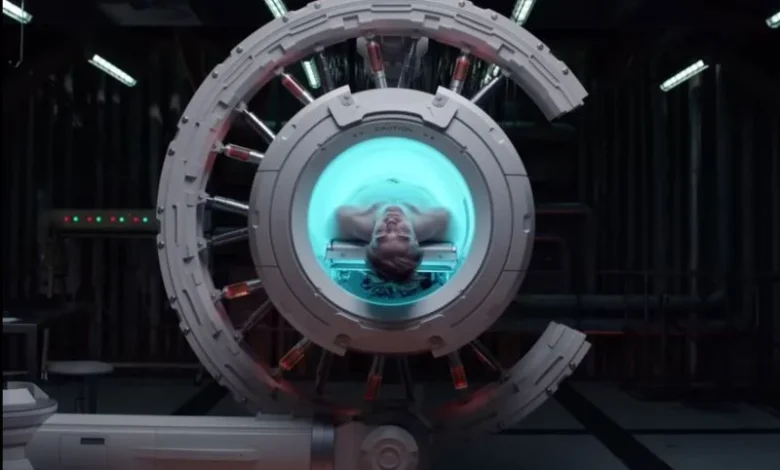
The narrative framework centers on human colonization efforts targeting Niflheim, a treacherous, frozen exoplanet. In this grim future, human interstellar expeditions rely on "Expendables"—members of the crew whose legal status and physical bodies are treated as disposable resources. Whenever an Expendable dies while performing tasks too dangerous for ordinary colonists—ranging from atmospheric testing to hostile fauna reconnaissance—a new clone is regenerated with most of their previous memories intact.
Robert Pattinson takes on the dual or rather serial roles of the protagonist, navigating the psychological toll of a perpetual existence where dying is merely an occupational hazard. Pattinson’s casting continues a remarkable career trajectory for the actor, who has seamlessly transitioned from global commercial blockbusters to critically acclaimed auteur-driven projects with directors such as Christopher Nolan, Robert Eggers, Claire Denis, and Matt Reeves.
Behind the Lens: Reuniting the Parasite Creative Engine
The production of Mickey 17 benefits significantly from the reunion of several key creative talents who contributed to the historic success of Parasite. Most notably, composer Jae-il Jung has returned to score the film, bringing the haunting, genre-blending musical sensibilities that elevated the tension and dark comedy of Bong’s 2019 masterpiece. Jung’s orchestral and electronic compositions are expected to play a vital role in establishing the oppressive, atmospheric dread of the Niflheim expedition.
Furthermore, the involvement of Plan B Entertainment ensures a high-tier production budget and meticulous attention to world-building. Plan B has a proven track record of bringing ambitious, prestige-driven cinema to fruition, having previously backed Academy Award winners such as Moonlight, 12 Years a Slave, and The Departed.
The technical crew assembled for Mickey 17 features industry veterans across cinematography, production design, and special effects, ensuring that the visual representation of Niflheim matches the psychological weight of the narrative. Production took place primarily in major studio facilities in the United Kingdom, utilizing cutting-edge virtual production technologies alongside traditional practical sets to bring the ice-bound colony to life.
A Star-Studded Ensemble Cast
Beyond Robert Pattinson’s central performance, Mickey 17 boasts one of the most formidable ensemble casts assembled for a science fiction feature in recent years. Steven Yeun, who previously collaborated with Bong Joon Ho on Okja, brings his immense dramatic range to the project. Yeun’s career has skyrocketed following his Oscar-nominated performance in Minari and his Emmy-winning turn in Netflix’s Beef.
The supporting lineup also features Naomi Ackie, whose breakout performance in Lady Macbeth and subsequent work in Star Wars: The Rise of Skywalker and I Wanna Dance with Somebody have cemented her status as a versatile dramatic force. Academy Award nominee Toni Collette, renowned for her harrowing work in Hereditary and Knives Out, joins the cast alongside Academy Award nominee Mark Ruffalo, whose extensive filmography spans blockbuster superhero franchises and prestige political dramas like Spotlight.
This powerhouse collective of actors is expected to bring depth to the complex socio-political dynamics of the Niflheim expedition, where corporate hierarchy, interpersonal survival ethics, and the dehumanizing nature of interstellar bureaucracy collide.
The Chronology of Bong Joon Ho’s Career Peak
To understand the weight of anticipation surrounding Mickey 17, it is necessary to examine the trajectory of Bong Joon Ho’s career leading up to this moment. Emerging from the vibrant South Korean film renaissance of the early 2000s, Bong steadily built an internationally acclaimed filmography characterized by genre subversion and sharp social critique.
In 2003, Bong directed Memories of Murder, a masterclass in procedural crime drama that established his collaboration with actor Song Kang-ho. He followed this with The Host (2006), a creature feature that shattered South Korea’s box office records while serving as an allegory for American military presence in the country. Subsequent projects, including Mother (2009) and Snowpiercer (2013)—his first English-language feature set aboard a perpetually moving train carrying the last remnants of humanity—further solidified his global reputation.
The culmination of these efforts arrived in 2019 with the release of Parasite. The film premiered at the 720th Cannes Film Festival, where it became the first South Korean film to win the prestigious Palme d’Or. Its momentum continued through the international awards circuit, leading to a historic night at the 92nd Academy Awards in February 2020.
Parasite achieved an unprecedented feat by winning four major Oscars: Best Picture, Best Director, Best Original Screenplay, and Best International Feature Film. It marked the first time in Academy history that a non-English-language film claimed the top prize for Best Picture. This watershed moment dismantled long-standing barriers for international cinema in Hollywood, opening commercial and cultural pathways for subsequent foreign-language masterpieces.
Consequently, Mickey 17 represents Bong’s first directorial effort since his Oscar triumph. The immense scrutiny and high expectations accompanying the film are a direct result of the cultural capital he accumulated during the Parasite awards campaign.
Thematic Implications and Sci-Fi Tradition
Science fiction has long served as a mirror for contemporary societal anxieties, and Mickey 17 fits comfortably within a rich literary and cinematic tradition that questions the ethics of labor, corporate commodification of human life, and technological advancement. Works such as Ridley Scott’s Alien, Duncan Jones’s Moon, and the classic television anthology The Twilight Zone have frequently explored the alienation experienced by blue-collar workers operating in the cold vacuum of deep space.
In the case of Mickey 17, the narrative utilizes the mechanics of cloning not merely as a high-tech gimmick, but as a biting commentary on modern corporate exploitation. The concept of an "expendable" worker who can be endlessly reprinted mirrors contemporary discussions surrounding gig economy labor, workplace safety regulations, and the disposability of marginalized workforces under late-stage capitalism.
Furthermore, the psychological ramifications of serial mortality—what happens to a human psyche when it experiences death and rebirth seventeen times—offer rich thematic territory for Pattinson’s performance. As the narrative progresses, the duplication of personnel creates logistical and existential crises, particularly if multiple iterations of the same individual happen to exist simultaneously.
Industry Analysis and Box Office Expectations
As the March 29, 2024 release date approaches, industry analysts are closely monitoring how Mickey 17 will perform in a shifting theatrical landscape. The post-pandemic box office has proven increasingly unpredictable for original mid-to-high-budget intellectual properties, with audiences frequently gravitating toward established superhero franchises and familiar nostalgic properties.
However, the combination of Bong Joon Ho’s global brand recognition, Robert Pattinson’s proven drawing power, and Warner Bros.’ robust marketing infrastructure positions the film as a major theatrical event. Unlike streaming-exclusive releases, Mickey 17 is designed to leverage large-format screens, IMAX presentations, and immersive sound design, encouraging theatrical attendance among premium-format consumers.
Moreover, the international appeal of Bong’s work guarantees strong performance across Asian markets, particularly in South Korea, where his films consistently break attendance records and cultural milestones. The global marketing strategy is expected to emphasize both the high-octane sci-fi adventure elements and the biting satirical humor that characterized his earlier works.
Conclusion: A Definitive Cinematic Milestone of 2024
Mickey 17 stands as one of the most anticipated cinematic endeavors of the decade. By merging the literary imagination of Edward Ashton with the singular auteur vision of Bong Joon Ho, the film bridges the gap between high-concept intellectual science fiction and prestige character-driven drama.
Supported by a stellar cast featuring Robert Pattinson, Steven Yeun, Naomi Ackie, Toni Collette, and Mark Ruffalo, and bolstered by the returning musical talents of Jae-il Jung, the production represents the pinnacle of modern international filmmaking collaboration. As audiences await the March 29, 2024 premiere, Mickey 17 is poised to challenge conventions, stimulate critical discourse, and reaffirm Bong Joon Ho’s status as one of the preeminent cinematic storytellers of the twenty-first century.
Related posts: