Gwendolyn Sundstrom and Showrunner Brad Caleb Kane Unpack the Major Twists and Character Dynamics in Peacock’s Slasher Prequel Series Crystal Lake

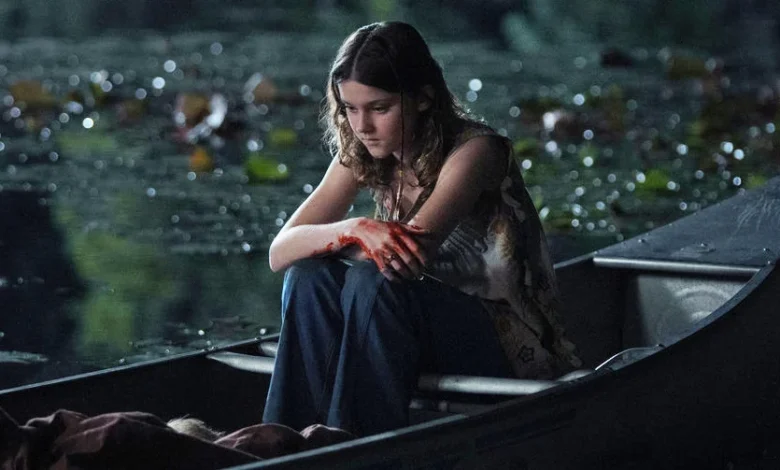
The landscape of modern television is heavily populated by prequels and spin-offs attempting to mine nostalgia from cinematic intellectual properties, but few face the formidable legacy of the Friday the 13th franchise. Peacock’s new horror series, Crystal Lake, developed by Brad Caleb Kane, ventures boldly into the dark history surrounding Camp Crystal Lake, long before the hockey-mask-wearing killer became a staple of pop culture nightmares. While the series incorporates several familiar locations and mythos from the 1980 Paramount Pictures classic, it also introduces entirely new narrative threads and characters designed to subvert expectations. Among the most notable additions is Grace, a young underdog and childhood friend to a pre-tragedy Jason Voorhees, portrayed with grounded emotional complexity by 13-year-old actress Gwendolyn Sundstrom.
Now streaming on Peacock, Crystal Lake has quickly generated considerable discussion among horror enthusiasts and casual viewers alike. The series leans into psychological horror, family dynamics, and the psychological fallout of grief, expanding the universe established by Sean S. Cunningham more than four decades ago. Through interviews and early critical responses, the creative choices behind the show—particularly its willingness to alter established franchise lore—have taken center stage in the discourse surrounding the premier season.
Unpacking Grace: A Fresh Face in a Familiar Hell
For Gwendolyn Sundstrom, stepping onto the New Jersey set of Crystal Lake at just 13 years old marked a major milestone in her burgeoning acting career. Speaking with entertainment reporters, Sundstrom revealed that playing Grace, the loyal childhood companion to a young Jason Voorhees (played by Callum Vinson), has been her favorite professional experience to date.
Despite the grim thematic elements of the horror genre, Sundstrom described the atmosphere on set as overwhelmingly positive, even as she tackled heavy emotional material. Finding common ground with a character living through severe isolation and an abusive home life required introspection and creativity from the young performer.
"It was fun, ’cause in real life I don’t really relate to Grace that much, but it was fun to try and find things from my life that I could put into Grace and really play her," Sundstrom explained. "But I had a great day every day on set, it was amazing."
Grace enters the narrative as an outsider who shares a profound, albeit fragile, bond with a young Jason. Unlike the stereotypical, throwaway teens typically populated in the background of slasher cinema, Grace’s character is built on vulnerability and marginalization. Sundstrom credits her real-life chemistry with co-star Callum Vinson as a foundational element that elevated their performances during intense flashback sequences.
"I think it was really helpful that Callum and I had really good chemistry in real life too, but I think building Grace as a character, she’s also kind of an underdog," Sundstrom noted. "She also doesn’t have very many friends, so I think we could kind of work off each other and portray that kind of character ’cause we’re so similar."

Chronology and Context: Re-Examining the Tragedy of Crystal Lake
To fully appreciate the narrative architecture of Crystal Lake, one must examine the timeline of the Friday the 13th universe. The foundational mythos of the franchise hinges on the year 1957, when a young Jason Voorhees allegedly drowned in the camp’s waters due to the negligence of teenage camp counselors who were preoccupied with romantic liaisons. This tragedy subsequently drove Jason’s mother, Pamela Voorhees, to commit the historic killing spree depicted in the original 1980 film.
Crystal Lake opens by recounting this pivotal drowning, aligning with the established lore while simultaneously expanding the periphery. In the premiere episode’s opening sequence, a young Grace intervenes when a local bully torments Jason, aggressively throwing the bully’s ball far out into the lake. While counselors Claudette (played by Danielle Kotch) and Barry (played by Phoenix Parnevik) slip away to hook up—a direct nod to the doomed caretakers of the original film—Jason wades into the murky depths to retrieve the ball, meeting his tragic and untimely fate.
Rather than dismissing the aftermath, the series utilizes flashbacks to trace Grace’s struggle to process the profound loss of her only friend, illustrating the profound isolation she endures while navigating the ordinary hardships of adolescence.
The Maternal Complexities of Pam Voorhees
As Grace struggles to cope with the absence of her closest companion, her life intersects with a formidable and psychologically fractured Pam Voorhees, portrayed masterfully by Linda Cardellini. With nowhere to channel her maternal instincts following the tragic loss of her son, Pam fixates on Grace, whose own home life is marked by maternal abuse and neglect.
This dynamic introduces a psychological tug-of-war that deepens the emotional stakes of the series. Grace, unaccustomed to genuine maternal affection—and arguably resistant to it given her traumatic upbringing—frequently attempts to distance herself from Pam. Conversely, Pam’s protective instincts intensify, blurring the line between maternal care and obsessive control.
Sundstrom expressed immense gratitude for the opportunity to work alongside Cardellini, noting the valuable lessons she absorbed while sharing the screen with the veteran actress.
"I loved working with Linda. She was so nice," Sundstrom said. "I definitely learned a lot from her. I think when Pam takes on kind of this maternal role, I think that’s something Grace, first of all, isn’t really used to, and also doesn’t really want. I think she’s trying to push Pam away, and Pam only wants to get even closer and even more protective, and I think that’s kind of a conflict that the two characters have."
Retconning Horror History: The Creative Decision Behind the First Kill
Perhaps the most controversial and widely discussed narrative swing in Crystal Lake occurs later in the season, when Grace falls in with a nomadic group of traveling hippies. Seeking refuge and a sense of "family" among the counterculture travelers, Grace participates in a drug-induced hallucination sequence that violently deconstructs the foundational lore of the entire cinematic franchise.

In a move that is certain to polarize diehard fans of the 1980 slasher classic, the series reveals that it was not Pam Voorhees who carried out the franchise’s very first murders, but rather Grace herself. During a potent drug trip, the famous first-person point-of-view (POV) murder sequence—traditionally attributed to an unseen adult killer—is recontextualized. It is revealed that Grace, caught in a psychological spiral, was the person who killed counselors Claudette and Barry in that infamous opening sequence.
For Sundstrom, filming this pivotal sequence offered a welcome creative challenge. "I had a lot of fun with that scene," she remarked. "I definitely like filming more dramatic, gritty, emotional things, so that was really fun for me."
However, subverting a 45-year-old cinematic tradition is a delicate undertaking. Showrunner Brad Caleb Kane anticipated the potential backlash from purists who might object to tampering with sacrosanct horror history. According to Kane, the decision to rewrite such a monumental piece of franchise lore was driven by a deliberate desire to challenge audience expectations and deliver genuine shock value.
"You have to re-contextualize it, and you want a shock," Kane explained. "We come to these movies for the rollercoaster ride of it, we come to these movies for the jaw-drop of it. If you think you know everything from the movie coming into the TV series, and then we just go, ‘Yeah, it’s exactly as you thought it was,’ that’s no fun."
Background Data, Production Context, and Broader Implications
The development of Crystal Lake has been a monumental undertaking for Peacock, navigating years of complex legal battles and rights issues that historically plagued the Friday the 13th property. With the legal hurdles finally cleared in recent years, the IP has transitioned from dormant cinematic artifact to contemporary prestige horror television.
Linda Cardellini leads the series as Pam Voorhees, depicting a grieving mother whose psychological unraveling forms the emotional spine of the narrative. The series unfolds against the backdrop of the late 1950s, meticulously recreating the period aesthetics of rural New Jersey, where production took place. By framing the narrative around the years leading up to the 1980 tragedy, the creative team has chosen to explore themes of generational trauma, systemic neglect, and the cyclical nature of violence.
The implications of Crystal Lake’s narrative choices extend far beyond a standard monster-of-the-week horror format. By humanizing Jason through the lens of childhood friendship and reframing iconic kills through unexpected characters like Grace, the series attempts to transition the slasher subgenre into a character-driven psychological drama. While purists may debate the validity of retconning the original film’s killer identity, the series has undoubtedly succeeded in generating cultural conversation, ensuring that the waters of Crystal Lake remain as murky, unpredictable, and perilous as ever.
Related posts: