Congo Ebola Crisis Intensifies as Death Toll Surpasses 4,000 Amid Escalating Insecurity and Administrative Turmoil

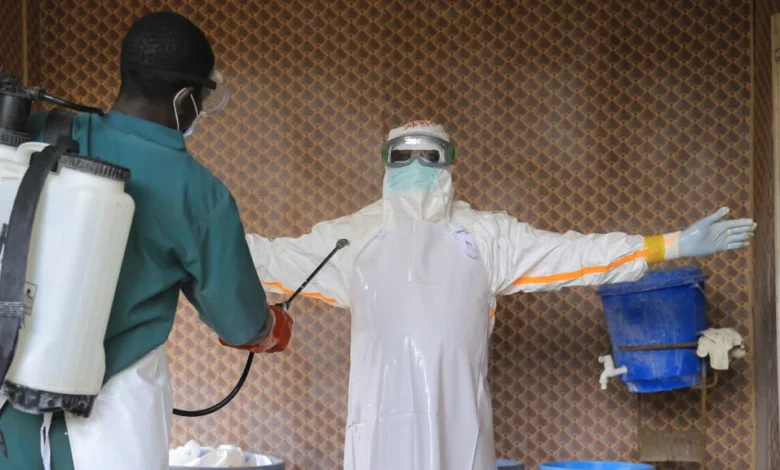
The Democratic Republic of the Congo (DRC) is currently grappling with the most rapid expansion of an Ebola virus outbreak in recorded history, a public health catastrophe that has now claimed the lives of 4,018 individuals. According to the latest data released by the Congolese Ministry of Health this Thursday, the total number of recorded cases has reached 8,300 since the official declaration of the outbreak on May 15. The trajectory of this epidemic has alarmed international observers, as the virus spreads into new health zones, effectively outpacing the resources available to combat it.
A Chronology of the Outbreak
The current crisis, centered in the eastern provinces of the DRC, has evolved into a multi-faceted emergency. Following the identification of the initial cases in mid-May, the disease moved swiftly through densely populated urban centers and remote, conflict-ridden rural regions. By mid-July, the outbreak reached a peak intensity, recording approximately 850 cases and 470 deaths per week.
While statistics provided by the Africa Centres for Disease Control and Prevention (Africa CDC) indicate a decline in new infections through September—averaging 490 cases and 230 deaths per week—health experts caution that these figures may be misleading. The perceived reduction in cases is likely tied to deteriorating security conditions and significant challenges in accessing affected communities, rather than a genuine stabilization of the virus’s transmission.
Labor Unrest and Administrative Failure
The operational backbone of the Ebola response is currently fracturing due to a mounting labor dispute. In Ituri Province, the epicenter of the current surge, frontline health workers have initiated protests, demanding months of unpaid wages. Surveillance teams and laboratory technicians, who represent the first line of defense against the viral spread, gathered in Bunia with placards reading, "No money, no data!" and "No payment for months."
Biongi Beiza, a representative of the protesting staff, confirmed that many workers have not received compensation for their services since August. This lack of remuneration has created a volatile environment where the very individuals tasked with containing the outbreak are forced to prioritize their own survival. The administration’s silence regarding these grievances has led to recurring strikes, further undermining the continuity of care. The failure to pay staff not only damages morale but also halts critical data collection, effectively blinding the surveillance networks necessary to track and isolate potential carriers.
The Intersection of Conflict and Contagion
The efficacy of the medical response has been severely compromised by the region’s broader geopolitical instability. The DRC’s eastern territories have long been a theater for armed conflict, and the Ebola crisis has been exacerbated by the presence of military operations.
In a recent incident in Kigonze, on the outskirts of Bunia, soldiers conducting a search for weapons burned a displacement camp that included a vital transit center for Ebola patients. The resulting destruction forced an estimated 19,000 residents to flee, creating a humanitarian vacuum. Julien Harneis, the United Nations’ senior Ebola coordinator, expressed profound concern over the loss of these facilities. "When we lose a center, that means we lose capacity, we lose investment, and we have to start again," Harneis stated. "Above all, it means that people do not get access to the care that they really need."
The displacement of thousands of individuals, some of whom may have been exposed to the virus, significantly increases the risk of undetected community transmission. Without stable transit and treatment centers, the ability to provide supportive care and break the chain of infection is drastically diminished.
Global Solidarity and Medical Risks
The gravity of the situation was underscored this week by the emergency medical evacuation of an aid worker affiliated with Médecins Sans Frontières (MSF). The worker, who contracted the virus while performing duties in the field, was flown to the Netherlands on a specialized medical flight. Upon arrival, the patient was transferred to a high-level isolation unit at the Leiden University Medical Center.
This event serves as a stark reminder of the personal risks borne by international and local volunteers. To date, at least 50 healthcare workers have succumbed to the virus. MSF has described the current humanitarian burden as "unprecedented," emphasizing that the scale of this outbreak has surpassed all previous instances of the disease in the country’s history.
Technological Advancements in Containment
Despite the systemic challenges, there have been strategic gains in diagnostic capabilities. The deployment of mobile laboratories has transformed the response time for case confirmation. In Butembo, medical teams are now utilizing advanced mobile units that allow for the rapid processing of samples.
Dr. Lota Kalubi, a physician at a treatment center in Butembo, noted that the transition from traditional, centralized testing to on-site mobile labs has been revolutionary. Where diagnostic processes once required up to 72 hours—a period during which an infected individual could inadvertently spread the virus to dozens of others—results can now be obtained in as little as six hours. Furthermore, as Michel Ngimba of the National Institute of Biomedical Research explained, these mobile units are designed for rapid deployment, allowing health teams to respond to emerging clusters in locations such as Katwa with minimal delay.
Socio-Political Barriers to Public Health
The struggle to contain Ebola is as much a social challenge as it is a medical one. Community resistance remains a formidable obstacle. In several regions, local populations have dismissed the existence of the virus, labeling it a hoax. This skepticism is deeply rooted in a history of chronic government corruption and previous mismanagement of health crises, which have eroded public trust in the authorities.
The tragic death of a Congolese politician, who was beaten to death earlier this week for defending government-mandated Ebola response measures, illustrates the intensity of this mistrust. Even with the introduction of a "village-centered approach," which seeks to partner with local community leaders to foster education and cooperation, the response efforts are frequently met with hostility.
Broader Implications and Future Outlook
The World Health Organization (WHO) has issued warnings that the current outbreak is on a trajectory to potentially exceed the death toll of the 2014-2016 West African epidemic, which claimed over 11,000 lives. The rapid spread into new, previously unaffected health zones is stretching already limited logistical and financial resources to their breaking point.
The implications for the region are severe. Beyond the immediate loss of life, the economic and social fabric of eastern Congo is being strained by the need for quarantine measures, the closure of markets, and the persistent threat of infection in transit hubs. The failure to address the underlying administrative issues—specifically the payment of frontline workers—and the ongoing security instability creates a perfect storm that hinders containment.
Looking ahead, the international community and the Congolese government face a critical juncture. The success of future containment efforts will likely depend on three pillars: the restoration of trust through transparent communication, the urgent stabilization of logistics to ensure that healthcare workers are paid and protected, and the continued innovation of diagnostic and treatment tools. Without a cohesive strategy that bridges the gap between scientific intervention and community acceptance, the specter of the Ebola virus will continue to haunt the eastern provinces of the DRC, threatening to reverse years of progress in public health development.
As the situation unfolds, the global health community remains on high alert, monitoring the data for signs of containment or further acceleration. The lessons learned in these final, difficult months of the crisis will be vital in informing the response to future viral threats in sub-Saharan Africa.