As the perennial adage reminds us, everybody talks about the weather, but nobody ever actually does anything about it. While human intervention in global atmospheric patterns remains largely confined to experimental cloud seeding and climate mitigation strategies, our collective obsession with forecasting the elements has endured for millennia. This fixation has naturally birthed a vast compendium of folklore, colloquialisms, and common assumptions passed down through generations. From cautionary parental warnings about dressing warmly to maritime proverbs passed down by ancient sailors, weather-related wisdom permeates modern culture. However, as meteorological science advances, researchers are increasingly able to separate enduring atmospheric myths from hardened empirical facts. Evaluating these popular beliefs reveals a fascinating intersection where human history, psychology, and atmospheric physics collide.
The Persistence of the Winter Cold Myth
Among the most pervasive pieces of domestic advice is the absolute insistence that failing to wear a heavy coat will result in catching a cold. For generations, parents have scolded children running outdoors without jackets, warning that exposure to freezing temperatures directly induces viral illness. Yet, modern medical microbiology and epidemiology confirm that the weather itself is entirely innocent of pathogen creation.
Dr. Manal Mohammed, a senior lecturer in medical microbiology at the University of Westminster, addressed this misconception directly in an analysis published via academic commentary, noting that cold temperatures do not cause infections independently. Instead, environmental chill factors orchestrate the biological, environmental, and social conditions that enable respiratory viruses to thrive.
The mechanism behind winter illness surges is multifaceted. During colder months, human behavior shifts dramatically; populations retreat indoors, congregating in poorly ventilated, heated environments. These indoor spaces typically feature exceptionally low relative humidity, which desiccates human nasal passages and diminishes the moisture barrier that naturally traps airborne pathogens. Furthermore, the resumption of the academic calendar in autumn and winter maximizes close-quarters human contact among children, creating ideal vectors for rhinovirus, influenza, and respiratory syncytial virus (RSV) transmission.

Physiologically, cold air does play a marginal, albeit indirect, role in human immune response. Inhaling frigid air lowers the internal temperature of the nasal cavity and upper airways, prompting localized vasoconstriction—the narrowing of blood vessels. According to physiological studies highlighted by institutions like Johns Hopkins Medicine, this constriction can temporarily weaken local immune defenses within the mucosal lining, making it marginally easier for an opportunistic virus to establish an infection. Nevertheless, this biological vulnerability requires the prior presence of the pathogen. A person exposed to sub-zero temperatures in total isolation will not contract a common cold unless they are already carrying the virus. Therefore, while winter correlates heavily with illness, the driving force remains viral exposure rather than environmental temperature alone.
The Real Mechanics Behind Lightning Strikes
Another deeply embedded cultural touchstone is the phrase "lightning never strikes the same place twice," utilized globally as shorthand for an extraordinarily rare occurrence. Etymologically and statistically, this idiom is fundamentally flawed. In meteorological reality, lightning not only can strike the same place twice, but it does so with astonishing frequency, dictated entirely by the laws of physics and electrostatics.
Atmospheric electrical discharges seek the path of least resistance between a cumulonimbus cloud and the Earth’s surface. Because electrical charges travel through the atmosphere, they naturally gravitate toward the tallest, most conductive objects in a given area. Consequently, towering skyscrapers, mountain peaks, and isolated communication masts are routinely targeted multiple times during a single thunderstorm.
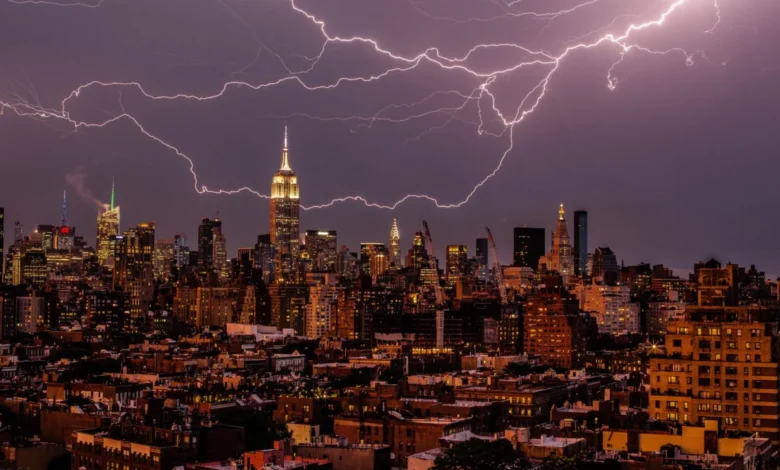
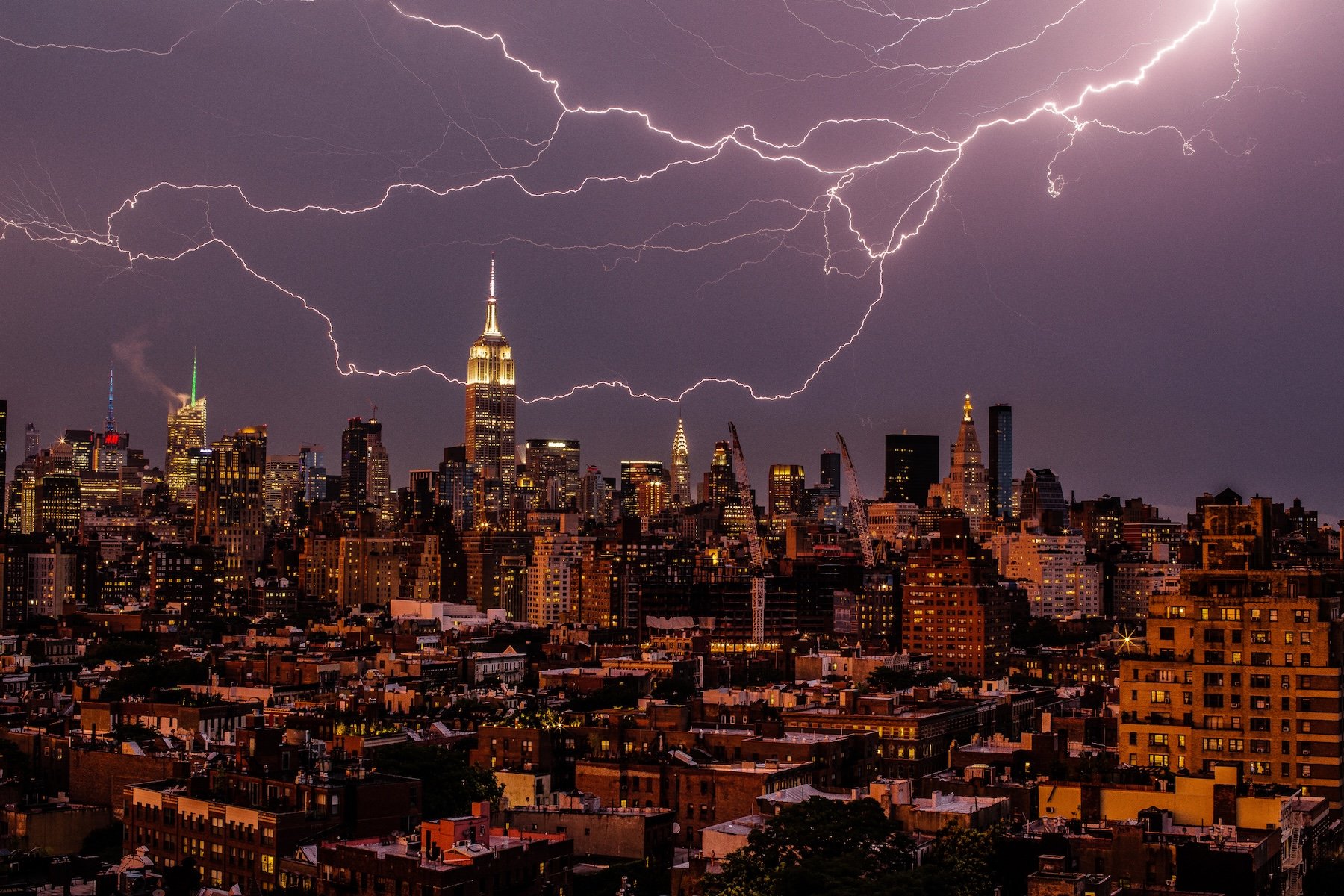
Data compiled by New York City Emergency Management indicates that the iconic Empire State Building is struck by lightning an average of 25 times every year. Moving northward, the CN Tower in Toronto, Ontario, endures an even more rigorous atmospheric battering, absorbing approximately 75 lightning strikes annually, according to structural engineering reports from the tower’s management. These structures are not compromised or destroyed by these repeated impacts; rather, they are engineered with sophisticated lightning protection systems—including heavy copper grounding cables and prominent lightning rods—that safely intercept the electrical current and dissipate millions of volts harmlessly into the earth.
The National Severe Storms Laboratory (NSSL) of the National Oceanic and Atmospheric Administration (NOAA) emphasizes that while statistical probability dictates lightning will preferentially strike prominent elevations, localized variations in atmospheric electric fields mean that lightning can occasionally bypass taller objects to strike unexpected locations. Thus, while predicting the exact coordinate of a localized lightning strike remains a complex challenge, the structural certainty of repeat strikes on prominent landmarks dismantles the absolute premise of the famous saying.
Ancient Maritime Proverbs and Atmospheric Pressure Systems
Perhaps one of the oldest surviving weather aphorisms is the classic rhyming couplet: "Red sky at night, sailor’s delight; red sky in the morning, sailors take warning." Documented extensively throughout human history—including biblical references in the Gospel of Matthew—this saying represents an early attempt at empirical meteorology. Unlike the winter cold myth, modern atmospheric science validates this proverb, provided it is applied within the correct geographic and meteorological context.
The scientific foundation of the red sky phenomenon lies in the physics of light scattering, known as Rayleigh scattering. When the sun is low on the horizon during sunrise or sunset, its light must travel through a significantly thicker slice of the Earth’s atmosphere than it does at midday. Shorter wavelengths of light, such as blue and violet, are scattered efficiently by gas molecules and suspended aerosol particles, while longer wavelengths, including red and orange, pass through relatively unhindered.
According to the United Kingdom’s Met Office, a vivid red sky typically signals that the atmosphere contains an abundance of dust, pollution, and water vapor trapped by a dominant high-pressure system. Because the sun sets in the west and rises in the east, a red sky at evening indicates that a high-pressure system—which generally brings stable, fair weather—is positioned to the west of the observer. Conversely, a red sky in the morning indicates that the high-pressure system has moved eastward, opening the door for low-pressure weather fronts carrying rain and wind to approach from the west.
This predictive power is inextricably linked to global wind patterns, specifically the prevailing westerlies. Dominating the mid-latitudes—regions situated between 30 and 60 degrees latitude in both the northern and southern hemispheres—these persistent winds blow from west to east across vast swathes of North America, Europe, southern Australia, and Japan. In these regions, a red sky at night genuinely heralds incoming stable weather, while a morning red sky warns of an approaching storm front.
However, the efficacy of this ancient proverb breaks down entirely when applied outside the mid-latitudes. In tropical and equatorial regions, weather patterns are driven by localized thermal convection, humidity, and trade winds rather than migrating pressure fronts carried by westerly jets. In the tropics, towering cumulonimbus clouds and sudden downpours can build rapidly from local thermal activity regardless of the sunrise or sunset coloration. Consequently, while the sailor’s proverb is anchored in legitimate atmospheric science, its accuracy is strictly bound to regional geography.

Implications for Modern Forecasting and Public Awareness
The survival of these enduring weather myths highlights a broader psychological tendency: human beings naturally seek patterns, causal explanations, and memorable heuristics to navigate an unpredictable environment. While idioms like the red sky rhyme demonstrate a remarkable, intuitive grasp of pre-instrumental meteorology, others, such as the direct causation of colds by cold air, reflect an oversimplification of complex biological and environmental interactions.
In an era defined by advanced satellite telemetry, Doppler radar networks, and hyper-local computational weather models, the reliance on folklore has largely been replaced by data-driven forecasting. Yet, understanding the scientific reality behind these cultural touchstones offers more than historical curiosity; it bridges the gap between traditional wisdom and empirical literacy. By recognizing that respiratory viruses—not freezing temperatures—drive winter sickness, and that towering urban structures routinely master thousands of volts of atmospheric electricity, society gains a clearer, more scientifically grounded appreciation of the natural world.
Related posts: