The Silent Suffocation: Inside the Decades-Long Battle for Black Lung Justice in American Coal Country

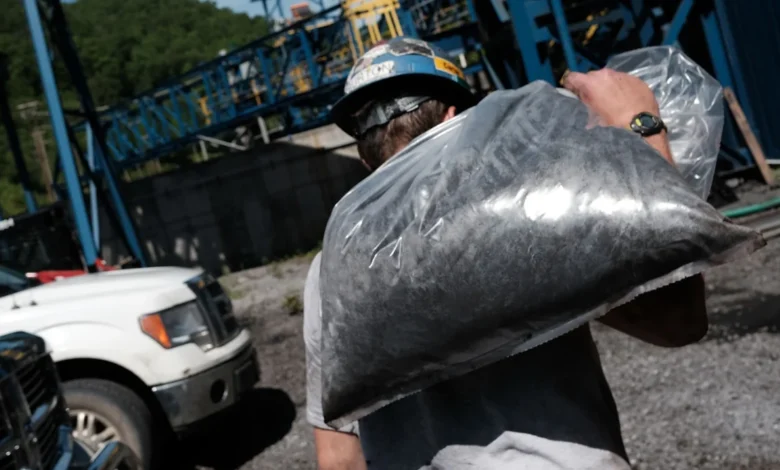
For 38 years, Josh Armes navigated the subterranean passages of West Virginia and Virginia coal mines, working long shifts in the dark to power the American economy. Today, at 74, the resident of Grundy, Virginia, finds his world constrained by the walls of his own home and the rhythmic hiss of an oxygen tank. Diagnosed with coal workers’ pneumoconiosis—commonly known as black lung disease—Armes represents a growing demographic of retired miners whose twilight years are defined not by rest, but by a grueling, protracted struggle against the very systems designed to support them.
The condition is the result of decades of inhaling microscopic coal dust, which causes irreversible scarring of the lung tissue. For Armes, the physical toll is compounded by a secondary, administrative ordeal: a 12-year legal battle to secure federal black lung benefits that were abruptly challenged by his former employer. His case is not an outlier, but a symptom of a systemic failure within the federal benefits program, which critics argue has become a gauntlet of litigation rather than a lifeline for the disabled.
The Anatomy of a Systemic Delay
The Federal Black Lung Benefits Program, established under the Federal Coal Mine Health and Safety Act of 1969, was created to ensure that miners incapacitated by the hazards of their profession received financial and medical support. However, contemporary data suggests the program is failing to meet its mandate. According to a May 2026 report from the Government Accountability Office (GAO), the bureaucratic path to benefits is fraught with adversarial obstacles.
Between 2013 and 2024, approximately 40 percent of all approved claims were challenged by coal operators. For claimants like the Armes family, the process is a test of attrition. When a company appeals an award, the benefits are often suspended, forcing the miner to navigate a labyrinth of medical re-evaluations, high-priced legal counsel, and, in some cases, the requirement to repay benefits previously received if a new judge reverses the initial decision.
"They can appeal it, get a different judge, and it is stripped away from you," says Crystal Armes, Josh’s daughter, who has spent over a decade documenting the medical evidence and legal filings required to sustain her father’s claim. "They fight you at every single step of the way. It feels as though they are simply waiting for the miner to die so they can avoid the obligation."
A Resurgence of an Industrial Scourge
The struggle for benefits coincides with a sobering medical trend: black lung disease is currently reaching its highest prevalence in nearly half a century. Recent data published in the American Journal of Respiratory and Critical Care Medicine indicates that 32.5 percent of veteran underground coal miners in Central Appalachia are now suffering from the disease. This represents a statistical return to the levels seen in 1978, a period many assumed had been relegated to history through improved ventilation technology.
The resurgence is widely attributed to the evolving nature of modern mining. Today’s coal seams are thinner and harder, requiring miners to cut through significantly more rock surrounding the coal. This process releases massive amounts of crystalline silica dust, which is far more toxic and faster-acting than traditional coal dust. Between 2020 and 2023 alone, more than 1,700 U.S. coal miners succumbed to the disease, a grim testament to the changing geological and occupational realities of the industry.
Chronology of the Legislative Standoff
The current crisis is characterized by a stark divide between legislative intent and regulatory enforcement:
- April 2024: The Mine Safety and Health Administration (MSHA) finalizes a new federal silica dust rule, designed to mandate strict engineering and ventilation controls to protect miners from the high-intensity dust levels currently causing the surge in disease.
- June 2024: Congressional funding to implement and enforce the new silica rule is blocked by a coalition of legislators, effectively rendering the mandate a paper tiger.
- April 2026: The Trump administration’s MSHA announces an indefinite delay on the enforcement of the silica rule, citing "pending judicial review."
- Mid-2026: Advocacy groups and the United Mine Workers of America (UMWA) confirm that the agency has requested an abeyance on court actions, effectively freezing the rule in a state of perpetual limbo.
The delay has drawn sharp condemnation from labor advocates. Rebecca Shelton, director of policy for the Appalachian Citizens’ Law Center, argues that the administration is leveraging the legal process to avoid regulatory action. "If the administration actually cared about protecting coal miners from black lung, we would have a strong silica rule in place right now," Shelton stated. "Instead, they are hiding behind a ridiculous legal process to delay action while miners get sick and die."
The Economic and Human Cost
The financial burden of this administrative limbo falls heavily on the miners and their families. Many are forced to pay out-of-pocket for specialized medical testing—often required by companies to verify the extent of lung damage—while living on fixed incomes. The GAO report highlights the extreme duration of these disputes, noting that among 53,000 closed claims, some cases dragged on for more than a decade. The median length of an appealed claim currently exceeds three years.
For the coal industry, these appeals are often viewed as standard risk management. For the miners, they represent a betrayal of a social contract. The emotional toll is compounded by the feeling of being discarded after a lifetime of service. "We’re hardworking, everyday Americans," Crystal Armes says. "We go to work, pay our taxes, and try to do the right thing, and then, we can’t get what was promised to us."
Official Responses and Future Outlook
When reached for comment regarding the delays and the status of the silica rule, the White House deferred all inquiries to the Department of Labor. A spokesperson for the MSHA stated via email: "Until pending litigation and limited rulemaking on respirable crystalline silica are resolved, MSHA continues to vigorously enforce the permissible exposure limit of 100 micrograms per cubic meter."
Industry analysts point out that while the 100-microgram limit has been the standard for decades, it is widely considered inadequate by modern medical standards, which suggest that even lower levels of silica exposure over long periods are sufficient to cause the rapid progression of disease seen in modern cohorts.
The United Mine Workers of America (UMWA) remains the most vocal opponent of the current regulatory freeze. Brian Sanson, president of the UMWA, has been adamant that the industry’s profitability cannot come at the cost of human life. "Every day that federal regulators drag their feet, another working father, mother, husband, wife, sister, or brother contracts an incurable, fatal disease," Sanson noted in a recent press statement.
Implications for the Future of Energy Labor
The impasse in West Virginia is a microcosm of a broader national debate regarding the responsibility of heavy industry toward its workforce. As the U.S. balances the need for energy security with public health mandates, the plight of the black lung patient remains a critical, albeit often ignored, variable.
If the current legal and regulatory status quo persists, health experts warn that the rate of disease will continue to accelerate, placing an even greater strain on the federal black lung disability trust fund and the families of those affected. The legislative efforts introduced by Senators Mark Warner, John Hickenlooper, Tim Kaine, and John Fetterman aim to streamline the benefits process and reduce the ability of operators to engage in multi-year, bad-faith appeals. However, with the current political climate in Washington, the prospects for such reform remain uncertain.
For Josh Armes and the thousands of others breathing through machines in the shadows of the Appalachian mountains, the policy debates in the nation’s capital are distant, yet their consequences are immediate and life-altering. As long as the silica rule remains on ice and the appeals process continues to favor the litigious, the "cost of doing business" will continue to be paid in the lungs of the American miner. For these families, the fight is not just for compensation; it is a desperate demand for the basic acknowledgment of the sacrifices they have made for the nation’s energy future.
Related posts: