Trump EPA Repeals Biden Carbon Power Plant Rule and Signals New Era for Coal Energy

The United States Environmental Protection Agency has officially moved to repeal the Biden administration’s 2024 regulations aimed at curbing carbon emissions from the electricity sector. This reversal marks the latest chapter in a two-decade-long policy tug-of-war regarding the role of coal in the American energy portfolio. By dismantling these standards, the Trump administration has effectively removed federal constraints on coal-fired power plants, signaling a shift toward prioritizing immediate grid capacity and fossil fuel utilization over long-term decarbonization targets.
The decision arrives as the nation faces a complex intersection of surging electricity demand, driven largely by the infrastructure requirements of artificial intelligence and data center expansion, and the ongoing technical obsolescence of the aging domestic coal fleet.
A Chronology of Policy Whiplash
The trajectory of U.S. climate policy regarding power generation has been defined by radical shifts between consecutive presidential administrations.
The first major federal attempt to regulate power sector emissions occurred under the Obama administration with the introduction of the Clean Power Plan. That policy sought to force a shift from coal to natural gas and renewables. However, the plan faced immediate legal headwinds and was ultimately stayed by the Supreme Court before it could be fully implemented.
When the Trump administration took office for its first term, it formally repealed the Clean Power Plan, arguing that it exceeded the EPA’s statutory authority. This set the stage for a landmark 2022 Supreme Court ruling in West Virginia v. EPA, which limited the agency’s ability to force a systemic shift in how utilities generate electricity.
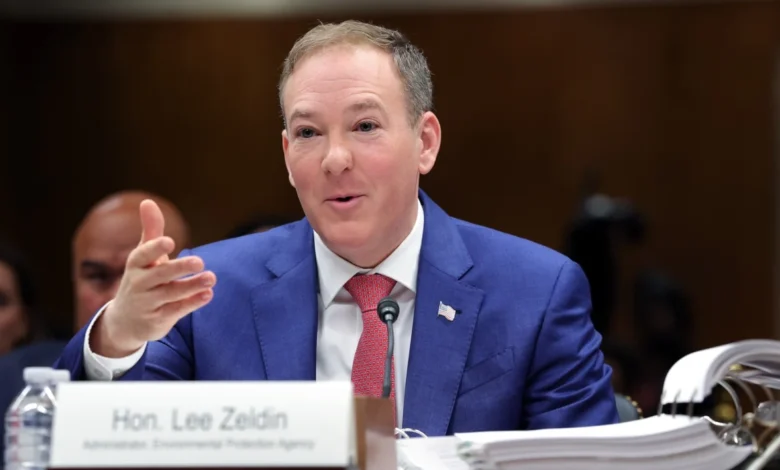
In 2024, the Biden administration attempted to navigate these legal boundaries by introducing a more flexible, technology-focused rule. This regulation provided utilities with a binary choice: retire aging coal plants by the 2030s or equip them with carbon capture and sequestration (CCS) technology to mitigate emissions. The repeal announced this week by EPA Administrator Lee Zeldin terminates this framework, effectively returning the regulatory landscape to a state of minimal federal oversight for greenhouse gas emissions from existing power plants.
The Economics and Environmental Impact of Coal
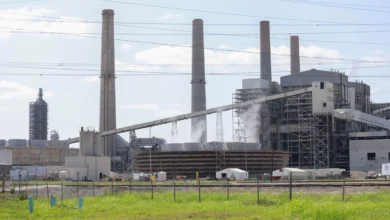
Coal remains the most carbon-intensive energy source in the global mix. Historically, it has been responsible for approximately 40 to 50 percent of cumulative global carbon emissions since the onset of the industrial era. Despite its diminishing share in the U.S. energy market, coal plants remain significant sources of public health hazards.
The 2024 rule, which is now being rescinded, was projected by the EPA to provide substantial public health benefits. Analysts had estimated that the regulation would have prevented $370 billion in health-related costs by 2035. The agency’s own data suggested the rule would have mitigated hundreds of thousands of asthma-related incidents and more than 1,200 premature deaths annually by reducing the release of mercury, sulfur dioxide, and particulate matter.
Economic experts argue that the repeal is less about a resurgence of coal’s competitiveness and more about a short-term reprieve for legacy assets. Kenneth Gillingham, a professor of environmental economics at Yale University and a former economic adviser during the Obama administration, noted that the absence of a federal target creates significant uncertainty for utility planning. "The reason to have a target is that it sends a clear signal to decision-makers in companies," Gillingham stated. "If you’re on the fence between choosing two things, you might as well choose the one that’s in line with the target. That has been undermined."
The Data Center Dilemma: Why Coal Is Staying Online
A primary driver behind the current administration’s push to preserve coal capacity is the unprecedented demand for electricity created by the rapid expansion of artificial intelligence. Large-scale data centers require constant, reliable "baseload" power, which has led many utility companies to revise their long-term plans.
Southern Company, a major utility provider in the Southeast, exemplifies this trend. Under the previous regulatory environment, the company had projected the closure of a major coal plant in Mississippi by 2028. However, citing the projected energy requirements of regional data centers, the utility recently announced that it would extend the operation of these units into the 2030s.
This trend is occurring despite the historical unreliability of large-scale carbon capture technology. Several major projects, such as the Kemper Project in Mississippi, were abandoned after failing to meet cost and technical performance benchmarks. Environmental advocates argue that the reliance on aging coal units to power the AI revolution is a temporary fix that overlooks the potential for more efficient, sustainable energy solutions, such as small modular nuclear reactors or expanded battery storage.
Official Stances and Legal Challenges
EPA Administrator Lee Zeldin has framed the repeal as a necessary step toward economic sovereignty. Speaking at an international energy summit in Texas, Zeldin characterized the regulatory efforts of the past 15 years as a "war on coal" that harmed consumers.
"We are working to go even further so that American energy can be fully unleashed," Zeldin said. "Realizing the full potential of American energy means more jobs, lower prices, and a more prosperous America."
However, the administration’s efforts to keep plants online have already faced judicial scrutiny. Earlier this month, a federal court ruled against Department of Energy orders that mandated certain coal plants remain operational, citing them as unlawful. This suggests that while the EPA may succeed in repealing regulations, the administration may face ongoing legal battles regarding the extent to which it can compel utilities to maintain unprofitable or aging infrastructure.
Implications for the Energy Transition
While the repeal of the Biden-era rule is a significant victory for the coal lobby, industry analysts suggest that the broader market trend toward cleaner energy is difficult to reverse. The "shale revolution," which made natural gas significantly cheaper than coal, remains the primary force behind the decline of coal-fired generation in the United States over the last two decades.
Even without federal mandates, the economics of the power sector have shifted. Many utilities are finding that the cost of maintaining 40- and 50-year-old coal plants—including maintenance, environmental compliance, and fuel transportation—is increasingly higher than the cost of building new renewable energy capacity combined with storage.
"We have more electricity demand than we did before, which is, on the margins, going to make it easier for a coal plant to stay on," Gillingham noted. "But the trend is pretty clear, and you can only fight markets so much."
The long-term impact of this repeal will likely be a slower transition for specific regions that rely heavily on coal-fired power. For the broader U.S. grid, the move reinforces a period of regulatory volatility. As the nation approaches mid-decade, the tension between the immediate need for electricity to power the digital economy and the long-term necessity of reducing carbon emissions remains the central challenge for energy policymakers.
Investors and utility executives now face a landscape where federal guidance is minimal, placing the burden of responsibility on state-level regulators and corporate sustainability boards. Whether this policy shift will result in a sustainable long-term energy strategy or merely delay the inevitable phaseout of a carbon-intensive fuel source remains the subject of intense debate among energy economists and climate scientists alike. As the political cycle continues, the next administration will likely inherit a power sector that is increasingly strained by demand but continues to gravitate toward more efficient, albeit intermittently produced, energy sources.
Related posts: