Microplastics in global agricultural soil act as a Trojan horse for toxins and pathogens

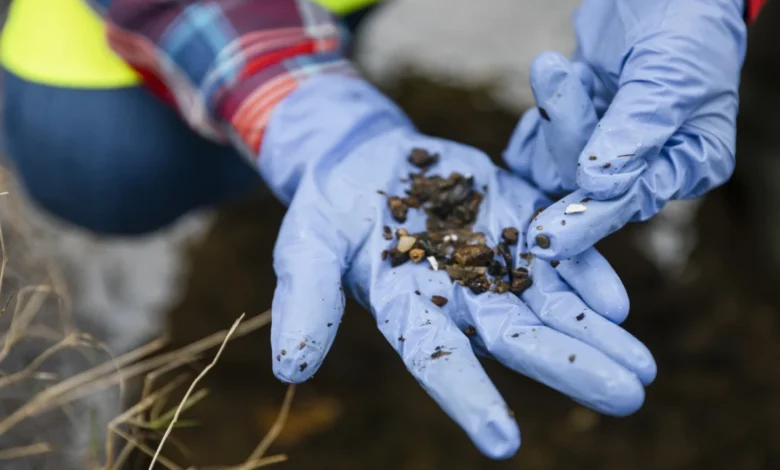
A comprehensive five-year multinational research project has revealed a concerning reality regarding the state of global agriculture: microplastics have permeated the very foundation of our food systems. The findings, generated by the EU-funded Minagris research initiative, indicate that these synthetic particles are present in every agricultural field tested across 11 European countries. Far from being inert debris, these microplastics serve as a "Trojan horse," facilitating the transport of harmful pesticides, industrial pollutants, and antibiotic-resistant bacteria into the soil, thereby threatening the long-term viability of terrestrial ecosystems.
The scope of the investigation involved testing 227 agricultural sites, resulting in a robust body of evidence comprising 22 peer-reviewed studies. The consensus among the researchers involved is that the ubiquity of plastic contamination in soil represents a global threat to food security, biodiversity, and the complex microbial networks that sustain life on Earth.
A Chronology of Discovery and Research
The awareness of plastic contamination in marine environments has been well-documented for decades, but soil-based microplastic pollution has only recently entered the mainstream scientific discourse. The Minagris project was launched to address this knowledge gap, systematically cataloging how plastic particles interact with agricultural environments.
Over the past five years, the research team—which included collaborators from the Countryside and Community Research Institute at the University of Gloucestershire—conducted longitudinal analyses of soil samples. Their work tracked how historical land use, such as the application of sewage sludge as fertilizer and the use of plastic mulch films, contributed to the current state of contamination. The project highlighted that even if plastic usage were significantly curtailed today, the legacy of past agricultural practices ensures that these materials will persist in the soil for generations to come.
The Mechanism of the Trojan Horse
The most alarming aspect of the research is the discovery of the "plastisphere"—a new ecological niche created on the surfaces of microplastics. As plastics break down into smaller fragments, their surface area increases, making them highly effective at adsorbing chemical pollutants, such as heavy metals and veterinary drugs, from the surrounding environment.
Professor Edoardo Puglisi, a microbiologist at the Catholic University of the Sacred Heart in Piacenza, Italy, notes that the smaller the particle, the higher its affinity for these dangerous hitchhikers. "The smaller the microplastics are, the more they tend to adsorb pollutants, microbes, and DNA," Puglisi explained. "This leads to a Trojan horse effect that can potentially increase the diffusion of pathogens and antibiotic-resistance genes."
Within these plastispheres, researchers observed an uptick in antibiotic-resistant genes. When combined with pesticide residues, these habitats become hotspots for genetic exchange, potentially accelerating the development of drug-resistant bacteria in the very soil where food crops are grown.
Impact on Soil Health and Crop Productivity
The implications for soil health extend beyond the microbial level, affecting macro-organisms that are essential for ecosystem services. Earthworms, which act as the primary engineers of soil structure and nutrient cycling, are particularly vulnerable. Studies within the project found that the ingestion of microplastics disrupts the biological processes of these organisms, leading to reduced nutrient availability for plants.
The research also delved into the physiological impact on plant life. Experiments focusing on lettuce crops showed that high concentrations of microplastics correlate with a significant reduction in biomass, leaf area, and chlorophyll content. Crucially, the researchers identified a synergistic negative effect: when microplastics were present alongside environmental stressors like drought, the plants fared significantly worse than they did under either stressor alone. This suggests that as climate change drives more frequent and severe drought events, the presence of microplastics in the soil will exacerbate the negative impacts on global crop yields.
The Fallacy of Biodegradable Alternatives
In response to the growing plastic crisis, the agricultural industry has increasingly pivoted toward "biodegradable" plastics. However, the Minagris project findings caution against viewing these materials as a panacea. The study found that many products labeled as biodegradable do not break down into harmless organic matter under standard agricultural conditions.
Instead, these materials often fragment into smaller, synthetic microplastics, which continue to act as vectors for pollutants. This indicates that current environmental assessments—which often treat chemicals, plastics, and drought as separate issues—are failing to capture the reality of modern field conditions. The researchers advocate for a more holistic approach, where policy and safety standards reflect the reality that pollutants do not exist in a vacuum but rather interact in complex, often unpredictable ways.
Statistical Context and Environmental Data
The data gathered from the 11 countries paints a picture of systemic contamination that transcends local management practices. In Switzerland, one specific study found a direct correlation between tire-wear particles—a significant source of microplastic pollution—and elevated levels of toxic metals in the soil.
The prevalence of these particles in agricultural fields is largely attributed to the practice of spreading sewage sludge, which often contains high concentrations of microplastics captured during wastewater treatment processes. Furthermore, the use of plastic films for soil covering in greenhouse operations and open-field vegetable production continues to contribute a steady stream of polymers into the topsoil.
Policy Implications and the Call for Transparency
The research team has called for an urgent overhaul of agricultural and environmental policies. Key recommendations include:
- Standardized Monitoring: Currently, there is no global standard for measuring plastic concentration in soil. Establishing a universal protocol is essential for comparing data and assessing the true extent of the problem.
- Full Manufacturer Transparency: The industry must be required to disclose the additives and chemical compositions of agricultural plastics. Knowing what these plastics are made of is the first step toward understanding how they will behave in the environment.
- Multispecies Risk Assessments: Regulators must move beyond testing single pollutants. Future risk assessments should evaluate how microplastics interact with co-pollutants and how these combinations affect a wide variety of species, from soil microbes to human consumers.
Esperanza Huerta Lwanga, a research associate in soil physics at Wageningen University, emphasized the permanence of the issue. "Once these plastics fragment into the ground, they’re practically impossible to remove, acting as vectors for agrochemicals and altering critical soil ecosystems," she stated. "To protect long-term food production and soil health, policy must catch up."
The Road Ahead: A Call for Scientific Rigor
The Minagris findings serve as a stark reminder that the soil is not a passive medium; it is a living, breathing system that is currently being fundamentally altered by human-made materials. The "Trojan horse" effect represents a systemic risk that threatens the efficiency of nutrient cycling, the stability of the soil microbiome, and, by extension, the security of the global food supply.
As policy discussions move forward, the scientific community emphasizes the need for objective, cross-disciplinary research. The challenge lies in managing a legacy of contamination while simultaneously redesigning agricultural inputs to prevent further degradation. Without a concerted effort to address the chemical and physical complexities of plastic in the soil, the agricultural sector faces the prospect of declining productivity and increased environmental costs in the decades to come.
The evidence presented by this five-year project acts as a definitive call to action, demanding that international regulatory bodies shift their focus toward the hidden, microscopic dangers beneath our feet. The longevity of the plastic in our fields ensures that this issue will remain at the forefront of environmental science for the foreseeable future, necessitating both innovation in material science and a fundamental reassessment of how we interact with the land that sustains us.
Related posts: