The Crisis in the Clouds: Federal Firefighters Face Unprecedented Strain Amid Aggressive Containment Mandates

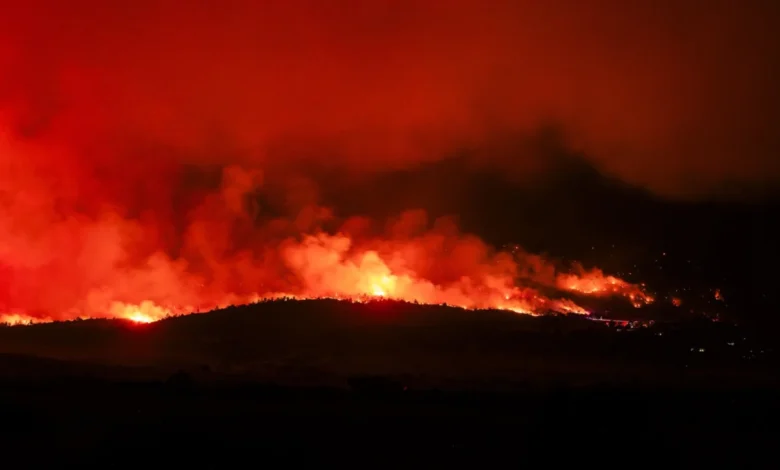
As the 2026 wildfire season stretches toward its conclusion, the United States wildland firefighting apparatus is teetering on the edge of structural collapse. Federal firefighters, tasked with managing an increasingly volatile climate landscape, are reporting that current administrative mandates for aggressive, full-scale suppression are exacerbating an already critical staffing shortage. With over 8.4 million acres scorched by mid-September—a figure representing 149 percent of the ten-year average—the human toll on the nation’s front-line crews has reached a decadal high, raising urgent questions about the sustainability of current federal fire management policies.
A Season of Unrelenting Intensity
The 2026 fire season has been defined by its relentless tempo. According to data from the National Interagency Fire Center (NIFC), the nation reached "Preparedness Level 5" (PL5)—the highest indicator of resource mobilization—for a staggering 48 consecutive days. This duration is nearly double the ten-year average, signaling that the nation’s firefighting capacity has been pushed beyond its operational threshold.
The Aspen Acres fire in Rye, Colorado, stands as a grim monument to this year’s severity. Having consumed over 73,000 acres, it has cemented its status as the eighth-largest fire in Colorado’s recorded history. The fire’s rapid progression reflects a broader trend: as atmospheric temperatures rise and multi-year droughts persist, fires are moving faster, burning hotter, and behaving in ways that legacy containment strategies are no longer equipped to manage.
Chronology of Escalation
The current crisis is not a sudden phenomenon but the culmination of long-term systemic neglect and accelerating environmental shifts.
- April 2026: Fire season begins with an unusually high frequency of early-season ignitions, forcing federal crews into the field months ahead of historical norms.
- July 2026: The Department of Agriculture and the Department of the Interior issue formal directives mandating a return to "full suppression" policies, prioritizing immediate, aggressive containment over the more nuanced, risk-managed strategies utilized in recent years.
- August 2026: The rate of firefighter entrapments hits a 20-year high. By mid-month, 12 instances of crews being caught in life-threatening positions are documented, including the tragic Knowles fire incident in Colorado, which resulted in the deaths of three firefighters and severe injuries to others.
- September 2026: Congressional leaders from the Western caucus issue an emergency letter to the USDA and the Interior Department, citing the depletion of the $6 billion suppression budget and the dangerous reliance on temporary, under-qualified supervisory structures.
The Human Cost of Strategic Aggression
Central to the controversy is the disconnect between the administrative "full suppression" mandate and the reality on the ground. Firefighters, speaking under the condition of anonymity, describe a workforce suffering from extreme fatigue and chronic burnout. The specialized leadership roles—taskforce leaders, division supervisors, and heavy equipment bosses—require years of field experience, yet the attrition rate for these positions remains high.
"Firefighting capacity is akin to wages, and the fire environment is akin to inflation," remarked one veteran fire captain based in the Pacific Northwest. "We have had shortages for two decades, but the current directive to fight every ignition with maximum aggression is forcing crews to work beyond safe operational parameters."
This perspective is echoed by organizations such as Grassroots Wildland Firefighters. Bobbie Scopa, a retired fire chief and vice president of the advocacy group, notes that the current structure of doubling up responsibilities to cover staffing gaps is a recipe for disaster. When senior personnel are forced to manage more divisions than is protocol, or when crews are pushed into "direct attack" strategies in terrain where containment is functionally impossible, the probability of entrapment increases exponentially.
Official Stance vs. Operational Reality
The federal government’s public position stands in stark contrast to the reports coming from the field. During a congressional subcommittee hearing on July 22, 2026, USFS Chief Tom Schultz stated, "Our firefighting workforce is stronger than at any point in recent years. We are fully staffed and equipped to respond aggressively to every unplanned ignition."
However, this rhetoric has been met with skepticism by members of the Senate. In a joint letter, Senators Michael Bennet, Alex Padilla, Ron Wyden, Adam Schiff, and John Hickenlooper challenged the assertion of full capacity. They pointed to the fact that requests for crews have frequently gone unfilled across Western states and that the reliance on "temporary supervisory structures" is a direct admission of a lack of qualified personnel.
The "Perfect Firestorm" and Ecological Implications
Timothy Ingalsbee, executive director of Firefighters United for Safety, Ethics and Ecology, identifies the issue as a "perfect firestorm." He argues that climate change is only half of the equation; the other half is a rigid, outdated fire management philosophy.
By insisting on the suppression of all fires, the federal government is effectively stockpiling fuel on the forest floor. In the long term, this ensures that future fires will be larger and more catastrophic. Ecologists have long advocated for "managed fire"—allowing specific, low-risk fires to burn to clear out underbrush—but the current political environment has effectively criminalized this practice in favor of immediate, optics-driven suppression.
Structural Analysis: The Road Ahead
The implications of this policy are profound. If the federal government continues to mandate that 100 percent of fires be extinguished, regardless of the risk-to-reward ratio, the following outcomes are likely:
- Retention Crisis: As on-the-ground leaders continue to face dangerous conditions with inadequate support, the brain drain within the USFS and the Department of the Interior will accelerate, further eroding institutional knowledge.
- Fiscal Exhaustion: The "full suppression" strategy is financially unsustainable. Spending the entirety of the $6 billion suppression budget by early autumn leaves no fiscal buffer for the late-season blazes that have become increasingly common in the era of climate change.
- Operational Instability: The reliance on temporary, unqualified supervisors to fill leadership voids will continue to lead to increased accident rates and fatalities.
As the season winds down, the focus of fire experts is shifting toward the upcoming winter budget sessions. The consensus among the firefighting community is clear: until the federal government acknowledges the reality of the personnel shortage and moves away from a rigid "suppression at all costs" mandate, the safety of the nation’s firefighters—and the communities they protect—will remain in jeopardy.
The tragic events of 2026 serve as a critical inflection point. Whether the federal administration will adjust its stance to prioritize sustainable, science-based fire management or continue on the current path of aggressive, high-risk suppression remains the most pressing question for the future of American forestry and public safety. For now, crews remain on the front lines, navigating a landscape that is burning faster than the bureaucracy can adapt.
Related posts: