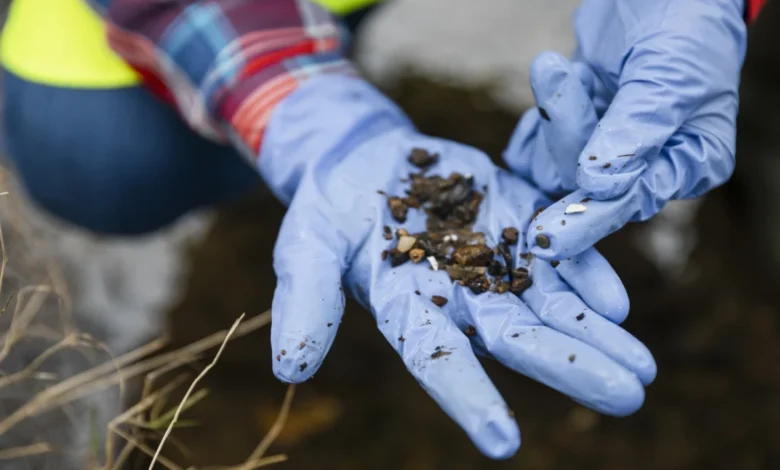
The integrity of global agricultural systems is facing a silent, invisible crisis. A comprehensive, five-year multinational research project, funded by the European Union and involving a consortium of environmental scientists, has revealed that microplastics are not merely inert debris in our farmlands; they are active agents of contamination. By acting as a "Trojan horse," these microscopic synthetic particles are facilitating the transport of toxic chemicals, hazardous pesticides, and antibiotic-resistant bacteria into the very foundation of our food supply: the soil.
The study, which encompassed 227 agricultural sites across 11 European countries, found consistent evidence of plastic contamination in every single field sampled. This discovery underscores a pervasive environmental challenge that transcends borders, suggesting that decades of industrial farming practices, coupled with the persistent nature of synthetic polymers, have created a legacy of soil degradation that will be difficult, if not impossible, to reverse.
A Chronology of Accumulation
The presence of plastics in soil is not a new phenomenon, but the systematic quantification of its impact is. The Minagris project—a collaborative effort involving partners such as the Countryside and Community Research Institute at the University of Gloucestershire—represents the most significant attempt to date to map the extent of this issue.
- 1950s–1980s: The widespread adoption of plastic-based agricultural tools, such as mulching films, irrigation tubing, and pesticide containers, begins in earnest, introducing synthetic polymers to rural landscapes.
- 1990s–2010s: Increased industrialization and the use of sewage sludge—which often contains microplastics from domestic and industrial waste—as fertilizer lead to a cumulative buildup of plastics in topsoil.
- 2020–2025: The Minagris project conducts its multi-year investigation, synthesizing data from 22 peer-reviewed studies to evaluate the biological, chemical, and physical impact of plastics on European agriculture.
- 2026: Final findings are published, highlighting the "plastisphere"—a specialized microbial ecosystem that forms on the surfaces of microplastics—and its role in harboring pathogens.
The Mechanism of the Trojan Horse
The term "Trojan horse" is used by researchers to describe the way microplastics interact with their environment. These particles possess a high surface-area-to-volume ratio, making them excellent sponges for hydrophobic pollutants, including polycyclic aromatic hydrocarbons (PAHs), heavy metals, and various pesticides.
When these plastics enter the soil, they do not remain static. They are transported by earthworms and other soil-dwelling organisms, which ingest the particles and move them throughout different soil horizons. As the particles break down into smaller fragments, their ability to adsorb—and subsequently release—toxic substances increases. Professor Edoardo Puglisi of the Catholic University of the Sacred Heart in Piacenza, Italy, notes that the smaller the plastic particle, the higher its affinity for hosting complex microbial communities and concentrated toxins.
This "plastisphere" is a critical area of concern. Within these micro-ecosystems, the project found an alarming increase in antibiotic-resistant genes. When combined with pesticide exposure, the plastisphere can accelerate the development of drug-resistant bacteria, creating a potential public health risk that has not been adequately addressed in traditional agricultural safety assessments.
Agricultural Productivity and Ecological Consequences
The impact of this contamination extends beyond chemical toxicity to the physical health of crops and soil structure. Researchers discovered that higher concentrations of microplastics significantly hamper plant development. In tests on lettuce, for instance, scientists observed a marked reduction in chlorophyll content, photosynthetic efficiency, and overall biomass.
These negative effects are exacerbated by climate change. When drought conditions were introduced in controlled experiments, plants struggling with plastic-laden soil performed significantly worse than those under drought stress alone. This suggests that microplastic pollution is stripping plants of their natural resilience, making them less capable of surviving the erratic weather patterns associated with a warming climate.
Furthermore, the disruption of nutrient cycles—a process vital for soil fertility—poses a long-term threat to global food security. Earthworms, which are the "engineers" of healthy soil, are being physically and physiologically compromised by the ingestion of these materials. As their health declines, the natural aeration and nutrient cycling that sustain healthy farmland begin to fail, potentially leading to lower crop yields and higher requirements for synthetic fertilizers, which in turn may contain more plastic contaminants.
The False Promise of Biodegradable Plastics
One of the most significant findings of the Minagris project is the warning against the blanket assumption that "biodegradable" plastics are a panacea. The study found that many materials marketed as biodegradable do not break down into harmless organic matter under standard field conditions. Instead, they often fragment into microplastics just as conventional plastics do.
This distinction is critical for policymakers. While switching to bio-based materials is a positive step in reducing dependence on petroleum-based plastics, it does not solve the underlying problem of soil contamination if those materials are not designed to degrade fully under specific environmental conditions (such as the temperature and microbial composition of soil).
Policy Recommendations and the Path Forward
The scientific community is now calling for a fundamental shift in how environmental authorities regulate soil health. Esperanza Huerta Lwanga, a soil physics expert at Wageningen University, emphasizes that the current approach—which evaluates pollutants in isolation—is outdated.
"To protect long-term food production and soil health, policy must catch up," Lwanga stated. Key recommendations from the research consortium include:
- Standardized Monitoring: Establishing a uniform global framework for measuring microplastic concentrations in soil to allow for consistent longitudinal data collection.
- Manufacturer Transparency: Requiring full disclosure of the chemical additives and polymer types used in agricultural plastics to allow for better risk assessment.
- Integrated Risk Assessments: Moving away from single-pollutant testing to evaluating the "cocktail effect" of microplastics, agrochemicals, and pathogens acting in concert.
- Restoration Initiatives: Investing in technologies that can mitigate the buildup of plastics in fields, though researchers acknowledge that removing already fragmented particles remains a monumental technical challenge.
Broadening the Scope: A Global Imperative
While the Minagris project focused on Europe, the implications are undeniably global. Industrial agricultural models are largely standardized across developed and developing nations. The patterns of plastic use observed in the study are mirrored in North America, South America, and parts of Asia, where high-intensity farming relies on plastic-based infrastructure.
The degradation of soil health is not just an ecological issue; it is a macroeconomic one. If the "plastisphere" continues to expand, the hidden costs—ranging from the loss of soil fertility to the increased burden of treating antibiotic-resistant infections—could run into the billions.
The research serves as a sobering reminder that the "hidden" pollutants in our environment are just as significant as the visible ones. As the world grapples with the need for sustainable food systems, the issue of microplastics in the soil represents one of the most complex, systemic, and urgent challenges of the 21st century. The path forward requires not just technological innovation, but a rigorous, science-led regulatory framework that treats soil not as an inert medium, but as a living, fragile, and essential component of the global climate and public health infrastructure.