I Play Rocky: Peter Farrelly’s Biographical Drama Captivates London Film Festival Audiences

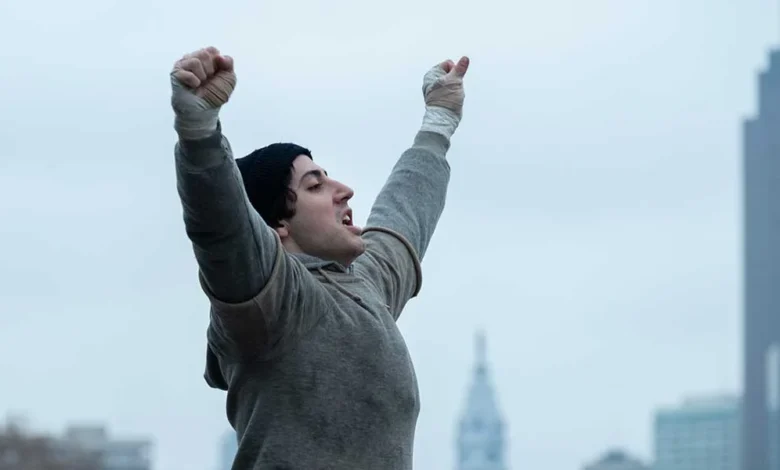
The London Film Festival provided a significant moment of cinematic intrigue this past Friday as the highly anticipated biographical drama I Play Rocky was unveiled as the event’s surprise film. Directed by Peter Farrelly, the feature chronicles the tumultuous and inspiring genesis of Sylvester Stallone’s 1976 cultural phenomenon, Rocky. The presentation, held before an enthusiastic audience, underscored the industry’s enduring fascination with the "underdog" narrative that mirrors the very story the film seeks to document.
The Genesis of a Hollywood Legend
The narrative of I Play Rocky is not merely a retelling of the production of a boxing film; it is a granular examination of the creative desperation and professional persistence that defined Sylvester Stallone’s early career. In the mid-1970s, Stallone was a struggling actor navigating the fringes of the industry, facing a series of professional rejections that nearly sidelined his ambitions. The film meticulously tracks the period between his initial script conception and the arduous negotiations required to secure his role as the lead—a battle against studio executives who sought to cast established stars rather than the unknown writer.
For film historians, this period represents a pivotal shift in the New Hollywood era. The success of Rocky, which went on to win the Academy Award for Best Picture and spawned a franchise that has spanned nearly five decades, serves as the ultimate case study in creative ownership. By capturing the specific cultural milieu of 1970s Philadelphia and the grit of the burgeoning independent film movement, Farrelly’s work positions itself as both a period piece and an industry procedural.
Anthony Ippolito and the Casting Process
Central to the film’s critical reception is the performance of newcomer Anthony Ippolito. During the festival introduction, Peter Farrelly revealed that the casting process for the lead role was intended to be an exhaustive, global search. The production team had prepared for months of auditions, anticipating a difficult hunt for an actor capable of capturing Stallone’s idiosyncratic mannerisms and distinct, vulnerable charisma.
The process was upended by Ippolito, a 27-year-old actor who, upon learning of the project, bypassed traditional channels. Ippolito reportedly tracked down the script and filmed three scenes in his grandmother’s basement on Long Island. This unsolicited submission proved decisive. Farrelly noted that the tape was so compelling that the production team effectively halted their search immediately. Ippolito’s portrayal has been lauded for its avoidance of mere caricature; rather than simply imitating Stallone’s voice, the performance captures the "sweetly stubborn" essence of a man fighting for his vision.
A Stellar Ensemble Cast
Supporting Ippolito is an ensemble cast tasked with portraying the key figures who influenced Stallone’s trajectory. AnnSophia Robb steps into the role of Sasha Czack, Stallone’s wife at the time, whose presence serves as the film’s emotional anchor. Matt Dillon provides a grounded performance as Frank Stallone Sr., capturing the complexities of the familial relationship that shaped the younger Stallone’s drive.
The production also highlights the essential contributions of the behind-the-scenes team. P.J. Byrne portrays Irwin Winkler, one of the primary producers who took a significant risk on the Rocky project, while Jay Duplass takes on the role of director John G. Avildsen. These performances illustrate the collaborative—and often conflict-ridden—process that resulted in one of the most successful sports films in cinematic history.
Critical Reception and Institutional Validation
I Play Rocky made its initial debut at the Toronto International Film Festival (TIFF) last month, where it was immediately identified as a frontrunner for audience-voted accolades. The film’s transition from the Canadian circuit to the London Film Festival has cemented its status as a significant awards-season contender.
Variety’s chief film critic, Owen Gleiberman, emphasized the precision of the production, noting that the film succeeds because it treats the history of the project with both reverence and narrative efficiency. The success of the film at these festivals is not merely a testament to the quality of the production, but to the continued commercial and cultural viability of the Rocky brand. By grounding the story in the personal stakes of its protagonist, the film transcends the sports genre to function as a character study of ambition and resilience.
The Stallone Seal of Approval
Perhaps the most significant hurdle for any biographical work is the endorsement of the subject. Farrelly has been candid about the professional pressure involved in depicting the life of a living icon. He noted that while critical acclaim is desirable, the personal validation of Sylvester Stallone remained the ultimate benchmark for success.
"No matter how well the movie does, how many people like it, if Stallone said, ‘I don’t like it,’ I would be really disappointed," Farrelly stated during his remarks in London. "And he loved it." This endorsement serves as a crucial marketing asset and a validation of the film’s narrative integrity. Stallone’s approval suggests that the film avoids the pitfalls of sensationalism, instead opting for a portrayal that respects the reality of the events as he experienced them.
Industry Implications and Future Distribution
As the film prepares for its wider release, the implications for the industry are twofold. First, I Play Rocky represents a growing trend of "biopic-as-process," where the focus is shifted from the entirety of a person’s life to a singular, transformative moment. This format has proven successful in recent years, allowing for tighter pacing and deeper emotional resonance.
Second, the film highlights the effectiveness of the festival-to-theatre pipeline. By leveraging the prestige of the Toronto and London Film Festivals, the distribution team has successfully built a narrative of critical excellence ahead of the film’s commercial release. With a scheduled premiere in U.S. and U.K. theaters on November 6, the studio is positioning the film to capture both the general public and the more discerning awards-season demographic.
Economic and Cultural Context
From a financial perspective, the Rocky franchise has generated over $1.7 billion in global box office revenue since 1976. The enduring nature of the IP makes I Play Rocky a strategic asset for the studio. However, the film differentiates itself from the sequels and spinoffs (such as the Creed series) by focusing on the "pre-fame" era. This serves to humanize the massive commercial entity that Rocky has become, reminding audiences of the modest, uncertain origins of the character.
The film also serves as a reflection on the democratization of the film industry. In an era where digital tools have made it easier for unknown actors to capture their own auditions, the story of Ippolito’s "basement" tape serves as a modern parable. It highlights the persistence required to break into an industry that is notoriously resistant to outsiders, echoing the very themes that made the original Rocky script so resonant in the first place.
Conclusion
I Play Rocky arrives at a time when audiences are increasingly drawn to stories that offer both nostalgia and a deeper, behind-the-scenes perspective on the art they consume. By combining a breakout performance from Anthony Ippolito with a rigorous commitment to the historical facts of the 1976 production, Peter Farrelly has crafted a film that functions on multiple levels. Whether viewed as an inspiring tale of professional perseverance or a technical exploration of how a classic is made, the film is poised to make a substantial impact when it hits theaters in November. The positive reception at the London Film Festival confirms that, much like its protagonist, the film possesses the tenacity and spirit required to succeed in a crowded and competitive field.