Netflix Appoints Former Disney Executive Peter Rice as Chief Content Officer Following Bela Bajaria Departure

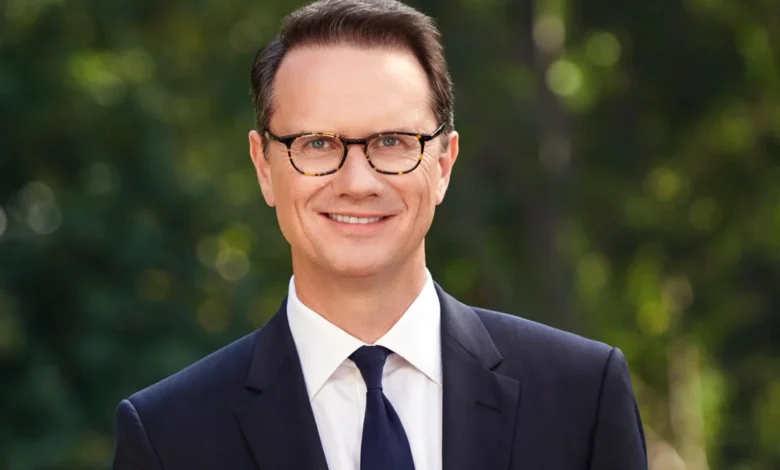
In a seismic leadership shift within the upper echelons of the global entertainment industry, Netflix has announced that former high-ranking Walt Disney Television executive Peter Rice will assume the role of Chief Content Officer, succeeding the departing Bela Bajaria. The high-profile transition, which takes effect on October 26, consolidates immense creative and operational oversight under Rice, who will now direct the entirety of the streaming giant’s content portfolio. This expansive purview encompasses scripted and unscripted television series, feature-length films, and the company’s increasingly vital live events sector.
The announcement came moments after industry publications and internal memos confirmed the departure of Bajaria, a veteran executive who has steered various facets of Netflix’s content strategy through an era of rapid transformation, market maturation, and increased global competition. Rice’s appointment represents a calculated pivot for Netflix as the platform navigates a complex media landscape defined by declining traditional cable metrics, the universal pursuit of streaming profitability, and a continuous evolution in subscriber consumption habits.
For Rice, this appointment marks his high-profile return to the apex of the entertainment industry following his abrupt and highly publicized departure from The Walt Disney Company in June 2022. During his tenure at Disney, Rice served as Chairman of Walt Disney Television and Chairman of General Entertainment, where he oversaw powerhouse creative engines including ABC Entertainment, ABC News, Disney Branded Television, Freeform, Hulu Originals, Onyx Collective, FX, and 20th Television. His sudden exit from the House of Mouse more than two years ago—where he was ultimately succeeded by Dana Walden—sent shockwaves through Hollywood, largely because Rice was widely regarded as a stabilizing, creatively astute executive with deep-seated relationships across the talent community.
Chronology of Leadership and Industry Transitions
The trajectory leading to Rice’s appointment at Netflix is rooted in decades of executive stewardship across traditional and modern media ecosystems. Rice’s career is hallmarked by long-standing leadership positions at major Hollywood studios, beginning with his extensive tenure at 21st Century Fox. At Fox, Rice served as Chairman and CEO of Fox Networks Group, overseeing a sprawling portfolio that included Fox Broadcasting Company, 20th Century Fox Television, FX Networks, and National Geographic Channels. His leadership during this period was characterized by the development and cultivation of critically acclaimed and commercially lucrative programming, positioning him as one of the premier content architects of his generation.
Following The Walt Disney Company’s acquisition of 21st Century Fox’s entertainment assets in 2019, Rice transitioned into the Disney corporate structure, integrating vast production pipelines and creative teams. His oversight at Disney cemented his reputation as an executive capable of managing massive, multi-platform scale while preserving creative autonomy for top-tier creators, showrunners, and filmmakers.
The timeline shifted dramatically in June 2022 when Disney Chief Executive Bob Chapek made the surprising decision to relieve Rice of his duties, citing a perceived cultural misalignment regarding organizational agility. The swift elevation of Dana Walden to Rice’s position left many industry observers questioning where the veteran executive would land next. Over the ensuing two years, Rice remained a sought-after figure in Hollywood advisory and creative circles, waiting for an opportunity that matched his institutional scale.
That opportunity materialized at Netflix, an organization that has systematically upended the traditional studio and network paradigms over the past decade and a half. The departure of Bela Bajaria, who had been a cornerstone of Netflix’s content operations and international expansion, created a vacancy at the very top of the content food chain. By securing Rice, Netflix has acquired an operator who possesses deep institutional knowledge of both legacy studio systems and the modern multi-platform era.
Scope of Responsibilities and Strategic Implications
As Chief Content Officer, Peter Rice steps into a role of unprecedented magnitude. He will be tasked with steering a global content budget that routinely runs into the tens of billions of dollars. His mandate covers a diversified slate that no longer relies solely on subscription-based video-on-demand (SVOD) models for episodic television and films. In recent years, Netflix has diversified its monetization and engagement strategies, expanding significantly into live entertainment—exemplified by high-profile comedy specials, live sports entertainment, and awards ceremonies—as well as ad-supported subscription tiers and interactive gaming initiatives.
The integration of scripted and unscripted content under a single executive umbrella reflects Netflix’s desire to streamline its creative decision-making processes. Under previous structures, content oversight was occasionally partitioned across geographic regions and format genres. Rice’s background in managing expansive, multi-genre portfolios positions him to harmonize these diverse pipelines, ensuring that strategic priorities align seamlessly with subscriber growth and retention metrics.
Industry analysts note that Rice’s arrival comes at a critical juncture for the streaming industry at large. As Wall Street demands sustainable profitability rather than unmitigated subscriber acquisition at all costs, content executives face the dual challenge of rationalizing production budgets while maintaining the cultural cachet required to capture global audiences. Rice’s historical strength lies in his ability to identify commercial viability in distinctive voices, a skill set that will be tested as Netflix balances big-budget tentpoles with locally produced international content that drives its overseas expansion.
Official Responses and Industry Reactions
The leadership transition elicited strong public endorsements from Netflix’s executive leadership, underscoring the strategic importance of Rice’s recruitment.
Ted Sarandos, Co-CEO of Netflix, issued a glowing appraisal of his new content chief, highlighting Rice’s operational pedigree and deep-rooted industry relationships.
"Peter is one of the most effective at-scale operators in the entertainment industry," said Sarandos. "His business acumen is sharp, his talent relationships are exceptionally strong, and his experience across TV and film is deep and broad. He understands what makes stories resonate, and he’s spent his career helping talent do the best work of their lives. I’m excited to welcome him to Netflix as Chief Content Officer as we continue to scale and deliver members more of the stories they love."
For his part, Rice expressed enthusiasm for joining a company that fundamentally rewrote the rules of global entertainment distribution and consumption.
"Netflix has fundamentally changed the way stories are made, made, shared and experienced around the world," said Rice. "They’ve shown again and again that they’re willing to take chances on distinctive voices and fresh ideas, and I’m excited to work with the team to help bring even more great stories to members everywhere."
The reaction from the broader Hollywood creative community has been largely positive. Showrunners, directors, and agency executives who worked with Rice during his tenures at Fox and Disney frequently cite his hands-on engagement with material and his protective stance toward creative risk-taking. In an industry increasingly dominated by algorithmic data and corporate risk aversion, Rice’s reputation as a champion of talent-driven storytelling is viewed by many as a reassuring asset for Netflix’s creative partners.
Broader Impact on the Global Streaming Landscape
The appointment of Peter Rice as Netflix’s Chief Content Officer signals more than just a high-level executive shuffle; it serves as a bellwether for the ongoing convergence of traditional Hollywood executive talent and Silicon Valley-born streaming models. As legacy media companies continue to grapple with the structural decline of linear television and the financial friction of transitioning their legacy businesses to streaming, top-tier executive talent has increasingly migrated toward platforms that possess structural scale and digital dominance.
Netflix’s decision to place its entire content apparatus under Rice indicates a desire for institutional stabilization and elevated creative curation. While data analytics and viewing metrics will continue to inform the platform’s programming decisions, Rice’s appointment suggests a renewed emphasis on human creative judgment, executive intuition, and long-term talent relationship management.
Furthermore, the consolidation of film, scripted series, unscripted programming, and live events under one executive leader suggests that Netflix is moving toward a more cohesive, cross-pollinated programming strategy. Events that cross over from live broadcasting into on-demand archives, or feature films that tie into ongoing episodic universes, will likely receive more unified strategic direction under Rice’s unified command.
As Rice prepares to assume his duties on October 26, the global entertainment industry will be watching closely to see how his traditional studio background influences Netflix’s aggressive, data-driven content engine. With hundreds of millions of subscribers spanning nearly every corner of the globe, Netflix remains the undisputed titan of the streaming era. By bringing in an executive with Rice’s depth of experience, the company has signaled its intent to not only maintain its market dominance, but to refine the creative frameworks that define contemporary popular culture.