The Moon Is Shrinking: How Lunar Cooling and Global Tectonic Faults Are Reshaping Our Celestial Neighbor

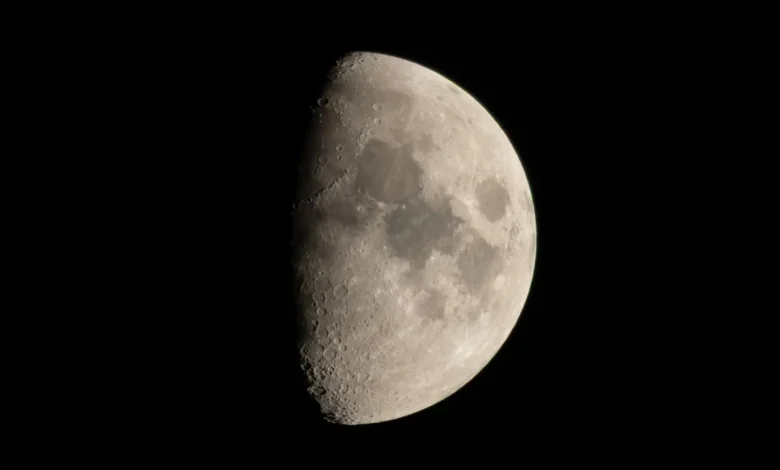
As the interior of the Moon continues to cool and contract, Earth’s only natural satellite is slowly shriveling, shedding nearly 148 feet of its overall radius over the past 400 to 800 million years. New research published in The Planetary Science Journal offers the most precise measurements yet regarding this planetary contraction, shedding light on a geological process that has significant implications for future crewed lunar missions.
Led by Dr. Thomas Watters, a senior scientist in the Center for Earth and Planetary Studies at the Smithsonian National Air and Space Museum, a team of researchers utilized high-resolution image data gathered by NASA’s Lunar Reconnaissance Orbiter Camera (LROC). The findings reveal that the Moon is not a geologically dead world frozen in time, but a dynamically active body experiencing ongoing tectonic activity. Unlike Earth, which features a shifting mosaic of lithospheric plates responsible for major earthquakes and mountain ranges along distinct boundaries, the Moon is encased in a single, rigid shell akin to an eggshell. As the lunar core loses thermal energy and shrinks, this single plate must buckle, fracture, and overlap, creating thousands of young faults and triggering widespread moonquakes.
Main Facts and Mechanics of Lunar Contraction
The primary driver behind the Moon’s shrinking waistline is simple thermal physics: as planetary bodies age, they radiate their primordial heat into the cold void of space. For the Moon, this cooling process has been underway for billions of years. As the interior cools, the volume of the lunar mantle and core decreases. Because the crust is a solid, brittle shell that cannot easily shrink uniformly, it is forced to accommodate a smaller surface area. This physical constraint results in crustal shortening, which manifests visually on the surface as lobate scarps—cliff-like ridges formed where one section of crust pushes up and over an adjacent section.
While 148 feet (approximately 45 meters) of reduction in radius over several hundred million years may sound negligible on a human scale—equating to a pace of roughly 2.4 to 4.3 inches per million years, or an imperceptible 0.1 micrometers annually—the cumulative structural stress is immense. Because the Moon lacks the distributed plate tectonics of Earth, where seismic strain is concentrated along well-defined fault lines like the San Andreas Fault, lunar tectonic activity is globally distributed.
When the LROC began its mission in 2009, scientists initially identified a modest number of these tectonic landforms. However, as the camera spent over 17 years capturing millions of overlapping, high-resolution frames under varying illumination angles, the true scope of the phenomenon became clear. The latest study tallies more than 10,000 distinct, young lunar faults scattered across the globe. These features are classified as "young" because they cut across small impact craters and other surface features that would have been quickly erased or degraded if the faults were ancient. This spatial distribution proves that the contraction is not a relic of the distant past, but an ongoing geological process.
Chronology of Discovery: From Apollo to the LROC Era
Humanity’s awareness of lunar seismic activity began during the Apollo program in the late 1960s and early 1970s. Astronauts deployed the Apollo Passive Seismic Experiment network, a series of seismometers designed to listen to the heartbeat of the Moon. Between 1969 and 1977, these instruments recorded thousands of moonquakes.
While many of these seismic events were linked to deep-seated tidal interactions with Earth or high-velocity meteorite impacts, a distinct subset of shallow moonquakes baffled scientists for decades. Originating only a few hundred kilometers below the surface, these shallow quakes were surprisingly energetic—some reaching magnitudes equivalent to 5.0 or greater on the Richter scale, capable of severely shaking equipment and potentially damaging structures.
For many years, the exact geological source of these shallow moonquakes remained an open debate within the planetary science community. A major breakthrough occurred in 2010 when Dr. Watters and his colleagues published a landmark study analyzing LROC images that revealed widespread, previously undetected lobate scarps. By correlating the locations of these young fault scarps with the epicenters of the shallow moonquakes recorded by the Apollo seismometers decades earlier, researchers established a direct causal link. The shallow moonquakes were—and still are—being generated by the active slippage and growth of these tectonic faults as the Moon cools and contracts.
Subsequent studies further refined the timeline and spatial patterns of these faults. Researchers mapped the orientation and distribution of the scarps to determine whether the tectonic stresses were globally uniform or influenced by tidal forces from Earth. The consensus established that while tidal forces can trigger or modulate the timing of seismic events, the primary engine driving the faults is the internal cooling and global contraction of the lunar interior.
Supporting Data and Spatial Distribution
The sheer volume of data collected by the Lunar Reconnaissance Orbiter has transformed planetary geology. With an orbital altitude averaging 50 kilometers, the LROC Narrow Angle Cameras (NAC) can resolve surface features as small as 50 centimeters per pixel under optimal lighting conditions. This unprecedented clarity allowed the research team to systematically catalog over 10,000 fault scarps.
A critical finding of the recent study involves the spatial distribution of these faults relative to crustal thickness. The lunar highlands, situated predominantly on the far side and parts of the near side, feature a significantly thicker crust compared to the low-lying volcanic plains known as maria. Data analysis reveals that regions with a thicker crust exhibit a lower density of young faults. In contrast, thinner crustal regions or areas adjacent to major impact basins show higher concentrations of tectonic deformation.
This variance suggests that crustal thickness plays a modulating role in how tectonic stress is expressed at the surface. Thicker crusts can absorb or distribute internal stresses differently than thinner, more brittle sections, making certain geographic coordinates more stable than others. Conversely, thin-crust regions act as preferred zones for fault propagation, increasing the local frequency of seismic slippage.
Furthermore, modeling the thermal evolution of the Moon indicates that the rate of contraction is non-linear. As the lunar interior steadily drops in temperature, the brittle upper crust thickens over time, altering the depth at which faults nucleate and grow. This evolution means that the seismic hazard profile of the Moon is dynamic, changing gradually across geological epochs.
Official Responses and Scientific Reactions
The planetary science community has widely embraced the findings as a crucial step toward understanding both lunar evolution and the broader mechanics of one-plate planets—a category that includes Mercury and potentially various icy moons in the outer solar system.
Dr. Thomas Watters emphasized the unexpected abundance of tectonic features during the release of the findings. "The number of these young faults revealed in LROC images is much greater than I ever imagined," Watters stated. "As the interior of the moon continues to cool and contract, it is expected that the growth of existing faults and formation of new faults continues today."
Independent geologists not directly involved in the study have praised the rigorous methodology combining orbital imagery with legacy seismic data from the Apollo era. Experts note that bridging the gap between orbital remote sensing and in-situ geophysics is one of the greatest triumphs of modern planetary science. The validation that tectonic faults are actively generating shallow moonquakes provides a unified framework for interpreting data that sat dormant for nearly half a century.
Space agency officials and mission architects have also taken note of the data, recognizing that lunar tectonics transition from an academic curiosity to an engineering parameter as humanity prepares to return to the lunar surface.
Broader Impact and Implications for Artemis and Beyond
The confirmation that the Moon is actively shrinking and generating moonquakes anywhere on its surface carries profound practical implications for future space exploration. As NASA, international space agencies, and commercial aerospace firms plan for sustainable, long-term human habitation under initiatives like the Artemis program, understanding the physical hazards of the lunar environment is paramount.
Shallow moonquakes are distinct from deep moonquakes in both origin and potential severity. While deep moonquakes originate hundreds of kilometers down and release relatively modest energy at the surface, shallow moonquakes occur close to the crust and can produce intense, sustained ground shaking. If a permanent lunar base, habitat module, or scientific observatory is inadvertently constructed on or near an active, unmapped fault scarp, the structural integrity of the facility could be compromised over its operational lifespan.
Engineers designing lunar habitats, power grids, and communication arrays must account for localized seismic risks. The identification of stable regions—particularly areas with thicker, more resilient crusts that exhibit fewer young faults—provides critical guidance for site selection. Future mission planners can cross-reference LROC fault maps to identify low-risk zones for landing sites and base camps, minimizing the exposure of equipment and personnel to seismic hazards.
In addition to engineering considerations, the ongoing contraction of the Moon offers a living laboratory for comparative planetology. By studying how a single-plate body manages thermal contraction, scientists gain valuable insights into the tectonic histories of other rocky worlds in the solar system, such as Mercury, which is also known to feature extensive scarps resulting from planetary shrinkage.
Ultimately, the revelation that our nearest celestial neighbor is dynamic, shriveling, and seismically active alters our perception of the Moon. Far from being a static, dead monument of stone, the Moon remains a living world governed by the slow, relentless physics of cooling and contraction—a reminder that in the universe, motion and change are constants, even on a world that appears frozen in the night sky.
Related posts: